
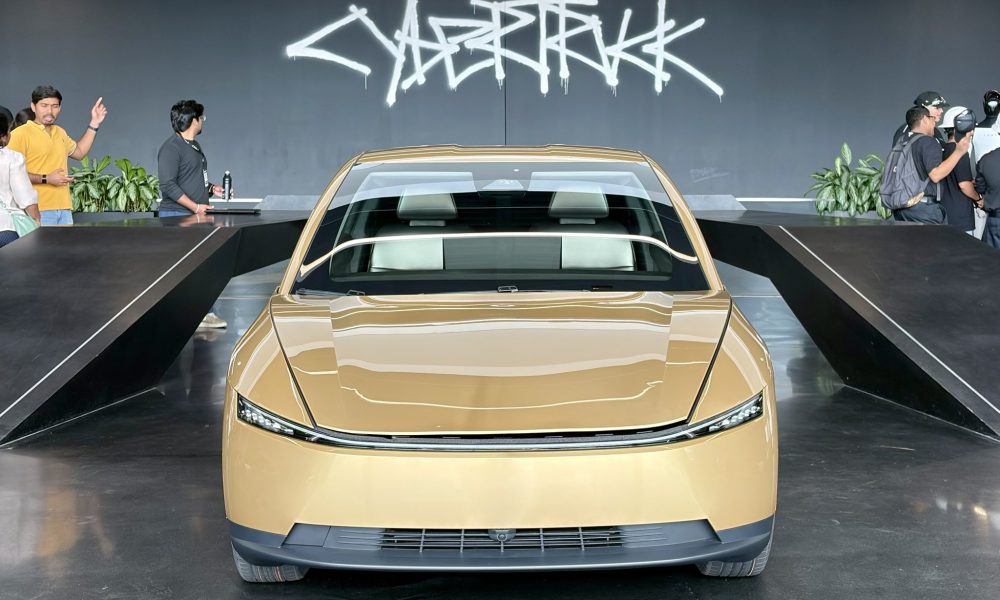


Tesla has set September 3 for the launch of its Cybercab in Austin, Texas, and invitations are already going out. The two-seat vehicle has no steering wheel and no pedals. If it works as advertised on public roads, it will be the first production car from a major automaker designed from the ground up to never be driven by a human.
The timing follows a report from The Information earlier this week suggesting a late-August launch. Tesla came close. It booked the event three days into September instead.
This is not the first time people have ridden inside a Cybercab. At the “We, Robot” event in October 2024, Tesla offered autonomous rides on a closed course at Warner Bros. Studios in Burbank. Employees began taking rides in the vehicle in July of this year.
But a closed loop at a movie studio and employee test runs are a far cry from dropping paying passengers into live Austin traffic. The real question is whether the September 3 event will include unrestricted rides on public roads. Tesla has been running its Model Y robotaxi service with real passengers for over a year, but the Model Y still has a steering wheel.
Cybercab does not. That distinction matters enormously, both technically and from a regulatory standpoint.
Tesla says its latest hardware suite, AI4, can deliver full autonomy. The company is already working on AI4.5 and AI5 for future vehicles. But capability claims and real-world deployment are two different currencies, and CEO Elon Musk has been writing checks on the autonomy front for the better part of a decade.
Austin was not a random choice. Tesla’s headquarters sits there. Operating on home turf gives the company maximum control over the variables, from route selection to local relationships with regulators.
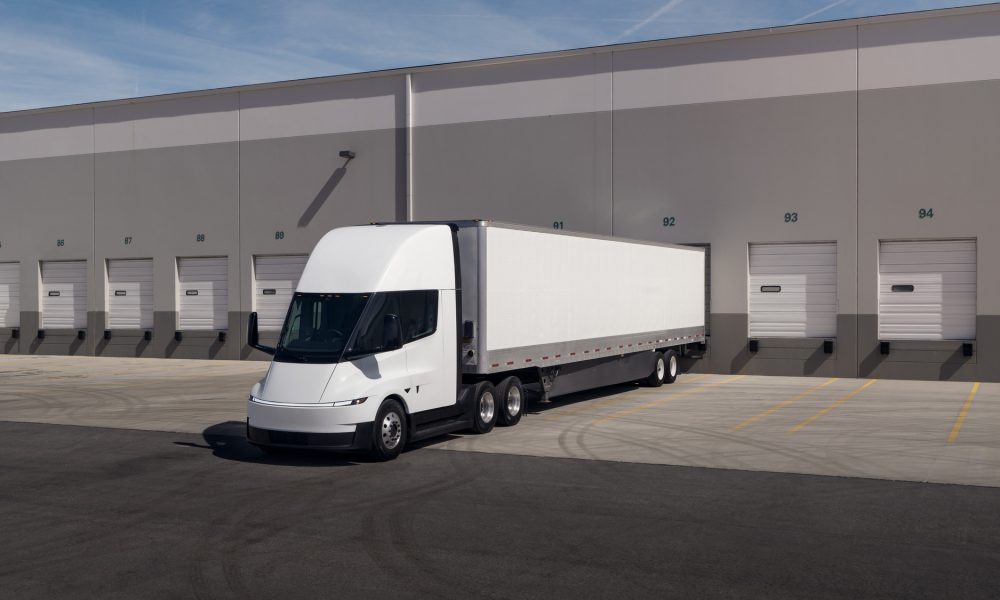
The Cybercab launch lands in a crowded stretch for the company. Tesla just confirmed it will bring the Semi to Europe, with a full reveal at the IAA Transportation fair in Hannover starting September 15. High-volume Semi production began at a dedicated Nevada facility in late April, targeting 50,000 units annually.
Meanwhile, Tesla is managing a recall of nearly three million vehicles in China over emergency door latches that regulators say are not visible enough. The fix amounts to stickers and an over-the-air software update.
All of this activity points to a company pushing on multiple fronts at once: autonomous ride-hailing, commercial trucking, and regulatory compliance across three continents. The risk is distraction. The reward, if the Cybercab actually performs in uncontrolled conditions, is a product category that no competitor has cracked at scale.
Waymo runs autonomous vehicles in several U.S. cities, but those are retrofitted conventional cars with roof-mounted sensor arrays. GM’s Cruise stumbled badly and pulled back. Tesla is betting that a purpose-built, sensor-lean vehicle running on camera-based AI can do what billions of dollars in lidar-equipped competitors have struggled to deliver consistently.
September 3 will not settle the debate. But it will show whether Tesla’s Cybercab can handle the unpredictable mess of real streets, real pedestrians, and real traffic in a city that did not sign a consent form. The invitations are out. The steering wheel is not coming back.
Share this Story