
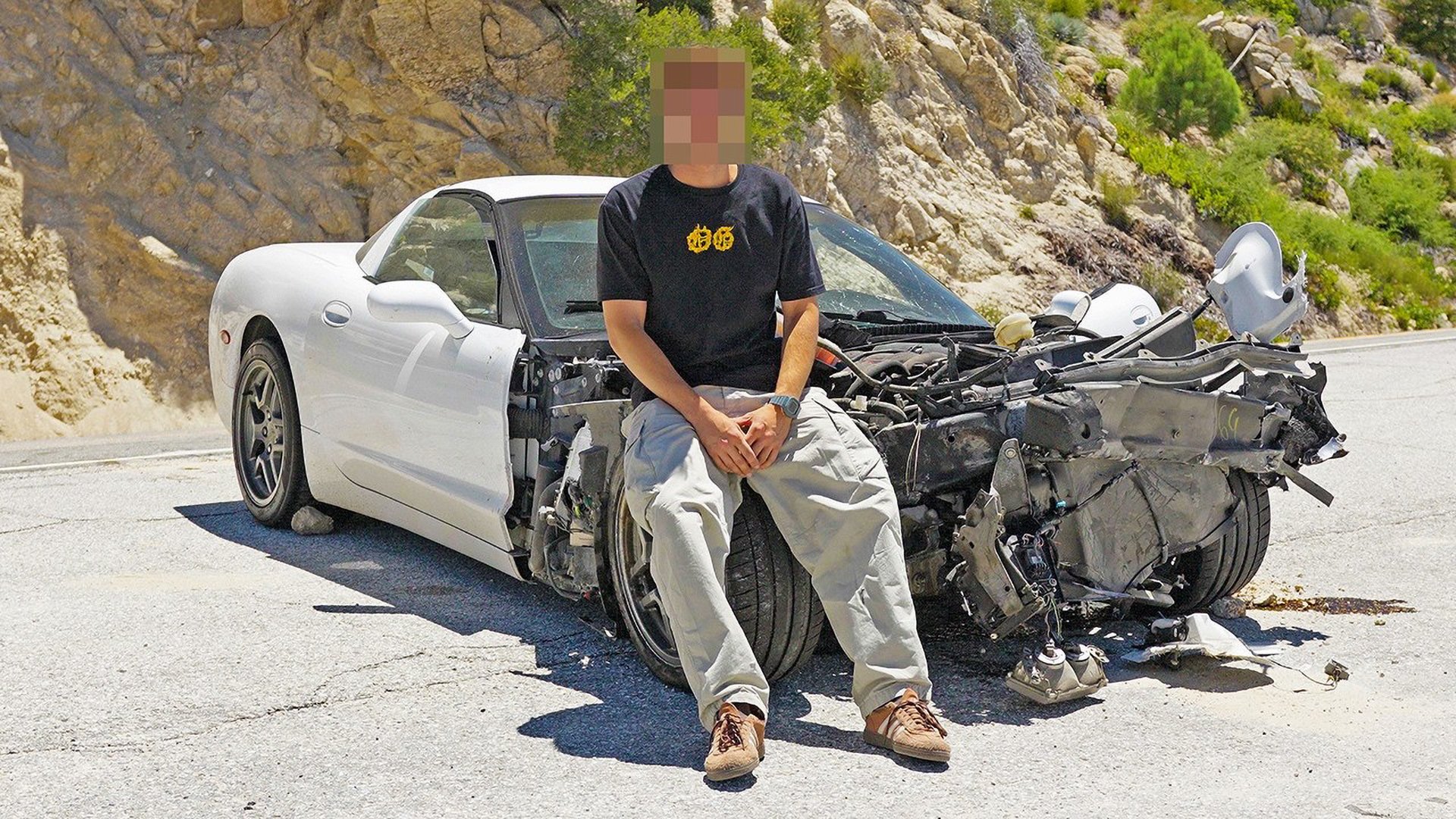


A man stands inside a hairpin turn on Angeles Crest Highway, middle finger raised at drivers who apex across double yellow lines. That image, from a video by self-professed canyon carver Evan Sawyer, ignited a fight that has been simmering in the enthusiast community for months. On the other side stands Cort Wagner, a pro-am racing driver who sees the open road differently.
Their clash, documented in a new video from The Drive, is really about a question nobody has a clean answer to: who does a public road belong to?
The tension is old. The consequences are not theoretical.
Late last year, Vince Zampella, the creator of Call of Duty, died on Angeles Crest when the Ferrari 296 GTS he was driving struck a concrete barrier exiting a tunnel. His passenger, Zachary Marks, also died. Zampella was experienced behind the wheel. He still made the kind of mistake anyone can make at speed on a public road, where there are no runoff zones, no tire walls, no corner workers waving yellow flags.
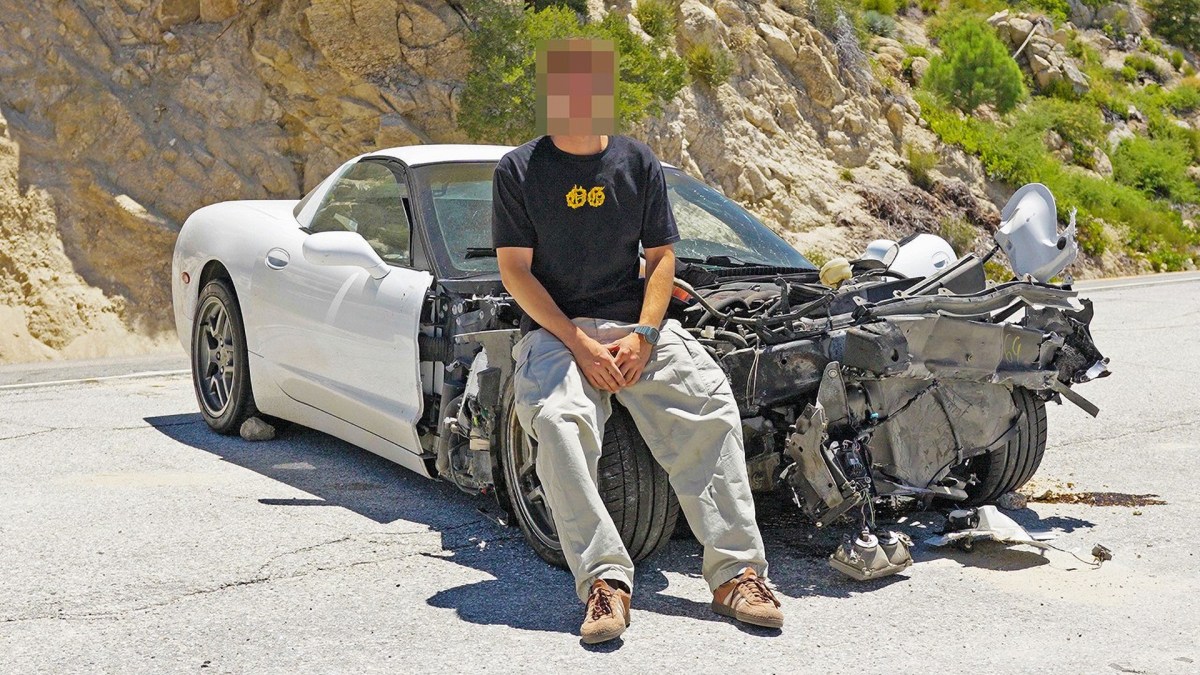
That crash hangs over the entire debate like a cloud that refuses to move. The survivorship bias among skilled canyon drivers is thick. Years of clean runs breed the conviction that the road is their domain, that talent and familiarity equal safety. It doesn’t. It just means they haven’t been wrong yet.
The Drive’s editor-in-chief, Kyle Cheromcha, took cameras up to Angeles Crest and asked enthusiasts about their personal limits. The answers were more measured than the online arguments suggest. One driver said he never exceeds 70 percent of his own ability, deliberately staying well below the car’s capability to leave room for gravel, blind corners, the unexpected.
Another put it plainly: driving at ten-tenths on a public road leaves zero margin for error. A third offered the simplest math of all. If I get to live another day, come back here another day, that’s a win.
Those are the voices that rarely go viral. The algorithm rewards the guy flipping the bird and the guy ripping a double-apex at eight-tenths on a two-lane road with oncoming traffic he cannot see.
The uncomfortable truth is that there is far more ordinary traffic in the world than there are canyon heroes. Even on roads that feel abandoned, a minivan, a cyclist, a family in a rental car can appear around a blind curve at any moment. There is exactly one place where that variable goes to zero, and it has a tech inspection line and a flag station.
Roads like Angeles Crest, Tail of the Dragon, and Mulholland exist in a strange regulatory limbo. Speed limits are posted and seldom enforced with any consistency. The culture of spirited driving on these roads is decades old and deeply embedded. Nobody is going to legislate it away, and no YouTube video is going to shame it into submission.
What the Sawyer-Wagner feud reveals is that enthusiasts cannot even agree on what responsible spirited driving looks like. One man’s safe margin is another man’s reckless endangerment. There is no shared code, no handshake agreement, no governing body. Just asphalt, gravity, and the persistent human belief that the worst outcome is always someone else’s problem.
The road doesn’t care about your skill level. It doesn’t care about your lap times at Willow Springs or your track day record. It just sits there, equal parts invitation and trap, waiting for the next person who confuses confidence with certainty.

Share this Story