
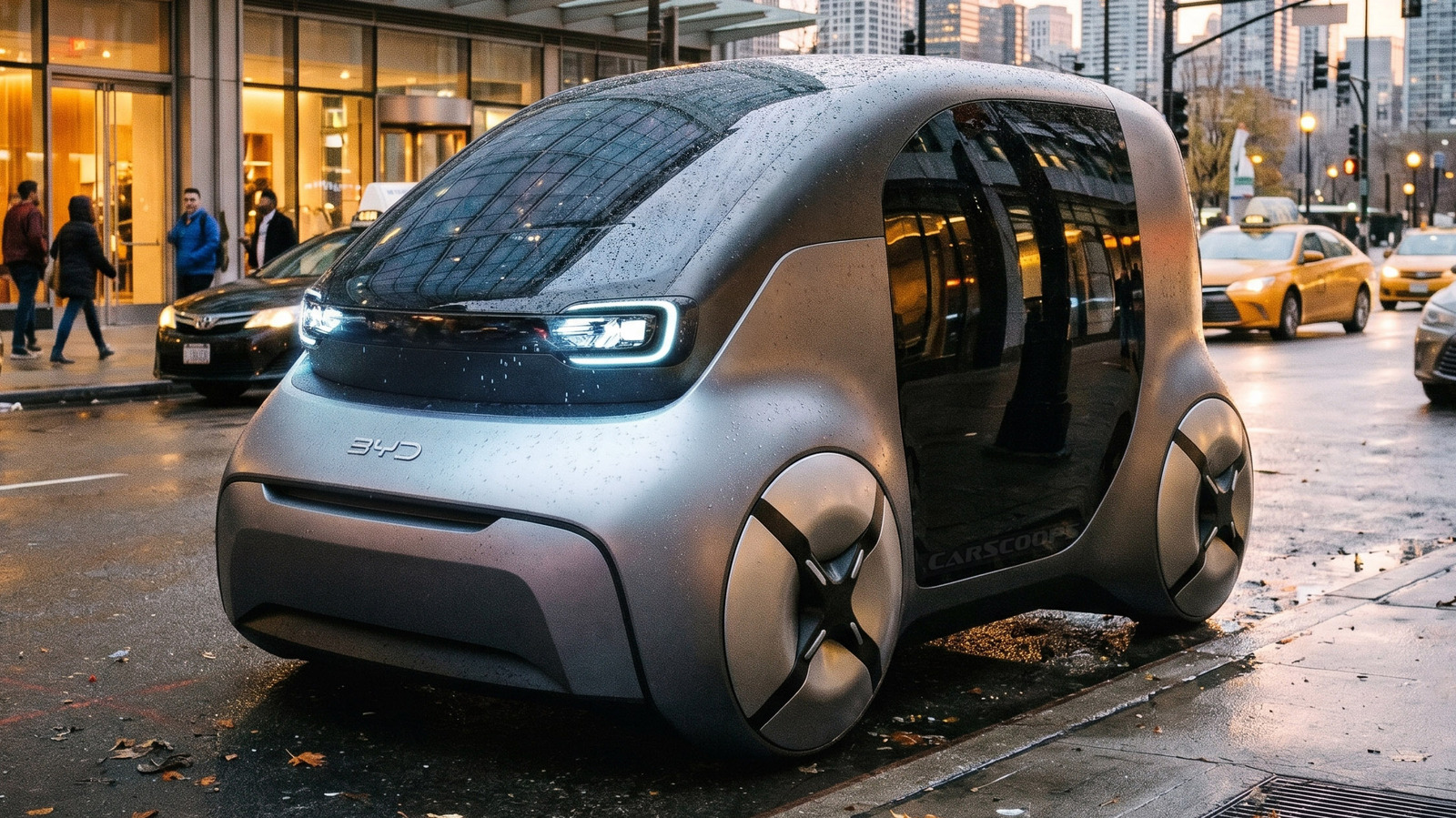


The same company that pushed the Yangwang U9 Extreme past 500 kph has filed paperwork for a car that looks like it could fit in the U9’s shadow.
Design patent drawings filed with China’s National Intellectual Property Administration in December 2025 show a two-door hatchback so compact it makes BYD’s current entry model look roomy. There are no specs, no name, and no timeline.
Just shapes, and the shapes say a lot.
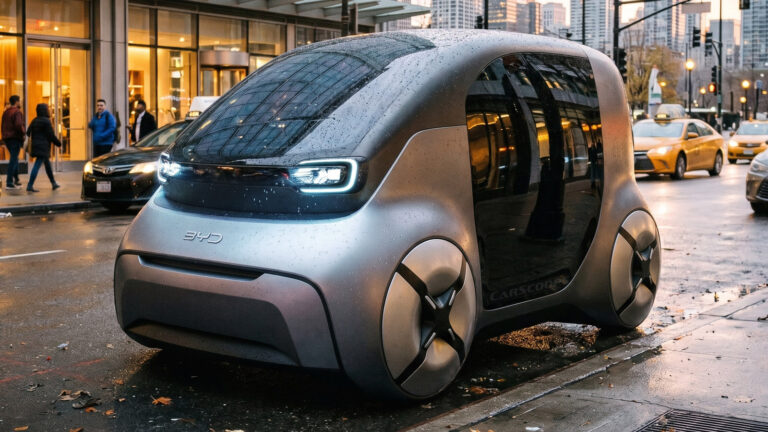
The drawings show single-volume proportions with almost no overhang at either end. C-shaped LED lights sit front and rear. The doors appear to be glass, and the A-pillars are hidden, so the greenhouse reads as one continuous bubble until thick B-pillars break it up above muscular rear fenders.
There are two bumps on the roof, mirrored graphics on both bumpers, and a glass tailgate with a spoiler folded into the roofline. The wheel covers wear a four-spoke pattern that belongs in a science fiction prop department.
There are no mirrors. There are no door handles.
That combination tells you this is a design study in its current form, not something ready for a dealer lot. Cars without mirrors don’t pass homologation in most of the world, and glass doors tend to vanish somewhere between the studio and the stamping plant.
The names on the filing deserve attention. The patent credits Wolfgang Egger, BYD’s global design chief, alongside Zhao Binggen, Xu Ziyan, Huang Xi, and Zhang Xi.
Egger is the man who penned the Alfa Romeo 8C Competizione. He passed through Seat, Audi, and Lamborghini before BYD hired him in 2017, and he now sets the visual direction for Denza, Fangchengbao, and Yangwang.
When the head of design puts his name on a city car sketch, it isn’t an intern’s weekend project.
Look at the lineup and the gap is obvious. The Seagull, sold as the Dolphin Surf, Dolphin Mini, or Atto 1 depending on the market, is the cheapest BYD most of the world can buy. It measures 148.8 inches long.
In Japan, BYD has already gone smaller with the Racco kei wagon at 133.7 inches. That car was built for a specific Japanese regulatory box, not for export.
The new Smart #2 tops out at 108.8 inches. Nothing in BYD’s global catalog comes close to that footprint.
Smart, now a joint venture between Mercedes-Benz and Geely, owns that space almost by default. Plenty of other Chinese microcars crowd it at home. A tiny BYD two-door with an Egger body would walk straight into both fights, in China and in European city centers where parking spots are measured in centimeters.
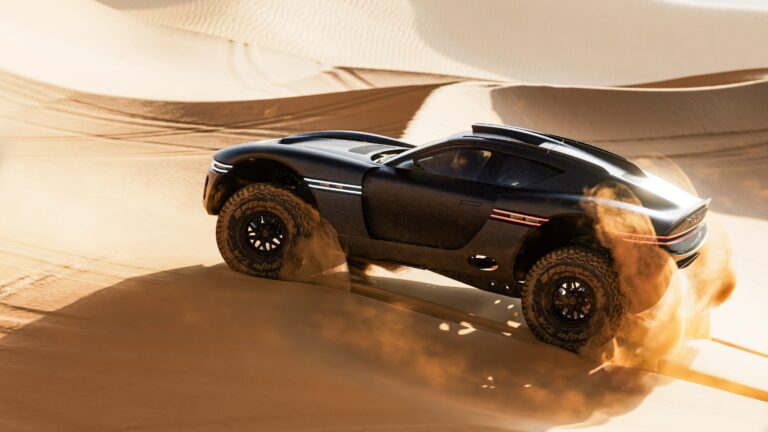
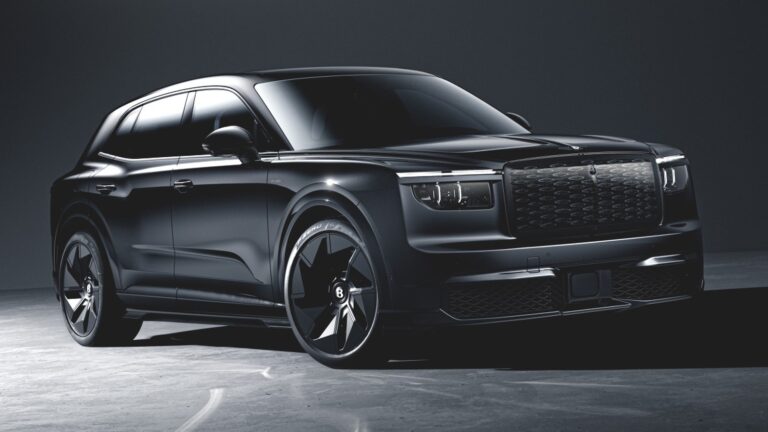
The timing is hard to ignore. In a short span BYD has claimed a top speed record, unveiled the Yangwang Altior sedan to chase Rolls-Royce buyers, and landed a kei car in one of the most protective car markets on earth.
A hypercar at the top. A limousine just below it. Now possibly a city pod at the bottom.
None of that guarantees this car exists beyond a filing cabinet. Automakers patent designs constantly, sometimes to protect an idea, sometimes to fence off a look a rival might borrow. Most never turn a wheel.
BYD hasn’t said a word about it.
The drawings are public now, though, and the measuring tape is already out. Somewhere in the 40 inches between a Seagull and a Smart, BYD has left a door open.

Share this Story