
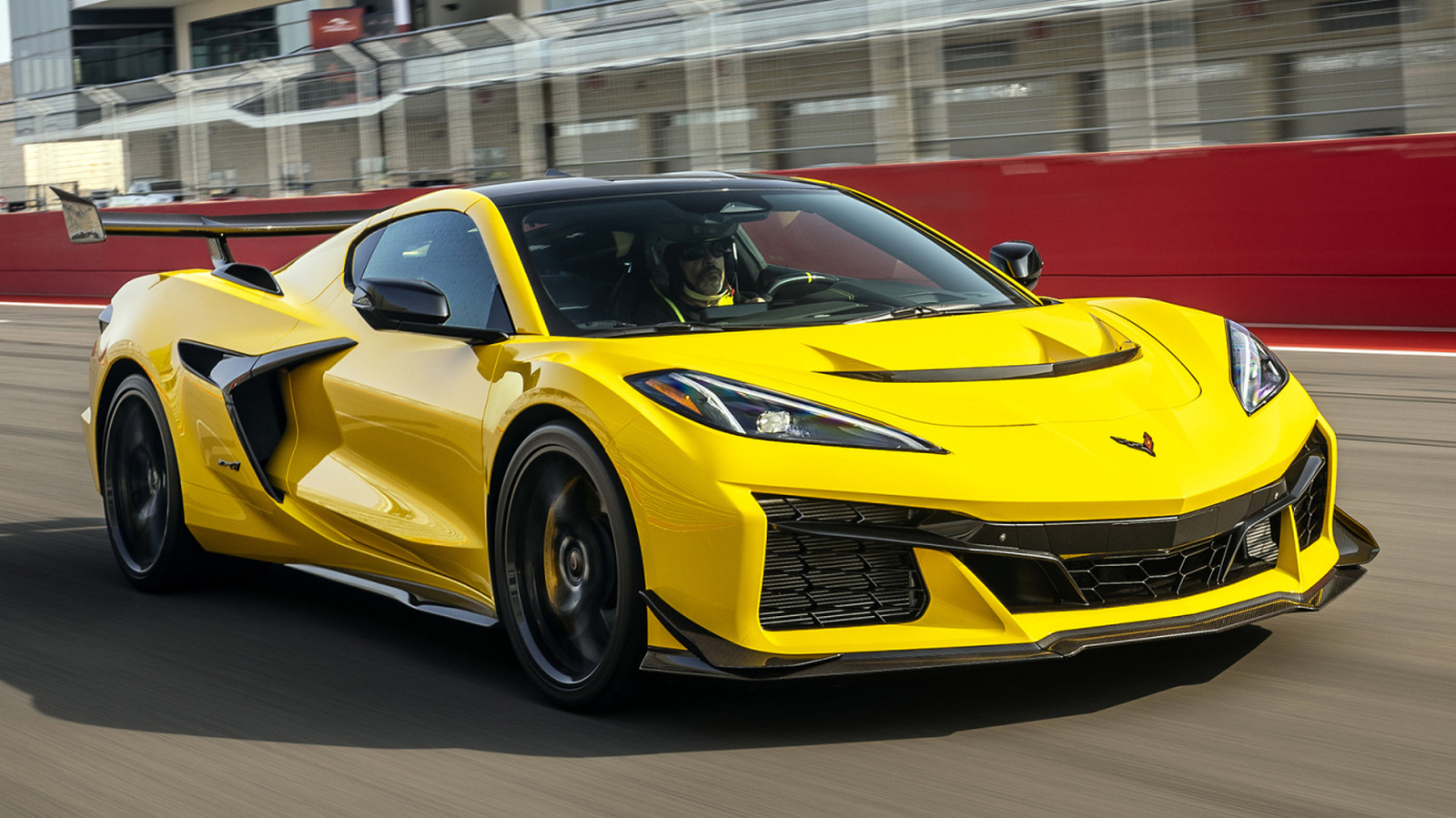


For seven years, the McLaren Senna sat untouched at the top of Car and Driver’s Lightning Lap leaderboard. A purpose-built, million-dollar British track weapon with active aero and a curb weight barely north of 3,000 pounds, it seemed untouchable. Then Chevrolet showed up with a flat-plane-crank V-8, 1,064 horsepower, and a price tag that wouldn’t even cover the Senna’s options list.
The 2026 Chevrolet Corvette ZR1 has officially set a new Lightning Lap record at Virginia International Raceway with a time of 2:34.2, shaving 0.7 seconds off the Senna’s 2:34.9 benchmark from 2019. It also posted the highest speed ever observed at Lightning Lap, hitting 179.0 mph on the Front Straight and dethroning the McLaren 765LT’s 174.6 mph mark from 2021.
Let that sink in. A rear-drive American car with a base price of $216,380 just humiliated a nearly million-dollar hypercar on the same circuit.
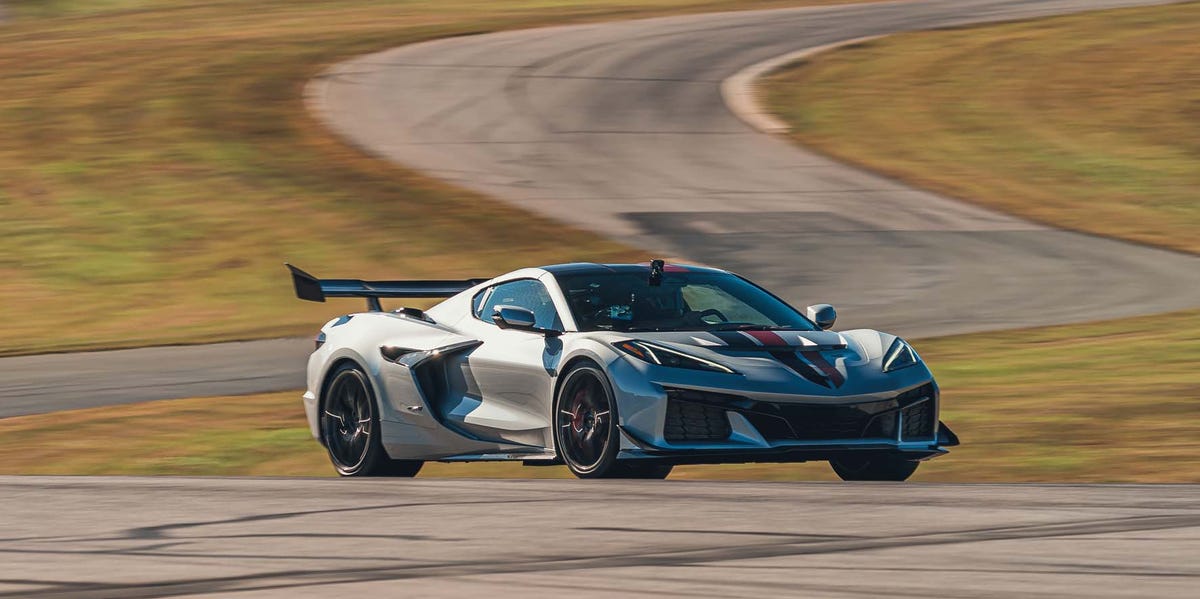
The numbers tell a great story. The Senna weighed 3,030 pounds and made 789 horsepower. The ZR1 tips the scales at 3,899 pounds and produces 1,064 horses.
Work out the power-to-weight ratio and you get an almost eerie parity: 3.7 pounds per horsepower for the Corvette versus 3.8 for the McLaren. The ZR1 was 6.1 mph faster on the Front Straight despite lacking the Senna’s active aerodynamics. It also clobbered the Climbing Esses record with an average speed of 141.2 mph, which was 5.2 mph quicker than the Porsche 911 GT3 RS managed two years prior.
This wasn’t some low-effort press-car stunt, either. Car and Driver’s team preheated the ZR1’s wheels and tires in a custom kerosene oven before sessions. Chevy engineers were on hand, manually activating the electric water pump between runs and strapping fans to the heat exchangers.
Getting engine coolant back to ambient took about 15 minutes per run. Eleven sets of Michelin Pilot Sport Cup 2R tires, roughly $28,000 worth of rubber, were consumed in the process. One carbon-fiber front wheel, a $6,060 part, was destroyed when the car clipped a curb while threading the Climbing Esses at 166.2 mph.
The ZR1 isn’t without flaws. Car and Driver noted that the electro-hydraulic brakes felt uncommunicative, eroding confidence heading into VIR’s tightest corners. The testers also wanted a stiffer bucket seat mounted lower, a round steering wheel instead of the flat-bottomed unit, and rearward visibility that qualifies as more than just technically legal.
These are real complaints, but they’re footnotes on an otherwise staggering performance.
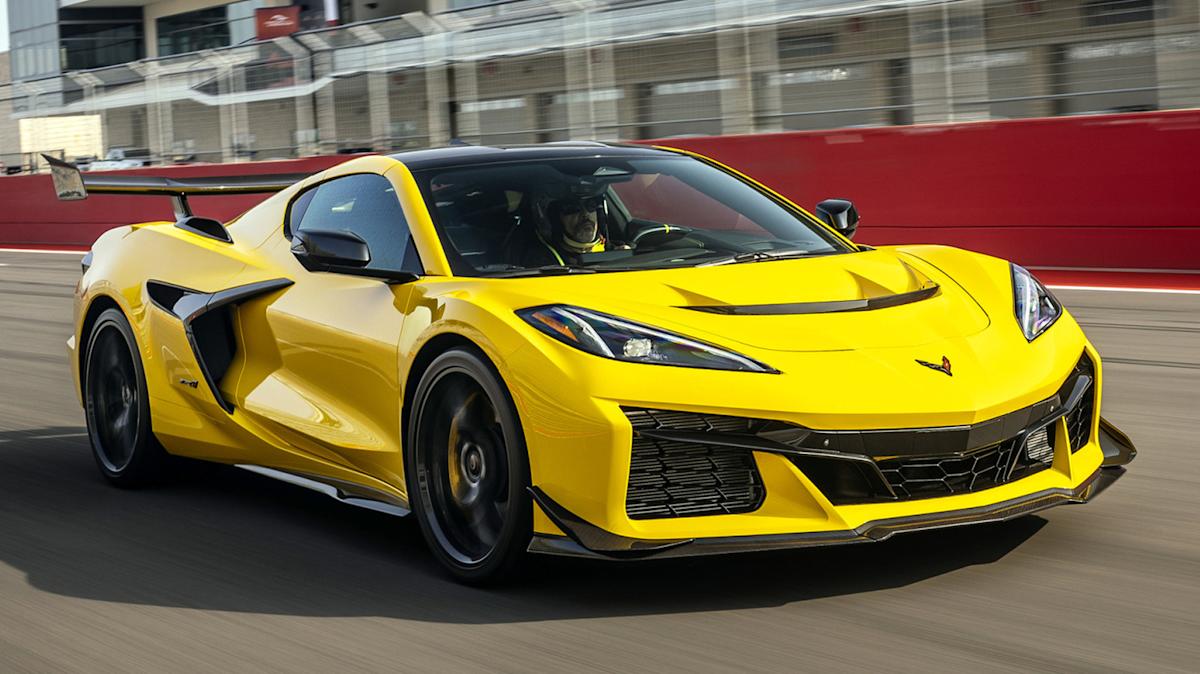
And here’s where the conversation gets uncomfortable for every European exotic maker watching. The ZR1 tested by Car and Driver stickered at $238,695. The Senna it just beat cost $982,816.
You could buy four ZR1s for the price of one Senna and still have enough left over for a set of those pricey carbon-fiber wheels. This isn’t the old narrative about crude American muscle being fast in a straight line but embarrassing in corners. The ZR1 matched or beat the Senna in high-speed cornering, braking zones, and outright velocity, then proved comfortable enough to drive home afterward.
Perhaps the most terrifying part for the competition is what comes next. Chevrolet has already announced the ZR1X, a 1,250-horsepower all-wheel-drive hybrid variant. Car and Driver is already eyeing it for next year’s Lightning Lap.
If the rear-drive ZR1 toppled a seven-year-old record set by one of the most focused track cars ever built, the mind reels at what 186 additional horsepower and four driven wheels could accomplish.
Bowling Green just sent a very loud, very American message to Woking, Stuttgart, and Sant’Agata Bolognese: the record book belongs to the Corvette now. Come and take it.
Share this Story