
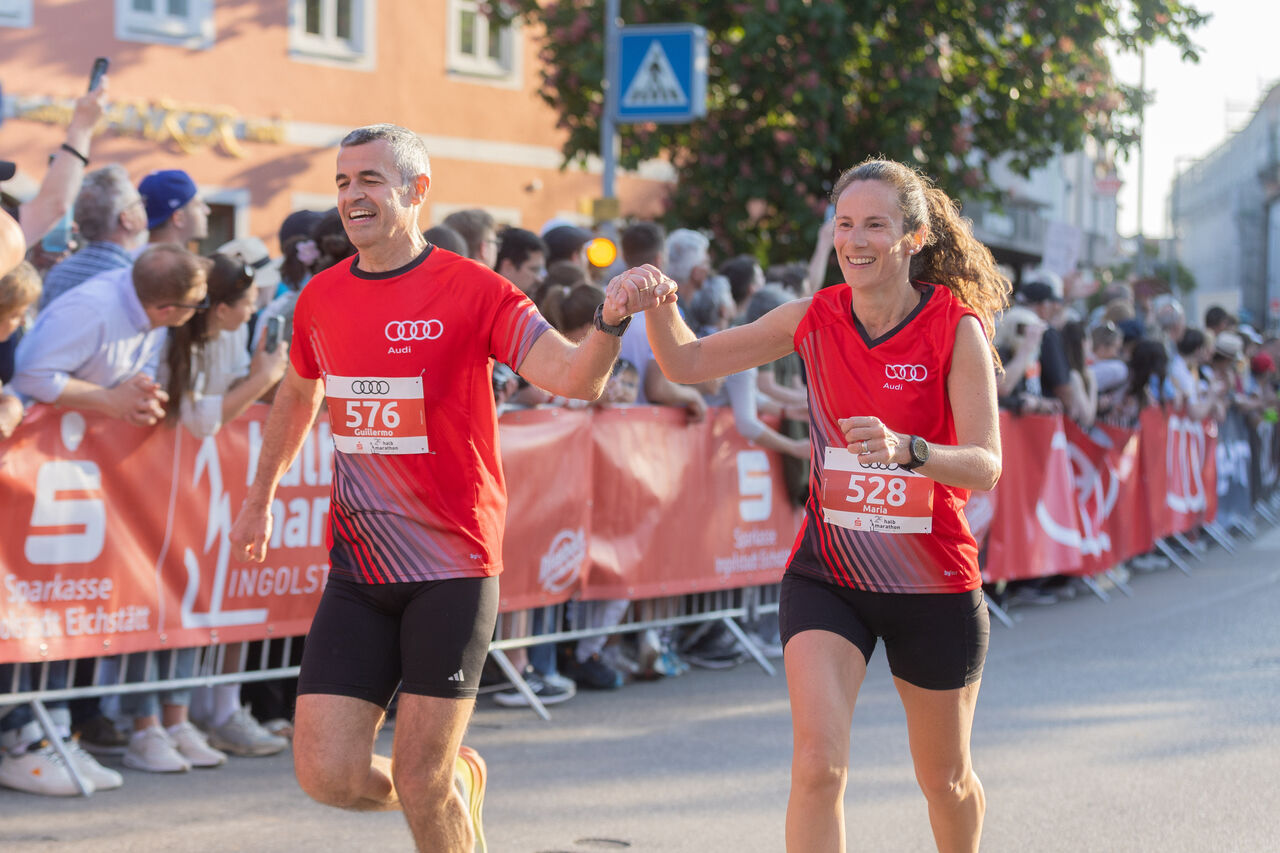


Approximately 7,500 runners will line up in Ingolstadt on May 9 for the city’s 25th annual half marathon. Audi, the town’s largest employer and economic engine, will be right there with them — not just writing checks, but fielding 500 employees as racers and deploying dozens more as volunteers handing out water in Klenzepark.
It’s a small-town gesture from a company navigating very big-picture problems.
Audi has sponsored this race since its inception a quarter century ago, and Chief Human Resources Officer Xavier Ros is leaning hard into the hometown narrative. Ingolstadt is Audi’s home — and we are deeply connected to the region,” Ros said. “The half marathon is a symbol of solidarity, health, and quality of life.”
Solidarity is a carefully chosen word. Ingolstadt’s economy revolves around Audi the way Detroit once revolved around GM, and the automaker has spent the last two years trimming costs, restructuring operations, and preparing for an electric future that requires fewer hands on the assembly line. When your workforce is anxious, a company fun run is one of the cheaper ways to remind people you still care about the zip code that built you.
This year Audi added a charity layer. For every kilometer logged by an employee in the internal Audi championship, the company donates to five regional organizations focused on inclusive sports. Audi volunteers will also staff a cheering zone and help run a children’s race.
The day after Ingolstadt, Audi picks up the baton 150 kilometers south at the Trollinger Marathon near its Neckarsulm plant. Two triathlons in Ingolstadt and Heilbronn follow in June. Add sponsorships of ERC Ingolstadt, FC Ingolstadt 04, and TSG Hoffenheim, plus amateur club support through its Team Spirit campaign, and you get a portrait of a company that treats regional sports like a second product line.
None of this is accidental. Automakers across Germany are renegotiating their social contracts with the communities that house their factories. Volkswagen Group, Audi’s parent, fought a bruising battle with unions last year over plant closures and job guarantees.
Audi itself announced significant headcount reductions at Ingolstadt and Brussels. In that climate, every charity kilometer and every volunteer hour becomes a data point in a larger argument: We are still here, and we still belong to you.
Ros framed it in HR language. “We want to offer our employees specific opportunities to take responsibility for social cohesion,” he said. “It makes me proud to see how many Audi employees are participating — whether they’ll be running, cheering, or volunteering.”
Corporate citizenship has always been part public relations, part genuine community investment, and the ratio shifts depending on how much pressure the company is under. Right now, Audi is under plenty. The European EV market remains sluggish, Chinese competitors are eating into margins, and tariff threats from Washington add another layer of uncertainty.
Against that backdrop, 500 employees lacing up running shoes in Bavaria is a modest play. But modest plays accumulate. They remind a city that the factory on the edge of town isn’t just a balance sheet — it’s a neighbor that shows up on race day, hands you a cup of water, and cheers you across the finish line.
Whether that’s enough to sustain goodwill through the hard restructuring decisions still ahead is a longer race entirely.

Share this Story