
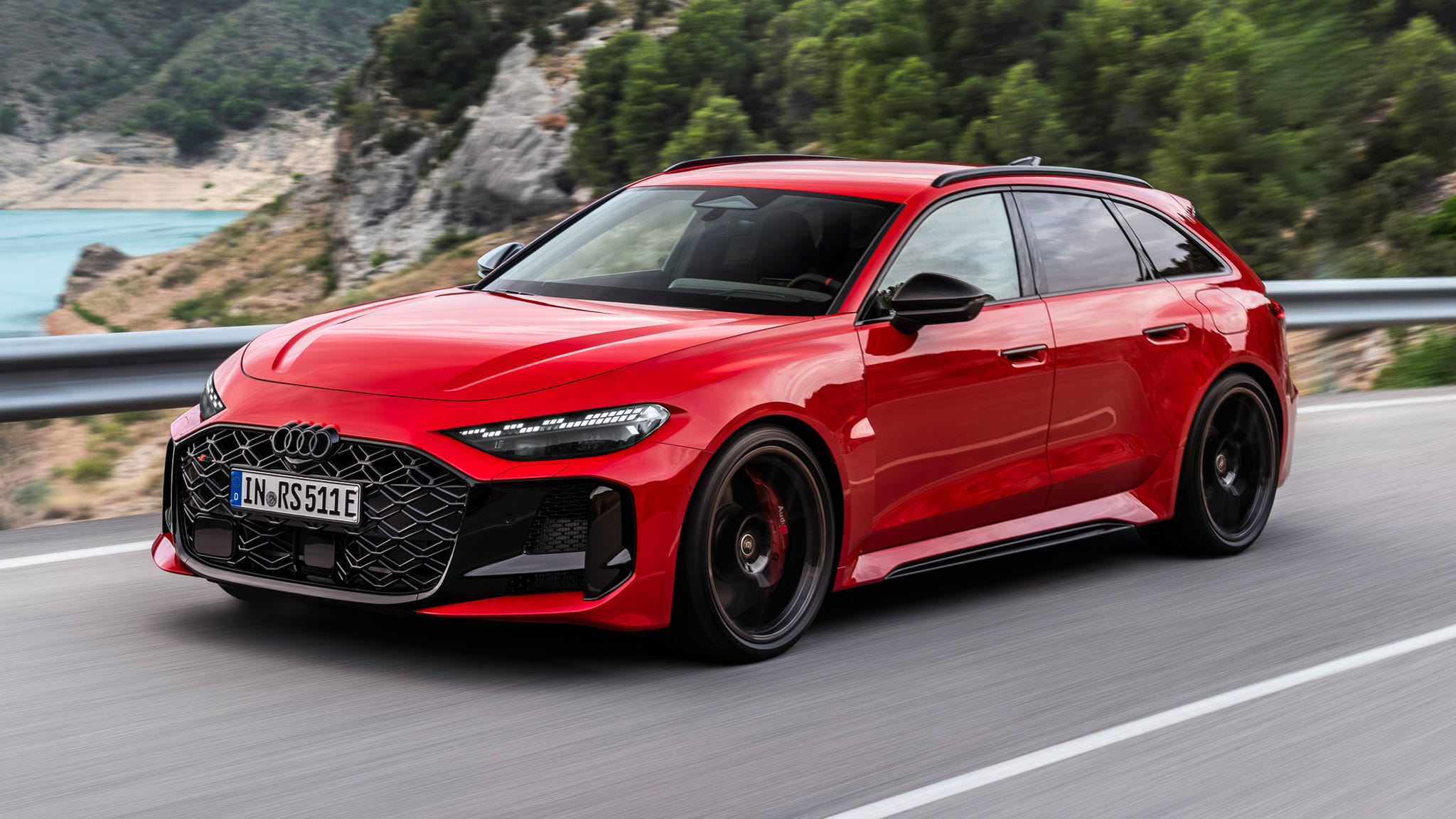


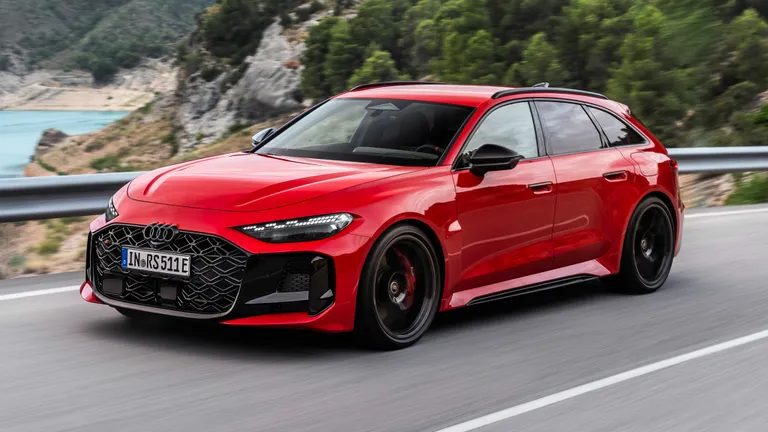
Audi Sport just pulled the wraps off the 2027 RS5, and it’s a machine that will either thrill you or infuriate you — possibly both at the same time. Available as both a hatchback sedan and the beloved Avant wagon, the new RS5 marks the first time Audi has bolted an electric motor onto one of its RS-badged powertrains. The result is 630 horsepower and 608 lb-ft of torque from a plug-in hybrid system that pairs a revised 2.9-liter twin-turbo V-6 with a 175-hp electric motor.
The V-6 alone cranks out 503 hp and 443 lb-ft, a 66-hp jump over the outgoing model thanks to variable-geometry turbochargers, higher injection pressure, and a reworked intake. Audi claims Miller cycle combustion cuts fuel consumption by up to 20 percent under heavy loads. Combined system output puts the RS5 squarely in the crosshairs of the 604-hp Mercedes-AMG E53 PHEV.
Audi says 0-62 mph happens in 3.6 seconds, but that number looks sandbagged. The previous RS5 Sportback hit 60 mph in the same time with 186 fewer horsepower and no electric assistance. Expect real-world performance to embarrass that claim.
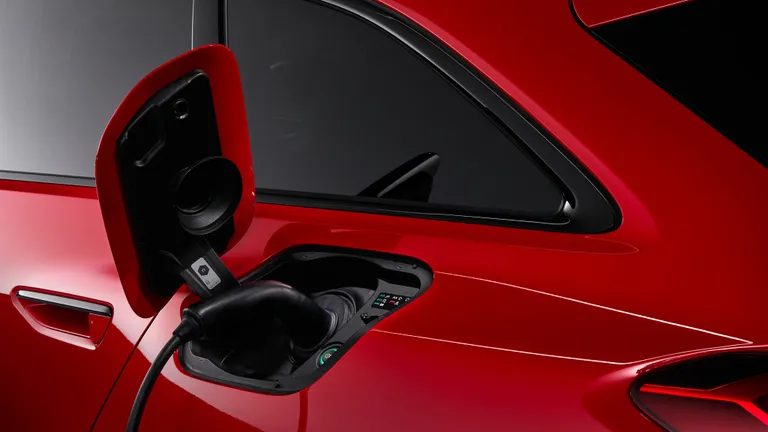
The hybrid system runs on a 25.9-kWh battery — 22.0 kWh usable — mounted beneath the trunk floor. Audi quotes up to 54 miles of all-electric city driving. The 400-volt architecture tops out at 11 kW charging, good for a full battery in about 2.5 hours.
That’s not fast by modern EV standards, but this isn’t really an EV. The electric motor also eliminates the need for a traditional 12-volt starter.
Here’s where it gets interesting — and potentially annoying. To access peak power and unlock the full potential of the new torque-vectoring system, the battery needs to be at least 90 percent charged when using RS Sport or RS Torque Rear drive modes. Audi says the car is programmed to hold charge in those modes, but it’s still a constraint that pure combustion rivals don’t impose.
The torque-vectoring system itself is genuine engineering muscle. Called Dynamic Torque Control, it uses a battery-powered permanent-magnet motor to actively shuffle torque between the rear wheels via an actuator and overdrive gears. Recalculations happen 200 times per second.
The Quattro all-wheel-drive system can split torque from 70/30 front-to-rear all the way to 15/85, meaning yes, you can drift this Audi.
Now for the elephant in the room: weight. The sedan tips the scales at 5,192 pounds. The Avant hits 5,225. That’s more than 1,000 pounds heavier than the last RS5 Sportback tested, which weighed 4,103 pounds.
Enthusiast forums are already roasting the number. One commenter pointed out the RS5 now weighs more than his truck. Another suggested the industry should just measure power-to-weight ratios instead of quoting raw horsepower figures that mask the bloat.
The bodywork is widened by 3.5 inches with aggressive fender flares, a honeycomb single-frame grille, and Audi Sport’s signature oval exhaust tips. An available Sport package adds 21-inch Phantom Black wheels, carbon-ceramic brakes with bronze calipers, an RS sport exhaust, and bumps the top speed to 177 mph.
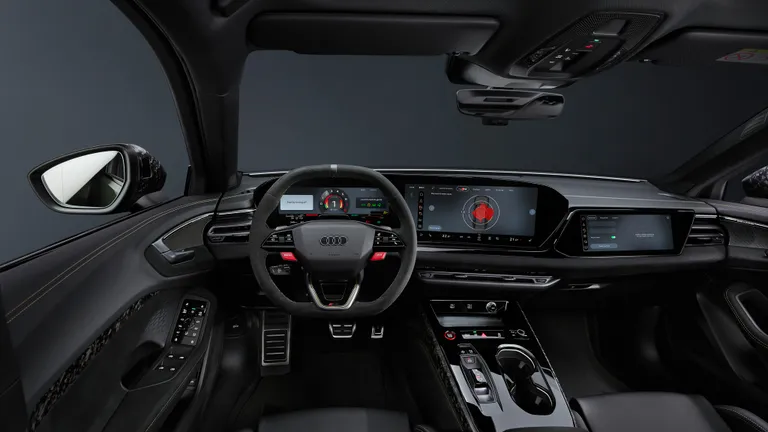
Inside, the RS5 shares its dual-screen layout with the A5 family — an 11.9-inch digital cluster and 14.5-inch touchscreen — but adds sector timing for track days, drift-angle logging, and performance analytics on the passenger-side display.
Pricing stings. German-market figures start around $125,000 for the sedan and $127,000 for the Avant. The outgoing RS5 Sportback started at roughly $81,000 in the U.S. for 2025. Whatever Audi charges stateside, expect a significant premium.
European orders open in Q1 2026 with summer deliveries. U.S. availability hasn’t been confirmed, but given the surprising success of the RS6 Avant in America, hopes are high that both body styles will cross the Atlantic. Whether the market will accept a 5,200-pound performance sedan at north of $125,000 is another question entirely.
Share this Story