
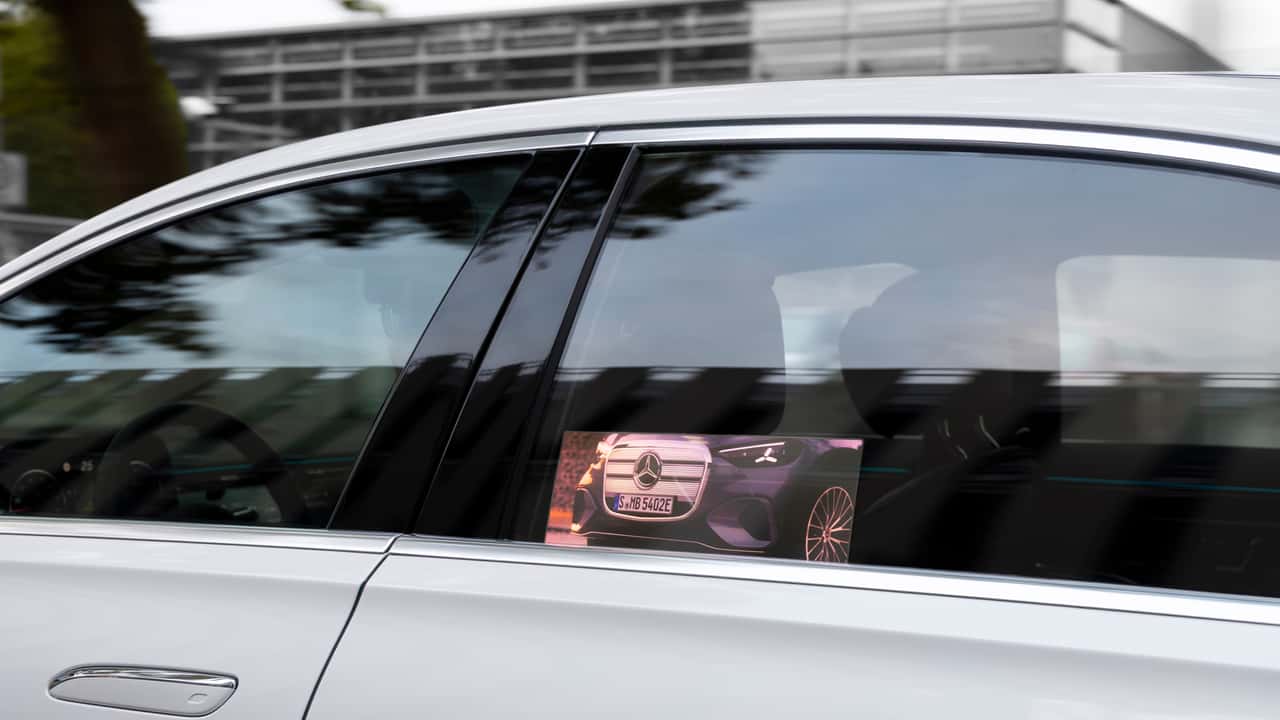


Mercedes-Benz has found a surface it hadn’t yet lit up: the glass. The company is developing LED displays laminated directly into vehicle windows, plus a holographic windshield that can show navigation, video calls, and movies.
This comes from a brand whose former design chief, Gorden Wagener, once mocked BMW and Audi for not going big enough with their displays. The philosophy outlived his tenure.
Mercedes frames the window work as safety, not spectacle. LED elements sealed inside the rear glass would let the car talk to the traffic behind it with warning signs, safety symbols, and traffic information.
Two versions are in development. Mini-LEDs cover larger areas and could handle brake lights and hazard warnings, while micro-LEDs serve smaller, higher-resolution zones and can run animations.
When switched off, the elements are designed to stay almost invisible. The glass looks like glass until the car decides it has something to say.
The windshield project goes further. A projector buried in the instrument panel beams images onto a transparent film laminated into the glass. Holographic optical elements in that film reflect the light selectively, so content stays readable in direct sunlight.
The content is also angle-specific. The driver can’t see what plays on the passenger side, and the passenger can’t see the driver’s view.
Mercedes says the display appears only on demand rather than turning the windshield into a permanent panel. That restraint is welcome. It’s also the bare minimum when the screen sits between a driver and the road.
Then there’s the bill nobody puts on a slide. A side or rear window is already a costly part to replace, and once electronics are laminated inside, a cracked pane or a minor fender-bender stops being a glass job and becomes an electronics job.
Mercedes hasn’t published repair pricing, and none of this hardware has a production date. Owners will want both numbers before they want animations in their rear window.
Audi is chasing the same goal with a lighter hand. The new Q7 and Q9 project animated turn-signal arrows onto the pavement from projectors in the headlights and taillights, timed to the conventional indicators.
The target audience is cyclists, pedestrians, and other drivers, especially at night or when a standard blinker is hard to spot. Some Audi models already use OLED taillights to flash warning symbols at following traffic.
Same mission, different canvas. Audi lights up the road and the lamps, while Mercedes wants to light up the glass the occupants look through.
The contrast sharpens when you look at who else is talking about screens right now. Alfa Romeo says it’s done with huge displays. Bugatti argues screens aren’t luxury.
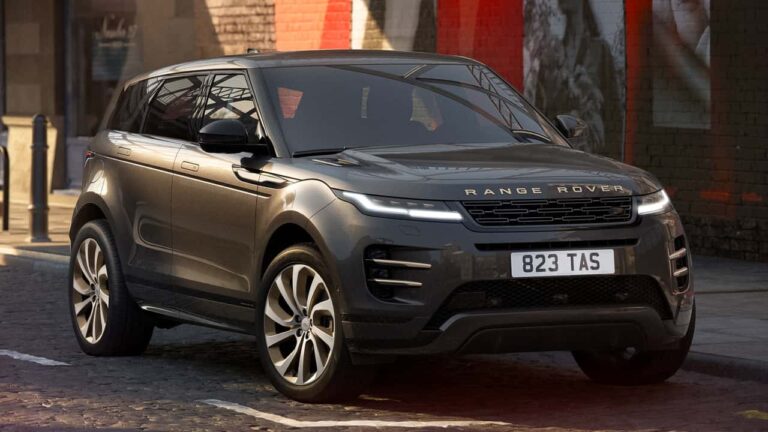
Bentley turned down a front passenger screen, insisting technology has to earn its place. Range Rover has promised to shrink its displays because drivers are tiring of the tech load.
Mercedes is reading the same market and walking the other way. It’s betting the problem was never the screen, only where it was mounted.
Its rivals are pulling glass out of the dashboard. Mercedes is putting electronics into the windows.
The holographic film and the laminated LEDs remain in development. The arguments about cost, distraction, and taste are already well underway.
Share this Story