
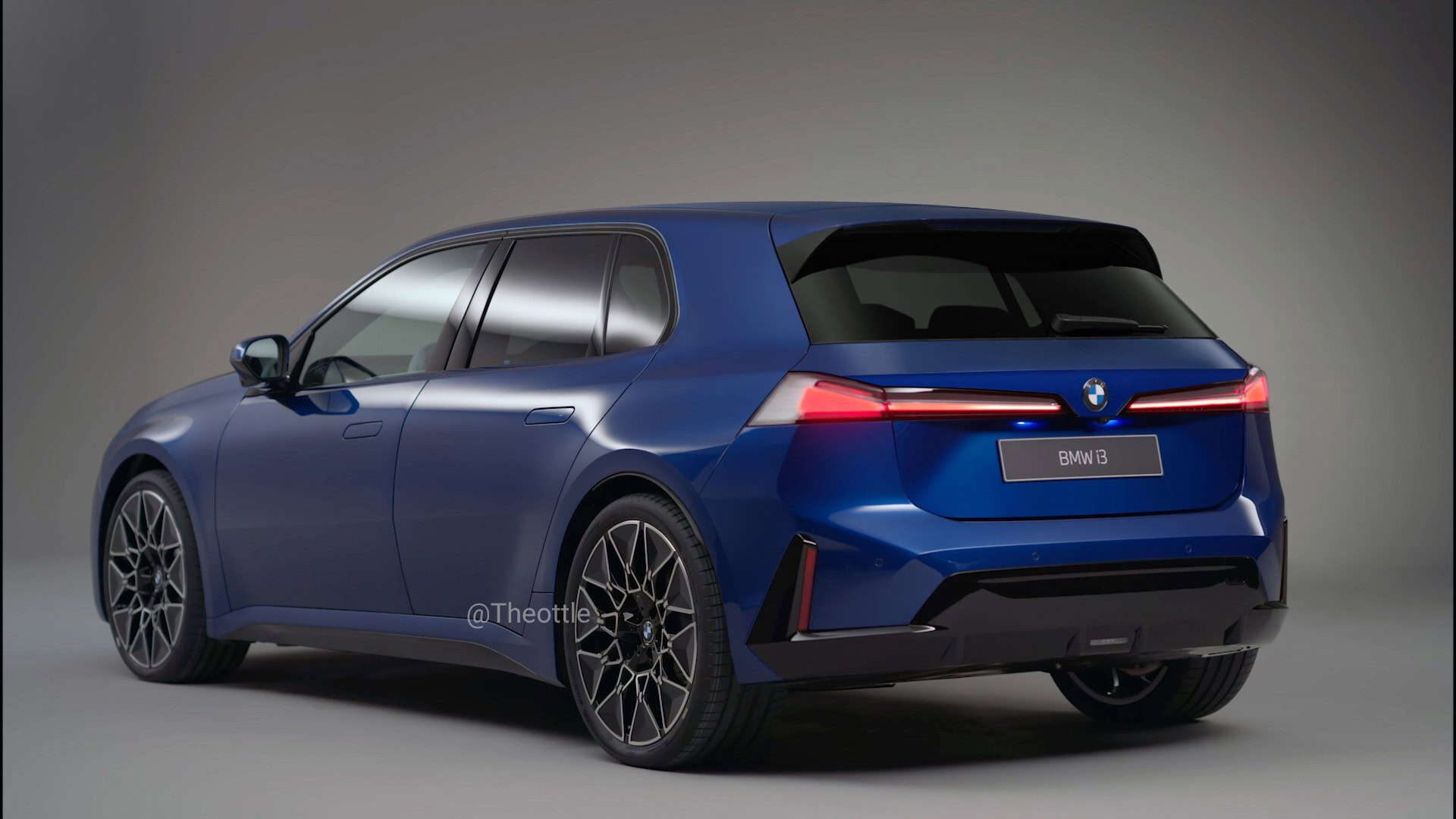


BMW used its third-quarter earnings call on November 5 to repeat a promise: “another fully electric BMW model in 2028” for the high-volume entry premium segment. Management offered no name, no price and no plant.
They didn’t need to. The car is widely believed to be the compact known internally as NB0, and it is expected to wear the i1 badge.
The pledge first surfaced at BMW’s Capital Market Day in September. Saying it twice in two months, on an earnings call, is how a carmaker tells investors a program has survived the budget meetings.
The detail that should get enthusiasts’ attention is the drive layout. The i1 is expected to put its single motor at the back.
That reverses a decision BMW made years ago. The 1 Series abandoned rear-wheel drive with the F40 generation, and the current F70 stayed front-drive.
Purists complained. BMW shrugged and kept selling them.
Now the electric platform is handing back what the combustion car took away. The i1 is expected to share the 800-volt architecture and sixth-generation eDrive used in the iX3 and i3. On those cars, single-motor versions drive the rear wheels and xDrive models add a front motor.
The awkward part is that BMW won’t be choosing between philosophies. The F70 is expected to remain in production into the early 2030s, so a front-drive 1 Series and a rear-drive i1 would share showroom floors.
Insiders point to five versions: i1 20, i1 30, i1 30 xDrive, i1 40 and i1 M50 xDrive. The two xDrive cars carry dual motors.
The M50 xDrive would be an M Performance model, not a full M car. It would also be the smallest BMW yet to carry an electric M Performance badge.
Expect it to sit below the i3 M60 xDrive. BMW hasn’t published that car’s output, but the iX3 M60 xDrive makes 450 kW (603 hp), and the sedan is expected to use the same hardware. M50 ranks under M60 in BMW’s naming, so the hatch’s flagship should land beneath that figure.
A small hatch doesn’t need 600 hp to be quick. It needs light weight and a well-sorted rear axle, which is the part BMW has been missing in this class for years.
The smaller footprint brings trade-offs. A smaller car means a smaller battery.
For reference, the i3 50 xDrive’s 108.7-kWh pack is rated at up to 912 km (567 miles) WLTP, with BMW estimating 440 miles on the EPA cycle. The entry i3 40 xDrive carries 82.8 kWh and is rated at 710 km (441 miles) WLTP. The i1 is expected to fall below that.
Charging may follow the same pattern. Neue Klasse models start at 300 kW and climb to 400 kW, and to 460 kW on the iX5.
The i3 40 xDrive peaks at 300 kW. BMWBLOG estimates the i1 could end up closer to that number than 400 kW, a guess the outlet itself flags as unconfirmed.
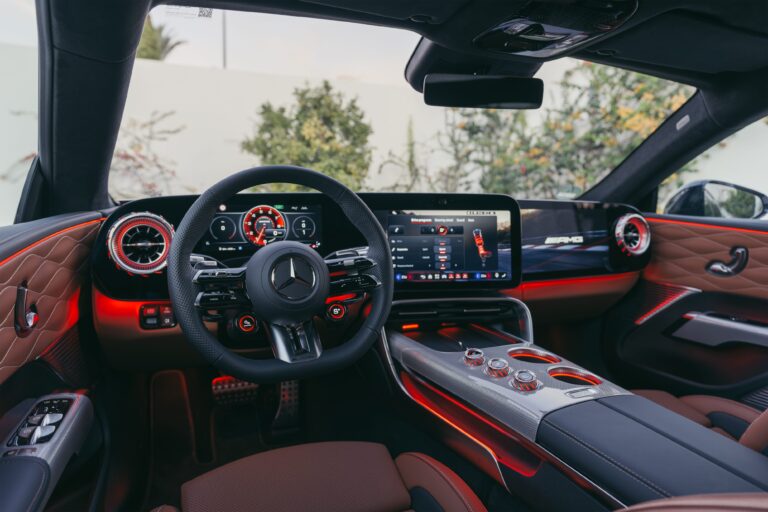
Inside, expect the familiar Neue Klasse setup: Panoramic iDrive, the Panoramic Vision display running along the base of the windshield, a central touchscreen and BMW Operating System X.
Nobody has photographed a prototype. The exterior remains unknown beyond a five-door hatchback shape.
Production is expected to start in spring 2028. The i1 should slot between the electric MINI Cooper and the iX1 and iX2, with Audi’s new A2 among its targets. Europe is the primary market.
Americans shouldn’t hold their breath. A US version is rumored but unconfirmed, and it may be too early for BMW to have decided.
If anything from this family crosses the Atlantic, the stronger candidate is the compact electric Gran Coupe expected to follow, codenamed NB8 and likely called i2.
Share this Story