
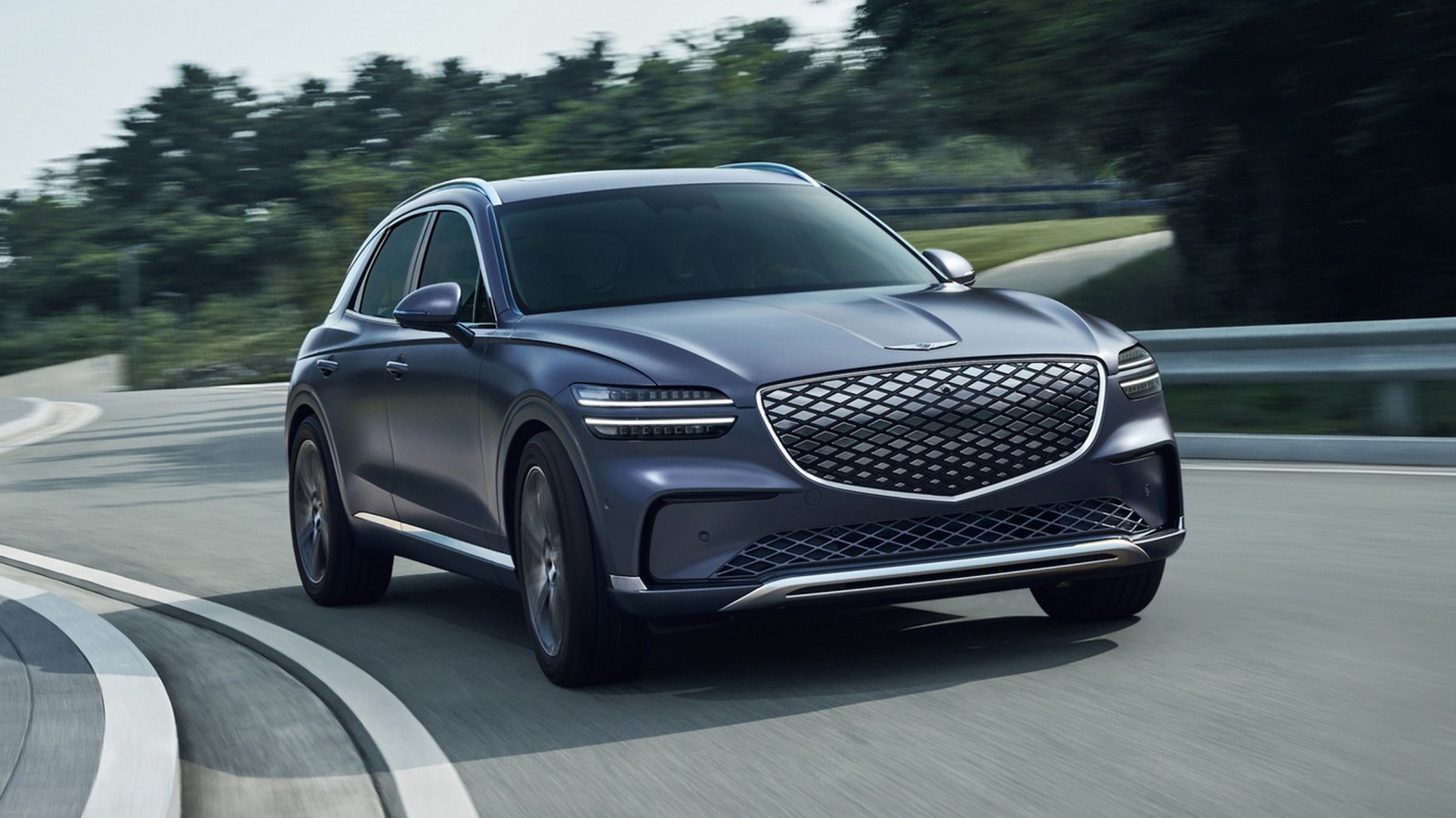


Genesis wants 640 miles from a single SUV. To get there, it is cutting the battery to less than half the size of a comparable EV and bolting a gasoline engine on board.
Hyundai’s luxury brand laid out the plan at a roundtable during the LA Auto Show. The vehicle is an extended-range electric SUV, and Hyundai’s product roadmap puts it in the first half of 2027.
If that date holds, Genesis beats Scout Motors to market. Scout, the Volkswagen-backed brand that built its comeback around rugged EVs with range-extending engines, has owned the idea of the American EREV for months without putting one on the road.
Genesis has not named the vehicle. The brand released a single teaser photo, and the silhouette looks a lot like a GV70.
The company has confirmed only that the EREV will be a D-segment SUV. That narrows it to the GV70 or the GV80.
The larger GV90 has been floated as an EREV candidate before. For now, it looks set to arrive as a pure EV only.
Hyundai is doing the same thing under its own badge. A Santa Fe EREV is due in early 2027, tied to the company’s plant expansion in Alabama.
The engineering is simple. An EREV drives like an EV, with electric motors turning the wheels at all times.
The gas engine never touches the drivetrain. Its only job is to spin a generator and refill the battery, which makes it a power plant riding along in the engine bay.
Owners with a garage outlet can plug in nightly and leave the tank close to empty. Owners without one can fill up with gasoline and let the engine do the charging.
Hyundai says new in-house battery cells will let the smaller pack match the performance of its full EVs. That claim gets tested the first time someone floors one with a depleted battery on a mountain grade.
Ash Corson, who runs product planning at Genesis, framed the move as a matter of choice rather than retreat.
“Some people have a garage, and it’s great because they can charge an EV there. It’s a wonderful experience,” Corson said. “A lot of people don’t.”
He pointed to rural buyers who face long stretches between fuel stops of any kind. “So, I think providing the customer a choice of what powertrain makes sense for them is really key,” he said.
That is a polite way of describing a change in direction. Two problems have kept American buyers away from EVs, charging access and range, and Genesis is fixing both with a fuel tank.
Anyone who drove a Chevrolet Volt a decade ago will recognize the idea. The difference now is that the industry spent the years in between telling customers the gas engine was on its way out.
Genesis still has plenty to answer. Pricing, electric-only range, engine size, fuel economy in extended mode and a firm U.S. delivery date all remain unknown.
What the brand has committed to is the number. More than 640 miles, from a battery less than half the size of the one it was selling as the future.
Scout is still building its factory in South Carolina. Genesis is now racing it to the same customer.

Share this Story