
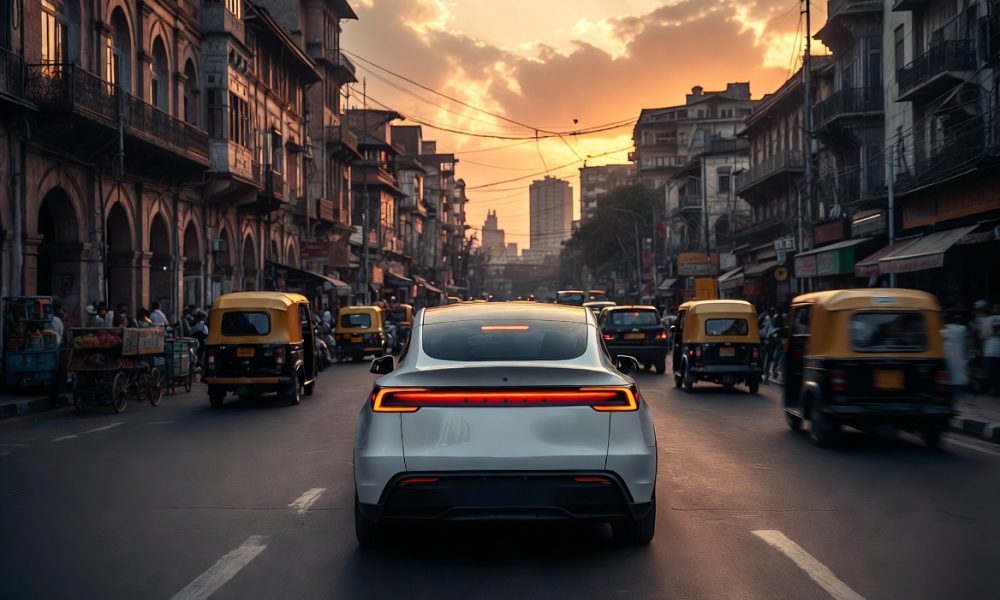


Tesla’s five-year flirtation with India ended not with a bang but with a bureaucratic shrug. India’s Minister of Heavy Industries H.D. Kumaraswamy confirmed on May 19 that Tesla formally notified authorities it will not build a manufacturing facility in the country. The announcement surprised no one who had been paying attention.
The courtship began around 2021, when Tesla hired local staff and pressed New Delhi for lower import tariffs. Tesla wanted to ship cars in cheaply, test demand, then maybe build a plant. India wanted the plant first, then the tariff break. Classic standoff. Neither side blinked, and the whole thing slowly suffocated.
India wasn’t being unreasonable. It offered to slash import duties from a punishing 110% down to 15% on EVs priced above $35,000, provided the automaker committed at least $500 million in local manufacturing investment within three years. Tesla passed.
The tariff impasse was the headline, but the real obstacles ran deeper. India’s EV supply chain remains underdeveloped. Industrial infrastructure outside a few corridors is spotty at best.
Tesla’s vehicles, even at their most affordable, are priced well beyond what the vast majority of Indian consumers can reach. The math never worked, and both sides knew it.
The body language told the story long before the official announcement. In April 2024, Elon Musk abruptly cancelled a trip to India where he was supposed to meet Prime Minister Modi and announce Tesla’s market entry. By July of that year, Fortune reported that Tesla executives had gone silent on Indian government officials entirely. The ghosting was the goodbye.
Here’s the number that explains everything: Tesla’s existing global factories are running at roughly 60% capacity. You don’t pitch investors on a brand-new plant in a developing market when a third of your current production lines are collecting dust. That’s not strategy. That’s negligence.
Tesla will keep selling imported Model Y vehicles through showrooms in Mumbai, Delhi, Gurugram, and Bengaluru. It’s a token presence, enough to maintain a brand footprint without deploying serious capital.
India, meanwhile, isn’t sitting around waiting. The country’s domestic EV market is growing fast, driven by Tata Motors, Mahindra, and a swarm of two-wheeler startups that understand the price points Indian buyers actually live in. BYD has been circling aggressively. The window Tesla once had to enter as the aspirational EV brand in the world’s most populous nation is narrowing by the quarter.
The India retreat fits a broader pattern of retrenchment for Tesla. The company is directing its resources toward AI, robotics, and autonomous driving, businesses Musk believes carry higher margins and faster growth than selling sedans in price-sensitive markets. The Optimus humanoid robot and Full Self-Driving software are where the capital is flowing. A half-billion-dollar factory in Maharashtra was never going to win that internal competition.
India wanted commitment. Tesla wanted concessions. Five years of negotiations produced exactly four showrooms and zero factories.
The lesson isn’t complicated: market access requires more than brand cachet and a famous CEO. It requires showing up with a checkbook and a timeline, and Tesla was never willing to do either.
The imported Model Ys will keep trickling in. But as a strategic play, India is done. Tesla walked away from a market of 1.4 billion people because the price of entry was actually building something there. That tells you everything about where the company’s head is right now, and where it isn’t.
Share this Story