
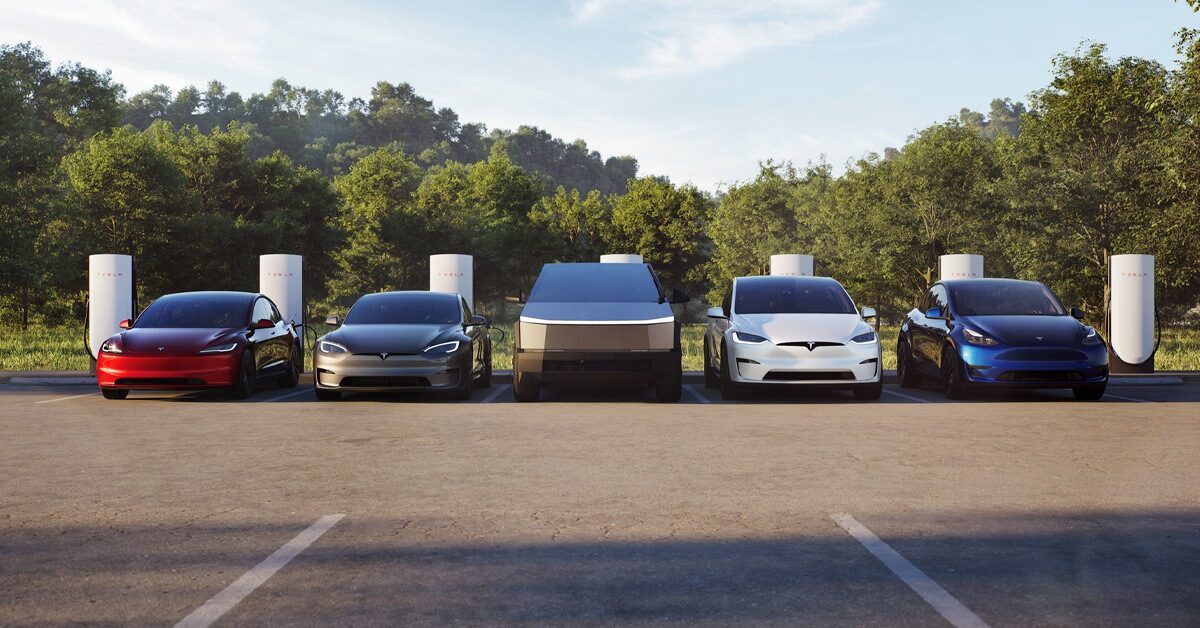


Tesla delivered just over 358,000 vehicles in the first quarter of 2026, a punishing 14 percent drop from the 418,227 it shipped in Q4 2025. The company posted its financial results Wednesday ahead of a management Q&A webcast, but the raw numbers tell a story that no earnings call spin can easily dress up.
Production hit 408,386 units for the quarter, meaning Tesla built roughly 50,000 more vehicles than it sold. That growing gap between production and deliveries is the kind of mismatch that makes inventory managers sweat and analysts sharpen their pencils.
The Model 3 and Model Y, still the overwhelming backbone of Tesla’s volume, accounted for 394,611 of those production units and 341,893 deliveries. The “Other Models” category, which includes the Cybertruck, Model S, and Model X, managed just 13,775 produced and 16,130 delivered. That delivery figure exceeding production suggests Tesla cleared some prior-quarter inventory on its higher-margin vehicles, but the volumes remain a rounding error in the grand scheme.
Compare the quarter to what came before. Q4 2025 saw Tesla deliver over 418,000 vehicles and deploy a record 14.2 GWh of energy storage products. This quarter’s 8.8 GWh in energy storage deployments represents a 38 percent sequential decline. Records, it turns out, are hard to repeat.
The seasonal excuse is available, and Tesla will almost certainly reach for it. First quarters are historically softer across the auto industry as post-holiday demand cools and new-year logistics hiccups play out. But a 14 percent sequential delivery slide is aggressive even by seasonal standards, and it lands at a moment when Tesla can’t afford softness.
Production outpacing deliveries by 50,000 units in a single quarter signals either deliberate inventory building for an anticipated ramp or weakening demand that the factory floor hasn’t adjusted to yet. Those are two very different stories. The earnings call will likely try to steer toward the first one.
Only 1 percent of Model 3/Y deliveries and 2 percent of Other Models were subject to operating lease accounting. Tesla has been pushing direct sales and loans over leases for years, and these numbers confirm the company continues to keep residual value risk off its books. Smart financial engineering, but it doesn’t move metal.
Energy storage remains Tesla’s brightest narrative. Even at 8.8 GWh, the deployments represent a business that barely existed at meaningful scale three years ago. But the sequential drop from 14.2 GWh suggests lumpy, project-driven revenue rather than the smooth growth curve Wall Street prices into forward models.
Tesla management scheduled its webcast for 4:30 p.m. Central Time Wednesday, the standard post-market window designed to let the stock absorb headline numbers before executives take questions. The format is familiar. The questions will be, too: demand trajectory, margin pressure, robotaxi timeline, and whether the production-delivery gap is strategy or symptom.
What the numbers can’t hide is this: Tesla produced more cars than people bought, delivered fewer vehicles than it did last quarter, and deployed less energy storage than its record prior period. Every one of those arrows points the wrong direction.
The full financial results, including revenue, margins, and earnings per share, were posted to Tesla’s investor relations site. Those figures will determine whether the delivery shortfall was offset by pricing discipline or compounded by discounting. Either way, 358,000 deliveries in a quarter where you built 408,000 vehicles is a number that demands an explanation, not a celebration.



Share this Story