
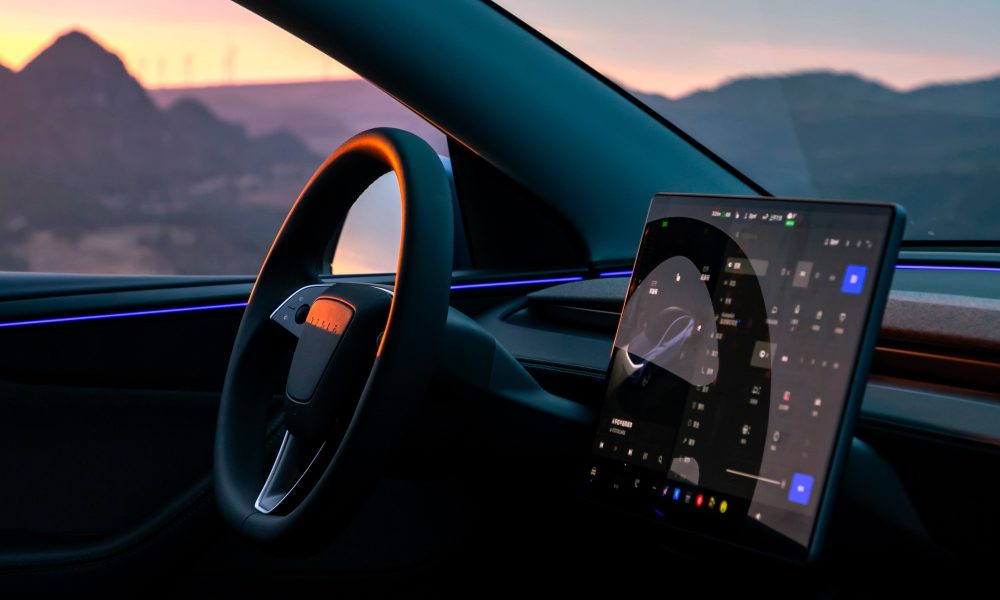


Tesla has now revised its Full Self-Driving intervention reporting menu for the second time in days, and the system still forces drivers to file a complaint even when they don’t have one.
The reporting tool, rolled out with FSD v14.3.2, originally gave drivers four choices when they took over from the semi-autonomous system: Preference, Comfort, Critical, and Other. Owners pushed back immediately, and Tesla swapped “Other” for “Navigation.” Now the company has shrunk the menu, embedded it inside the voice memo prompt, and stopped it from blocking the entire screen.
Progress, sure. But the fundamental flaw remains untouched.
There is no option to dismiss the menu. Every time a driver touches the wheel or taps the brake, the system demands an explanation. Back into your driveway because you want to be closer to the charger? Tesla logs that as a driver intervention with a cause.
Choose a different lane because you feel like it? Same thing. The data pipeline is being polluted by false positives that have nothing to do with FSD performance failures.
Tesla knows this. Owners have been loud about it. Prominent voices in the Tesla community have flagged the issue repeatedly. And yet two revisions in, the “skip” button doesn’t exist.
A third revision is reportedly coming. It should have been the first.
The broader context makes the reporting tool more than a minor UI annoyance. Tesla is sprinting toward unsupervised FSD, targeted for the fourth quarter of this year. The Cybercab is ramping at Giga Texas with a goal of two million units annually at full capacity.
Robotaxi service is already running without safety drivers in Austin, with seven more cities slated for the first half of 2026.
California, meanwhile, just armed police with the ability to ticket autonomous vehicle operators directly. New DMV rules taking effect July 1 treat the AV company as the driver when no human is behind the wheel. Violations must be reported within 72 hours, and repeat offenders face fleet restrictions or permit revocation.
When every intervention gets logged whether it’s meaningful or not, the data Tesla collects from its fleet becomes noisier, not cleaner. At the exact moment the company needs surgical precision in understanding where FSD stumbles, it’s collecting contaminated feedback from millions of drivers who just wanted to park backwards. Regulators, cities, and law enforcement are watching closer than ever.
Tesla’s used vehicles, meanwhile, are telling a different story about brand strength. The Model X was the fastest-selling used car in the entire country during Q1, averaging just 25.6 days on dealer lots. Used Tesla prices held essentially flat year-over-year while non-Tesla EV prices cratered 10.3 percent.
Discontinuing the Model S and Model X to make room for Optimus production at Fremont has only tightened supply and boosted resale demand. The company’s hardware is holding value. Its software pipeline is what needs tightening.
Getting the intervention reporting right is not a cosmetic exercise. It is the feedback loop that trains the system Tesla wants to deploy without any human in the seat. every false signal is noise, and every forced response without a “nothing was wrong” option degrades the dataset.
Two revisions deep, Tesla has made the menu smaller and less intrusive. It hasn’t made it smarter. For a company betting its entire next chapter on autonomous driving, that gap between cosmetic fixes and structural ones matters more than a resized pop-up window.
The third revision can’t come fast enough.


Share this Story