
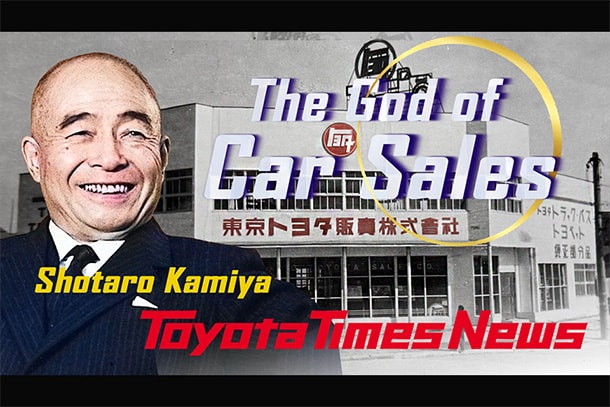


Cars don’t sell themselves. Kiichiro Toyoda understood that when he handed full authority over sales to a former Mitsui and General Motors Japan veteran named Shotaro Kamiya in 1935. Toyoda could build the cars. Kamiya would make Japan buy them.
Toyota‘s in-house media arm, Toyota Times, just dropped the second installment of its Toyota Legends series, and the subject tells you everything about where the company’s head is right now. Not an engineer. Not a designer. A salesman.
Kamiya’s operating philosophy was ruthlessly simple: “First the customer, second the dealer, third the manufacturer.” That hierarchy sounds like corporate boilerplate in 2025. In 1935, it was radical.
Japanese industry didn’t think that way. Kamiya did because he’d worked inside General Motors’ Japanese operation and saw firsthand how Americans moved metal.
He joined Toyoda Automatic Loom Works before Toyota Motor was even a standalone entity. From that perch, he built the nationwide dealer network that would become the backbone of Toyota’s dominance, not just in Japan but as a template for its global expansion. The relationship between Toyota and its dealers remains one of the tightest in the industry, and the architecture traces directly back to Kamiya’s handshake-by-handshake construction of trust.
The timing of this profile is no accident. Toyota is navigating an electric vehicle transition that has exposed cracks in even the most bulletproof sales organizations. Dealers worldwide are wrestling with new inventory models, direct-to-consumer competitors, and customers who increasingly research and decide before they ever set foot in a showroom. Reminding the network where it came from is a message aimed squarely at where it’s going.
Kamiya wasn’t just a dealmaker. As Japan’s postwar motorization boom sent traffic fatalities soaring, he took it personally. He established Shoko-ji Temple on Mt. Tateshina in Nagano Prefecture as a place of remembrance for crash victims and a symbol of his commitment to traffic safety. The temple still stands. Toyota says it has maintained prayers there for over 50 years.
That detail matters because it reveals something about the culture Kamiya embedded in the company. Selling cars was never just a transaction. The responsibility extended past the point of sale, past the warranty, into the streets where those cars operated. It’s a philosophy that echoes in Toyota’s current push toward advanced safety systems and its cautious, some would say stubborn, approach to autonomous driving.
The Legends series itself is a strategic exercise in institutional memory. The first installment covered Kiichiro Toyoda. Now Kamiya. Toyota is methodically reinforcing its origin story at a moment when the entire industry is obsessed with reinvention. Silicon Valley wants to erase the past. Toyota wants to weaponize it.
Kamiya died in 1980, but his dealer-first model outlasted him by decades. Toyota still operates more dealership points in Japan than any competitor. Its U.S. dealer body is among the most profitable and loyal in the business. When other automakers flirted with bypassing dealers during the pandemic’s inventory crunch, Toyota held the line.
Shotaro Kamiya never saw an EV, never touched a touchscreen, never heard of over-the-air updates. But the distribution philosophy he forged in postwar Japan, earn the dealer’s trust and the customer follows, remains the most durable competitive advantage Toyota owns. The company clearly knows it. That’s why they’re telling his story now.
Share this Story