
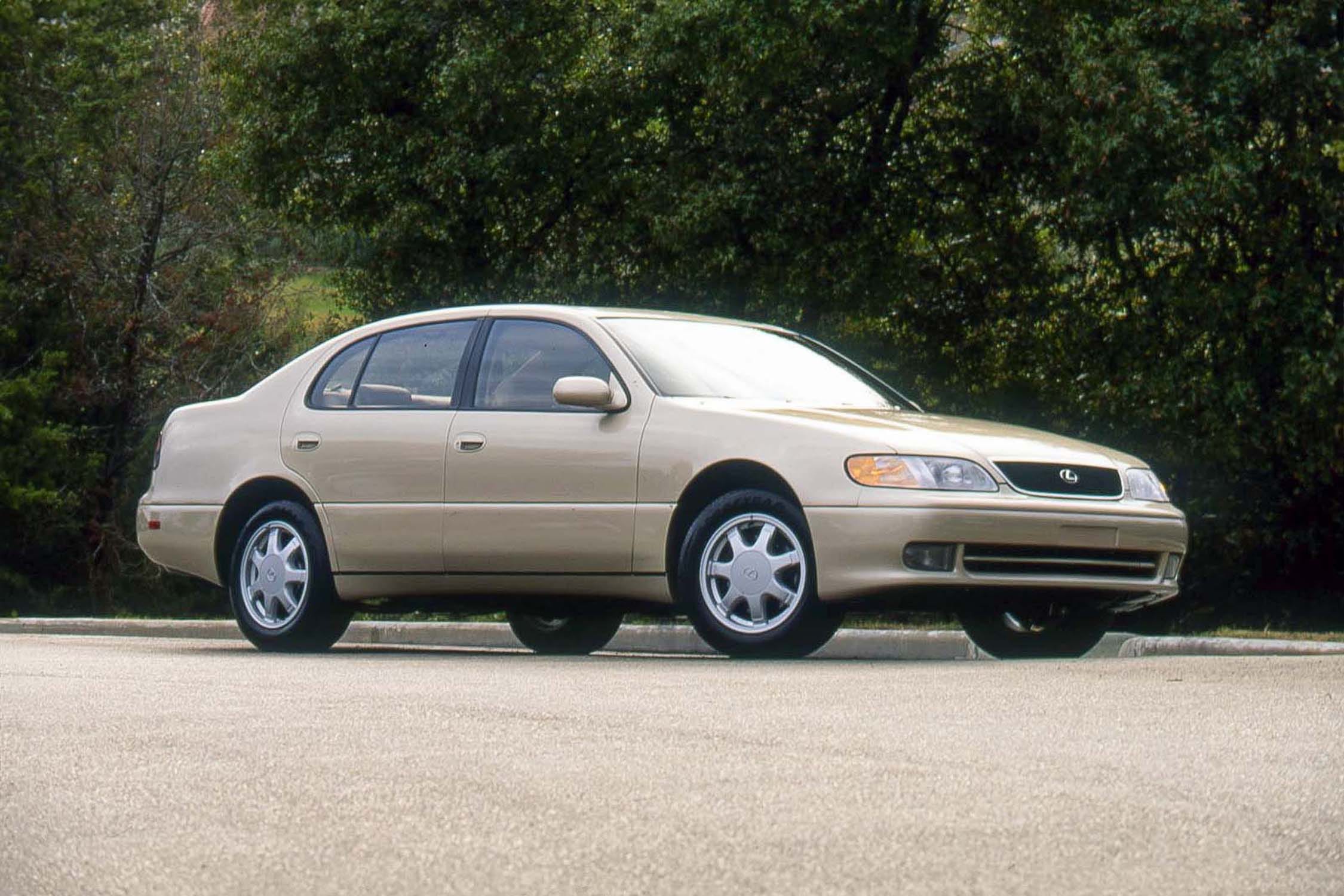


A Toyota engineer chose his employer over Mitsubishi because the cafeteria food was better. That engineer, Hiroyuki Watanabe, went on to create the 1994 Lexus GS300, a car designed to steal sales from BMW and Mercedes-Benz. The origin story tells you everything about how Toyota’s luxury division operated in the early 1990s: pragmatic decisions wrapped in ambitious intentions.
The GS300 slotted between the $27,930 ES300 and the $48,733 LS400, priced around $37,500. Lexus boss J. David Illingworth positioned it squarely against the BMW 5-series and Mercedes-Benz 300-series sedans. That was a bold claim for a car that arrived with no manual transmission option and an 8.7-second sprint to 60 mph.
The design originated at Giorgetto Giugiaro’s Ital Design studios in Turin, receiving only minor adjustments from Lexus stylists. The 0.31 drag coefficient was respectable, the proportions were handsome, and nothing about the exterior would offend. Nothing about it would thrill, either.
Inside, the GS300 nearly replicated the LS400 experience. Interior dimensions were close to the bigger sedan. The same tilting and telescoping steering wheel retracted automatically for easy entry and exit.
Every surface carried that expensive, hushed quality Lexus had already made its calling card. Dual front airbags and seatbelt pretensioners came standard. The ergonomics were so intuitive that Car and Driver’s original review suggested an alien could figure out the controls before you could say “Zarathustra.
There was even a hands-free phone system that responded to voice commands and could store twenty names. You’d say “Kirstie Alley” and it would dial her number, assuming you had it. In 1993, this was the future.
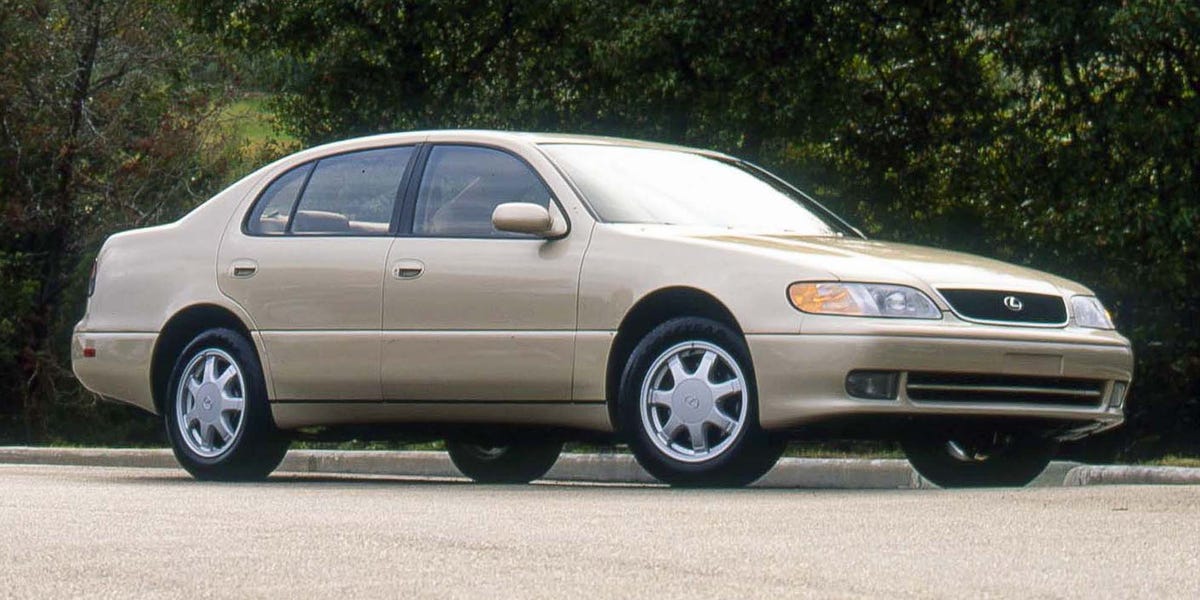
But the car’s real tension lived in the gap between what Lexus wanted the GS300 to be and what it actually was. Watanabe talked about “the exhilaration of driving.” The car delivered something closer to the exhilaration of napping.
The 220-horsepower inline-six, borrowed from the SC300 coupe but down 5 hp due to exhaust routing, paired exclusively with a four-speed automatic. The transmission shifted with seamless precision, but precision is not the same thing as excitement.
On Texas Hill Country roads, the double-wishbone front and multilink rear suspension handled everything thrown at it with poise. When the tail stepped out, it did so predictably. Skidpad grip measured 0.82 g, and braking from 70 mph took 177 feet, both figures competitive with the BMW 535i.
The GS300 could keep pace with Munich’s best on a spec sheet. The problem was how it felt doing it.
Liquid-filled subframe mounts and a structurally rigid cabin made the interior tomb-quiet. Road feel, the kind that made a BMW or Mercedes worth choosing over a Buick, was nearly absent. The ride was superb, but the steering communicated almost nothing.
Car and Driver’s original assessment drew a useful distinction: if you split this segment into performance-luxury and luxury-performance, the GS300 belonged firmly in the latter camp. Lexus put luxury first because Lexus always put luxury first. It was an instinct the brand couldn’t override, even when the assignment demanded otherwise.
The GS300 sold well. It found buyers who wanted German prestige without German maintenance bills, buyers who valued silence over steering feel. But the car Watanabe described, the one born from devotion to speed and exhilaration, never quite materialized. Lexus would keep chasing that vision for decades, sometimes getting closer, never fully arriving.
Share this Story