
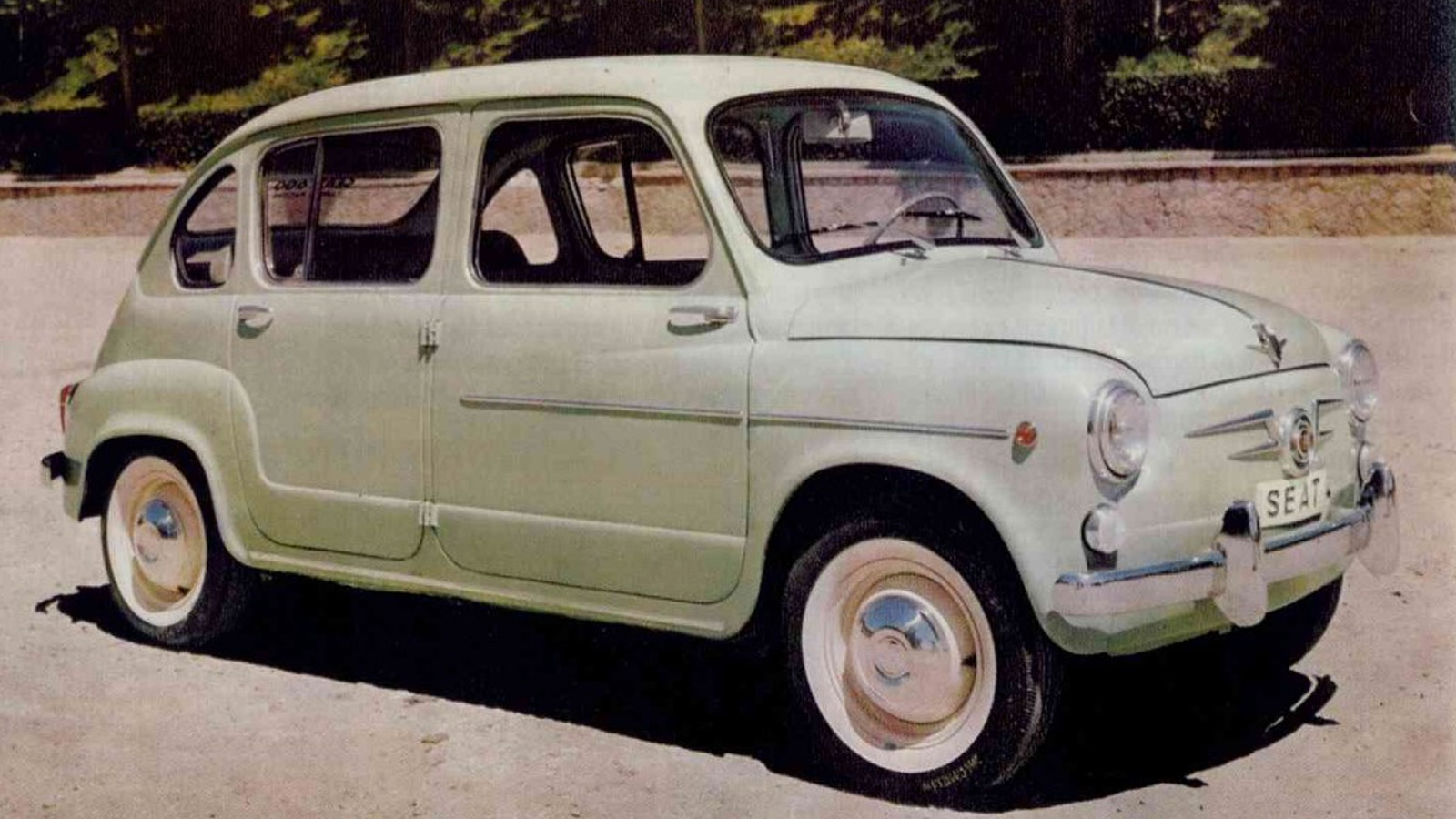


Before SEAT became just another brand swallowed into the Volkswagen empire, it was doing something genuinely clever with borrowed Italian blueprints. The Spanish automaker, born out of post-civil war economic desperation, took Fiat’s smallest city cars and performed a trick almost nobody else in the industry bothered to attempt: stretching them into proper four-door sedans.
The story starts with the Fiat 600, the rear-engined runabout that became an icon of European postwar recovery. SEAT built it under license as the SEAT 600, and that little car became the rolling symbol of Spain’s economic resurrection, the so-called Spanish Miracle. But Spain needed family transportation, not just city runabouts, so SEAT’s engineers did what seemed almost absurd — they added a second pair of doors and stretched the wheelbase, creating the SEAT 800.
It looked a little mutated, honestly. The Fiat 600’s proportions were never meant to accommodate four doors, and the stretch showed.
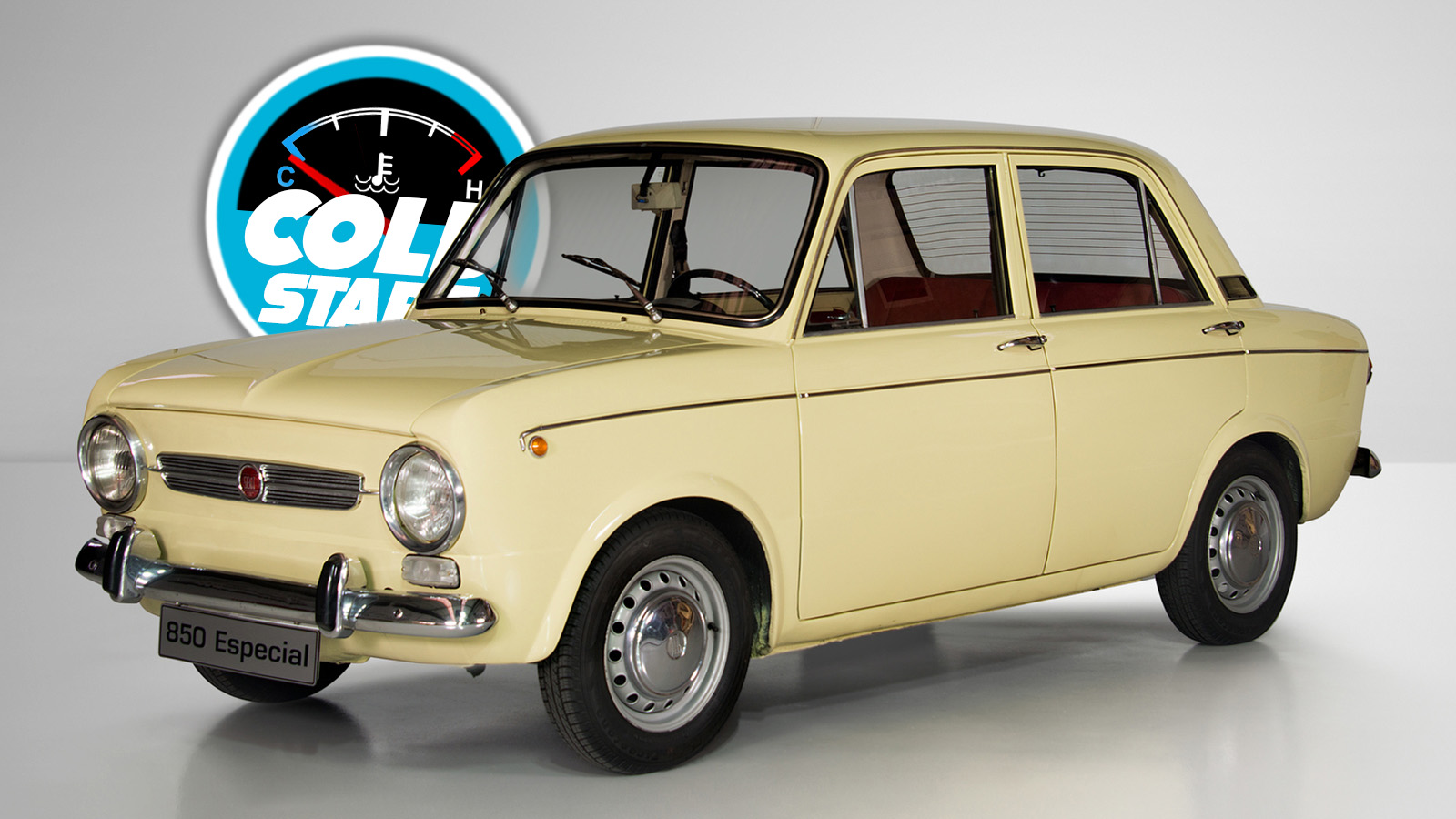
But SEAT learned from that first attempt. When Fiat replaced the 600 with the 850 — a cleaner, more resolved design — SEAT went back to the same playbook and produced something remarkably convincing. The four-door SEAT 850 actually existed in two variants: an incredibly rare short-wheelbase version and a longer one that sold in meaningful numbers. The longer car nailed proportions that the 800 never quite managed, trading the original’s fastback roofline for a proper notchback profile that made the whole package look intentional rather than improvised.
That’s the part that deserves attention. This wasn’t a hack job. SEAT’s designers understood how to redistribute visual mass on a tiny platform.
The four-door 850 reads as a complete, coherent sedan rather than a subcompact with an identity crisis. The rear seat appears genuinely usable. The interior packaging, given the car’s footprint, borders on impressive.
The mechanicals stayed faithful to Fiat’s original layout. All 850 cubic centimeters of inline-four sat longitudinally in the rear, with the radiator offset to one side. The front trunk handled most luggage duties, with a shallow well under the rear window offering supplementary space.
SEAT’s own brochure showed a meticulously packed frunk as a point of pride, and rightly so — extracting livable utility from a car this small required genuine engineering discipline.
The question that lingers is why more manufacturers didn’t do this. High-volume people’s cars were obvious candidates for four-door variants. Volkswagen famously refused to allow anyone to produce a four-door Beetle, going so far as to blacklist a taxi conversion outfit that tried.
The company forced them to source cars from used lots and wreckers. That kind of territorial rigidity looks foolish in hindsight. Fiat, by contrast, apparently had no problem letting SEAT reimagine its designs for the Spanish market.
SEAT also produced the 850 Coupé, showing just how adaptable Fiat’s basic styling architecture was. From city car to family sedan to sporty coupe, the platform stretched across segments with surprising grace. Spain wasn’t the only country doing this kind of licensed local adaptation — Renault had its own Spanish variants, like the Renault Siete — but SEAT did it with a consistency and visual competence that stands out decades later.
These cars have essentially vanished from roads. Finding a four-door SEAT 850 outside the company’s museum near Barcelona requires serious luck or serious dedication to Spanish automotive archaeology. A few surface occasionally on European classifieds, priced as curiosities rather than collectibles.
They deserve better than curiosity status. In an industry now obsessed with platform flexibility and maximizing variants from shared architectures, SEAT was doing exactly that sixty years ago with hand tools and slide rules. The difference is nobody wrote a press release about it.

Share this Story