
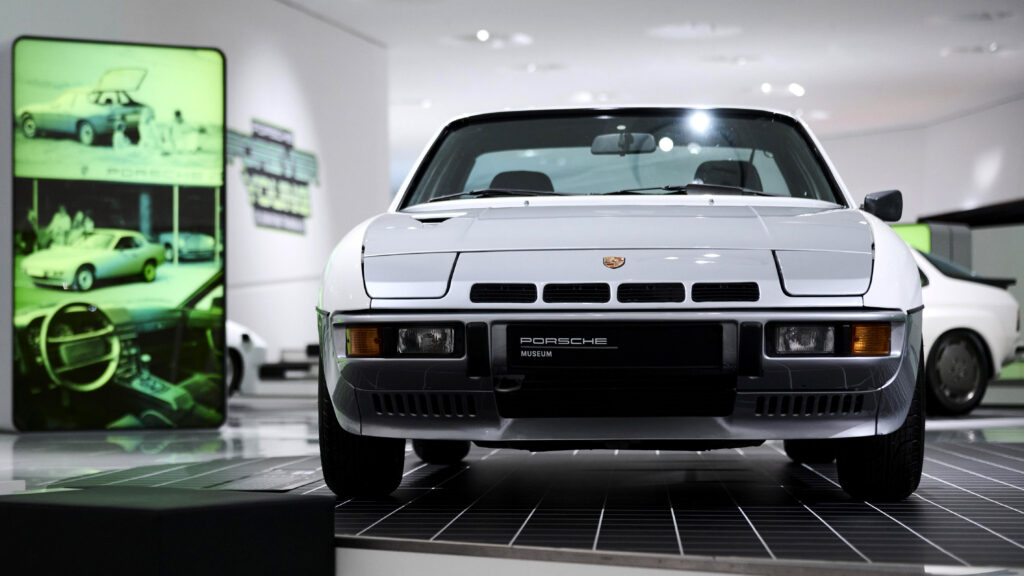


For two decades, Porsche treated its front-engined transaxle cars like the relatives you don’t talk about at dinner. Now they’re getting a museum exhibition in Stuttgart, and the timing says everything about how the brand’s hierarchy has quietly shifted.
The exhibition, called Forever Young. Celebrating Transaxle, opened May 14 at the Porsche Museum and marks 50 years since the transaxle layout entered series production. Rather than roping off a few cars behind velvet stanchions, Porsche is running rotating pop-up installations through the end of the year. The mix includes motorsport hardware, design deep dives, and unabashed 1980s nostalgia complete with graffiti artists and neon.
The cars in question — the 924, 928, 944, and 968 — were built between 1976 and 1995. Porsche sold nearly 400,000 of them. That number alone should have earned respect decades ago.
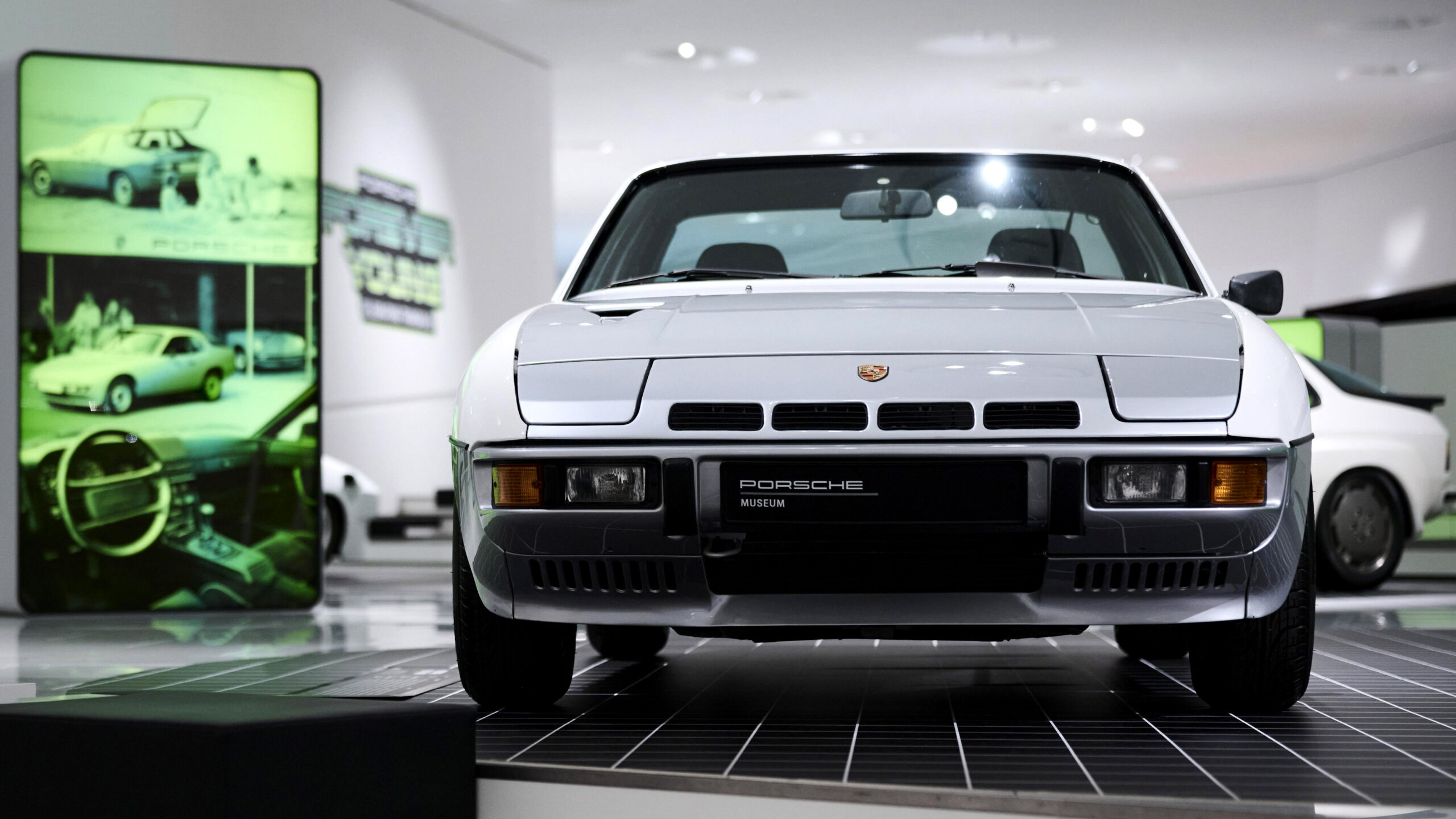
It didn’t. The 911 faithful spent years dismissing these models as lesser machines, diluted by their Volkswagen origins and water-cooled engines. The 924 started life as a VW project that Wolfsburg abandoned.
Porsche picked it up, refined it, and inadvertently launched a whole lineage. The 928, with its 4.5-liter V8 and grand touring ambitions, was supposed to replace the 911 entirely. It won European Car of the Year in 1978 — the only expensive performance car ever to do so — and still couldn’t shake the stigma of not being rear-engined.
The 944 was the commercial heavyweight. Porsche sawed a 928 V8 in half to create its 2.5-liter four-cylinder, wrapped the mechanicals in widened 924 bodywork with muscular fenders, and sold over 163,000 units. It was the car that kept the lights on in Zuffenhausen when 911 sales couldn’t carry the load alone.
The 968 refined the formula further before the whole transaxle family was quietly discontinued in 1995, replaced eventually by the Boxster.
The motorsport credibility was always there for anyone who cared to look. A 924 GTP raced at Le Mans. Walter Röhrl drove rally-prepped versions. The 944 Turbo was a genuine weapon on track, but none of it mattered to purists who measured authenticity by the location of the engine.
What changed is the market. Values on clean 924s, 944s, and especially 928s have climbed steadily over the past five years. A decent 944 Turbo that traded for $15,000 a decade ago now commands multiples of that. The cars Porsche once seemed embarrassed by are now gateway drugs for a new generation of buyers priced out of air-cooled 911 territory.
Porsche clearly reads the room. The exhibition leans hard into Radwood-era aesthetics and cultural nostalgia, targeting exactly the demographic that has driven transaxle values upward. There’s commercial logic here alongside the historical recognition.
Still, there’s something slightly uncomfortable about a brand celebrating cars it spent years marginalizing. The 928 was supposed to be the future, and Porsche chose the 911 instead. The 944 outsold everything in the lineup, and Porsche let it die.
The transaxle cars didn’t fail — they were abandoned in favor of a narrative that said only the 911 mattered. Now, half a century later, Porsche is acknowledging what the sales figures always said: these cars weren’t misfits. They were the foundation that kept the company solvent long enough for the 911 to become the icon it is today.
The museum exhibition is welcome. It’s also about 30 years late.
Share this Story