
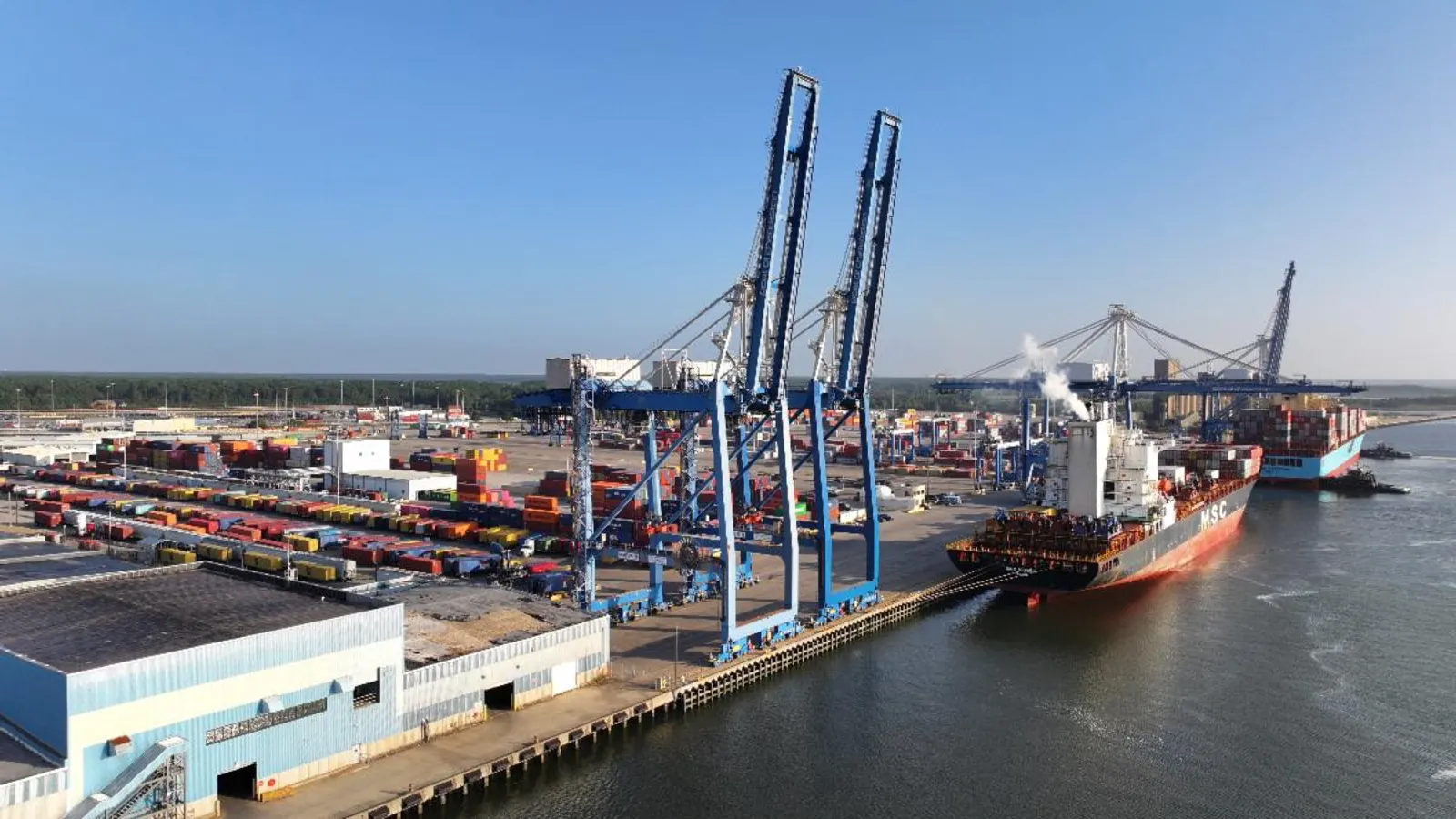


The Port of Charleston is expanding its roll-on/roll-off cargo operations with upgraded rail infrastructure and larger vessel parking areas at its North Charleston Terminal, targeting a 2028 completion date. An adjacent paper mill is scheduled for demolition this summer to make room.
The South Carolina Ports Authority hasn’t released final capacity numbers yet, but the scale of ambition is clear. The Columbus Street Terminal already moves more than 250,000 vehicles annually. The expansion aims to keep pace with a state that claimed an 18% share of completed passenger vehicle sales in 2025, the largest of any state in the country.
Motor vehicles and parts were South Carolina’s top export commodity last year. BMW, Mercedes-Benz Vans, and Volvo Cars all operate manufacturing facilities in the state and depend on the port for just-in-time supply chain logistics. They import and export parts on tight schedules that leave zero margin for bottlenecks.
That dependency is exactly why the port authority is pouring money into infrastructure now. Just-in-time manufacturing doesn’t forgive delays. A congested terminal or an undersized berth can ripple through an assembly line within hours.
But Charleston isn’t operating in a vacuum. Down the coast, the Georgia Ports Authority handled 779,000 vehicles in 2025 and crowned itself the nation’s busiest automobile port. Georgia is investing $100 million in a new roll-on/roll-off berth, expanding outdoor vehicle storage, and modifying its harbor to accommodate larger vessels.
This is a Southeast port war, fought with cranes and concrete instead of rhetoric.
South Carolina’s pitch leans on workforce availability, a deep supplier network, rail connectivity, and open land. Laura Clifton, the port authority’s public relations manager, framed it as a package deal. It’s the kind of ecosystem that makes automakers comfortable committing to long-term manufacturing footprints rather than just passing cargo through.
The distinction matters. Charleston isn’t just a waypoint for finished vehicles heading to dealer lots. It’s embedded in the production process itself, feeding parts to factories that build cars a short truck or rail ride from the docks.
That makes the port operationally critical in a way that pure volume numbers don’t fully capture.
Georgia, meanwhile, is playing a volume game with enormous throughput and heavy machinery handling that topped 53,000 units last year. Both ports are preparing for bigger ships and bigger demand. Their strategies diverge in subtle ways that reflect different bets on where the automotive industry is heading in the Southeast.
Construction equipment and oversized vehicles like buses and trailers also move through Charleston. That cargo diversity cushions the port against swings in any single sector.
The 2028 timeline gives Charleston roughly two years to complete the buildout. In port infrastructure terms, that’s aggressive but not unrealistic. It all depends on demolition staying on schedule this summer and supply chain conditions for construction materials cooperating.
What’s driving all of this is straightforward arithmetic. The Southeast has become the center of gravity for American automotive manufacturing, pulling investment from both legacy automakers and their suppliers. Ports that can’t keep up with that growth will watch cargo and the economic multiplier that comes with it shift to competitors willing to spend.
Charleston is spending. So is Savannah. The automakers building cars in the Carolinas and Georgia will ultimately decide which port earns the business, and they’ll make that call based on reliability, capacity, and cost, not press releases.





Share this Story