
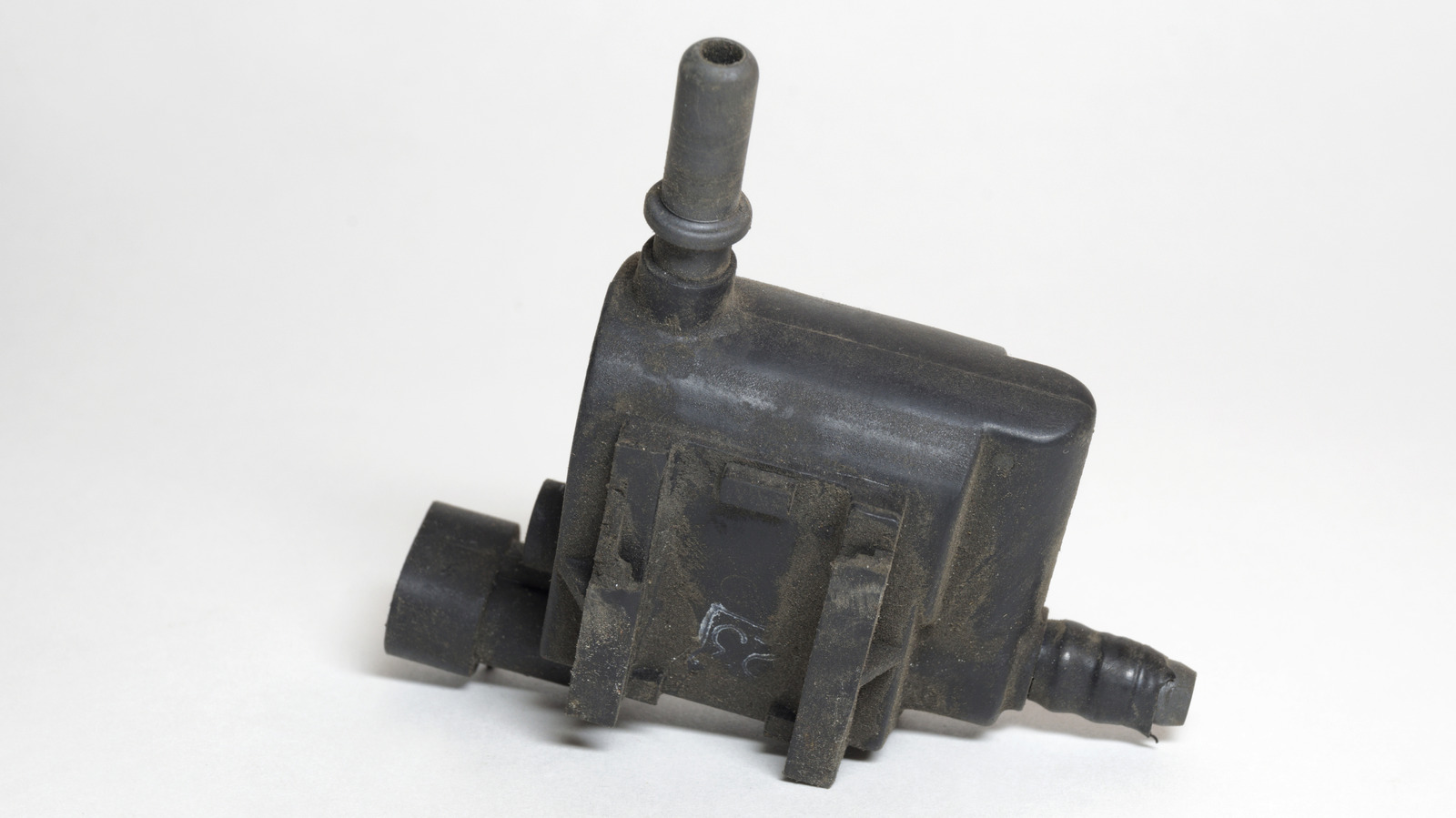


There’s a small, unassuming chunk of plastic sitting somewhere in your engine bay right now, and you’ve probably never thought about it once. That changes fast when it fails.
The purge valve — sometimes called the purge control solenoid or canister purge valve — is one of those emissions components that does its job quietly for years until it doesn’t. When it stops working, the symptoms hit you from multiple angles: rough idle, sluggish acceleration, the stink of gasoline, lousy fuel economy, and a check engine light that won’t quit.
Its function is straightforward but essential. Fuel in your tank produces vapors. Rather than venting those vapors into the atmosphere like cars did decades ago, modern vehicles store them in a charcoal canister near the fuel tank.
The purge valve acts as the gatekeeper between that canister and the engine’s intake manifold. When the engine is off, the valve stays shut. When it’s running, the powertrain control module pulses the valve open in a controlled rhythm, feeding those stored vapors into the combustion cycle where they actually get burned as fuel.
That’s free energy your engine would otherwise waste. It also keeps hydrocarbons out of the air you breathe.
The trouble starts when the valve sticks — either open or closed. A valve stuck open lets fuel vapors flood the intake uncontrolled, creating a rich condition that fouls up idle quality and can make the engine hard to restart, especially right after you’ve filled the tank. A valve stuck closed means those vapors build up with nowhere to go, pressurizing the fuel system and potentially contaminating the charcoal canister.
Either way, you’ll likely see a check engine light. Grab an OBD2 scanner and you’re looking at fault codes in the P0441 through P0446 range. Those codes are practically a neon sign pointing straight at the purge valve or its associated plumbing.
This isn’t a rare problem confined to certain brands. Purge valve failures are common across just about every make and model on the road. And here’s a habit that speeds up the damage: topping off your fuel tank past the first click of the nozzle.
That extra fuel can seep into the evaporative emissions system, contaminating vacuum lines, the charcoal canister, and the purge valve itself. Stop doing that.
The good news is that replacement is one of the easier DIY jobs you can tackle. The hardest part is actually locating the valve, which can sit near the intake manifold or closer to the fuel tank depending on your vehicle. Check your service manual or ask someone who knows your platform.
Once you’ve found it, the process is dead simple: disconnect the battery, unplug the electrical connector, pull the vacuum hoses, unbolt the old valve, and reverse the steps with a new one.
While you’re in there, inspect those vacuum hoses. If they’re cracked, brittle, or fraying, replace them too. A new valve with deteriorated hoses is just setting yourself up for another check engine light in a few months.
Parts typically run under $200. A shop might charge up to $500 with labor, but this is genuinely a 20-minute job for most people with basic hand tools.
If you want to confirm the valve is actually dead before spending money, you can bench-test it. Apply 12 volts and a ground to the terminals. You should hear a distinct click as the solenoid actuates. Silence means it’s toast.
The purge valve can theoretically last the life of the car. But heat cycles, vibration, fuel contamination, and plain old age work against it. Given how cheap and easy the fix is, there’s no reason to let a failed purge valve drain your wallet at the pump or leave you fighting a rough idle every morning. Pay attention to the symptoms, don’t ignore that check engine light, and keep your hands off the fuel nozzle after it clicks.






Share this Story