
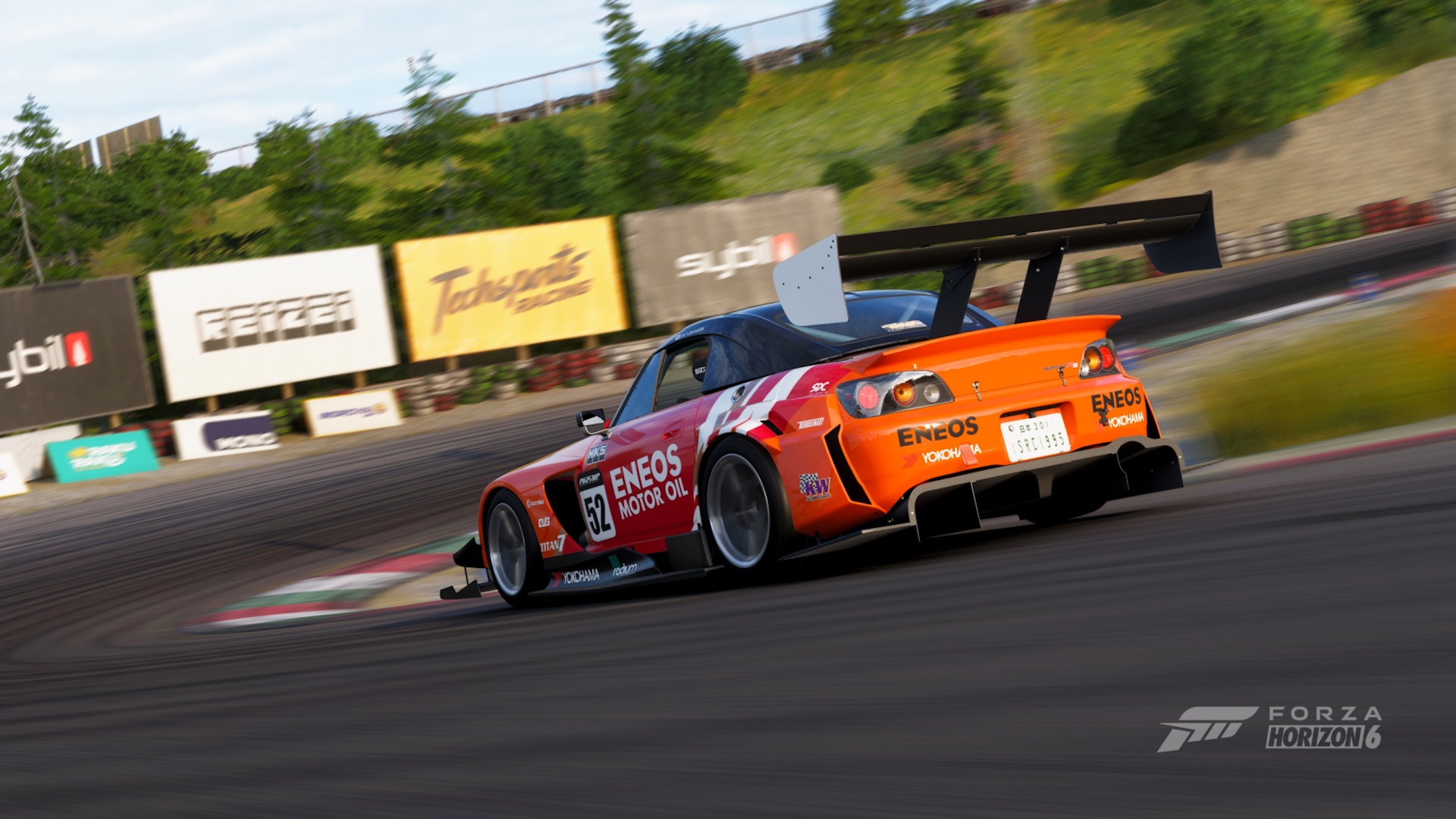


Forza Horizon 6 launches May 19, and buried inside its photo mode is something no racing game has attempted before: real Canon lens physics, courtesy of automotive photographer Larry Chen and the optics engineers at Canon itself.
Chen didn’t just lend his name and likeness to the game. He brokered a direct connection between Playground Games and Canon’s technical team, pushing the developers to simulate actual focal lengths and lens behavior rather than the generic camera tools that have defined racing game photo modes for years.
Canon has so much technical knowledge about optics, photography, and lens behavior that goes way beyond what I understand myself,” Chen told The Drive. The goal was simple: make players feel what it’s actually like to shoot cars through real glass.
The collaboration goes deeper than gear simulation. Chen appears in the game as a mission-giver, sending players on driving challenges designed to capture specific shots. Those missions aren’t arbitrary fetch quests. They’re modeled on Chen’s actual workflow shooting cars across Japan, where timing isn’t a luxury — it’s the entire job.
“Everything is time critical,” Chen said. “Whether it’s doing rolling shots, finding a clear street with less traffic, waiting for the perfect lighting conditions, or timing a flyby shot perfectly with the Shinkansen in the background.”
Playground Games took that seriously. The developers pressed Chen on the urgency and spontaneity that define real automotive photography, then built gameplay mechanics around those constraints. The result is a set of missions that force players to think like photographers, not just drivers.
Racing games have had photo modes for over a decade, and they’ve gotten progressively prettier. Gran Turismo treats its replay theater like a museum. Forza Motorsport’s photo tools are robust. But the underlying camera models in these games have always been approximations — virtual lenses behaving in ways that look plausible but don’t map to any real-world equipment.
Chen’s intervention changes that equation. Incorporating Canon’s actual focal length data means a 50mm lens in Forza Horizon 6 should compress and distort the way a real 50mm does. A 200mm telephoto should flatten perspective the way it does trackside. For the millions of players who’ve never held a professional camera, the photo mode becomes an accidental education in optics.
Chen also pushed the team on cultural authenticity. Japan isn’t just a backdrop in Forza Horizon 6 — it’s the setting, and Chen wanted the game to feel honest about Japanese car culture rather than leaning on Western stereotypes of drift missiles and neon.
“They really wanted this game to feel culturally accurate, not just visually accurate,” Chen said. Given that Chen has spent years building relationships within Japan’s car scene, his endorsement carries weight.
Early access players are already proving the system works. Screenshots flooding social media from the game’s first days show a noticeable step up in photographic realism. Depth of field behaves naturally, and bokeh looks earned rather than filtered on after the fact.
The gaming industry loves celebrity consultants. Most of them are marketing exercises. Chen’s involvement here reads differently because it produced a measurable technical change: real lens data from a real optics company, integrated into game code. That’s not a cameo. That’s engineering.
Share this Story