
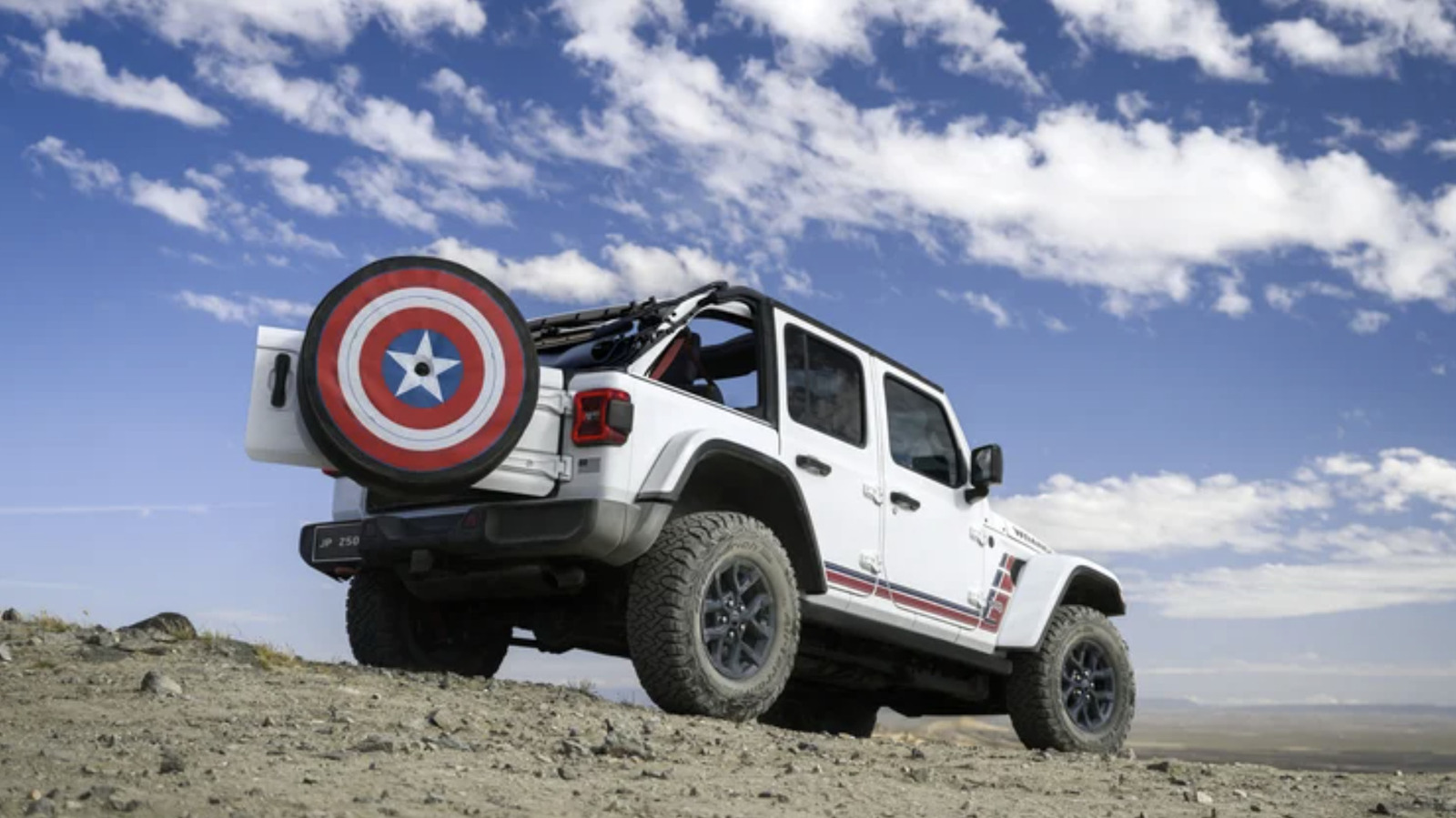


Jeep just announced a Captain America-themed Wrangler tied to the America250 celebration, and the internet responded exactly the way you’d expect — by asking what kind of person actually buys this thing.
Jalopnik’s Erin Marquis didn’t mince words. She called it the car for someone stuck 15 years in the past, living in a world where the Marvel Cinematic Universe still defines culture. A Wrangler wrapped in comic book patriotism, priced well north of affordable, aimed squarely at adults who never quite moved on from who they were at 17.
It’s a brutal read, but it lands because the observation isn’t really about Jeep. It’s about what our vehicles say when we’re not paying attention to the message.
Marquis posed the question to readers: what car screams “I peaked in high school?” Her own answer was the Ram truck, and the reasoning was specific. She grew up in a Michigan exurb full of lakes, where the high school parking lot overflowed with brand-new pickups bought by nouveau riche parents for kids who’d never tow a thing.
The Ram, she argued, is now the truck of the tailgater, the no-signal merger, the vehicle with enormous capability and zero intention of ever using it.
She even took a shot at Ram’s “badge of protest” marketing — the campaign positioning the truck as an act of rebellion. Marquis compared it to wearing dark lipstick in high school while your mom was still the one buying it for you. Rebellion as aesthetic. Defiance as consumer choice. It’s sharp because it’s true.
But there’s a deeper thread running through this. The automotive industry has spent the last decade leaning hard into nostalgia as a product strategy. Heritage editions, throwback liveries, licensed collaborations with entertainment franchises. The Captain America Wrangler isn’t an anomaly — it’s the logical endpoint of an industry that has figured out arrested development is a demographic.
Jeep knows its customer. The Wrangler has become less a utilitarian off-roader and more a lifestyle totem, a rolling bumper sticker for a certain kind of identity. Bolting a superhero shield onto it just makes the subtext into text.
You’re not buying capability. You’re buying a feeling. And that feeling, increasingly, is rooted in looking backward.
Ram plays the same game from a different angle. The trucks keep getting bigger, more expensive, more loaded with technology that has nothing to do with work. The average transaction price on a Ram 1500 now pushes past $60,000. These aren’t farm trucks — they’re status symbols dressed in blue-collar drag.
The question Marquis asked her readers is funny on the surface, but it cuts at something the industry doesn’t love talking about. When your product’s core appeal is nostalgia — for a simpler time, a tougher identity, a version of yourself that probably never existed — you’re not selling transportation. You’re selling regression.
Every automaker does this to some degree. Ford leans on Mustang heritage like a crutch. Chevrolet won’t stop resurrecting the Blazer name. Dodge spent its final V8 years throwing a going-away party that lasted longer than most marriages.
The cars that scream “I peaked in high school” aren’t really about the cars at all. They’re about an industry that realized the most profitable customer is the one who never wants to grow up — and then built an entire product lineup around that insight.
Jeep just happens to be the one putting a superhero costume on it and calling it a celebration.
Share this Story