
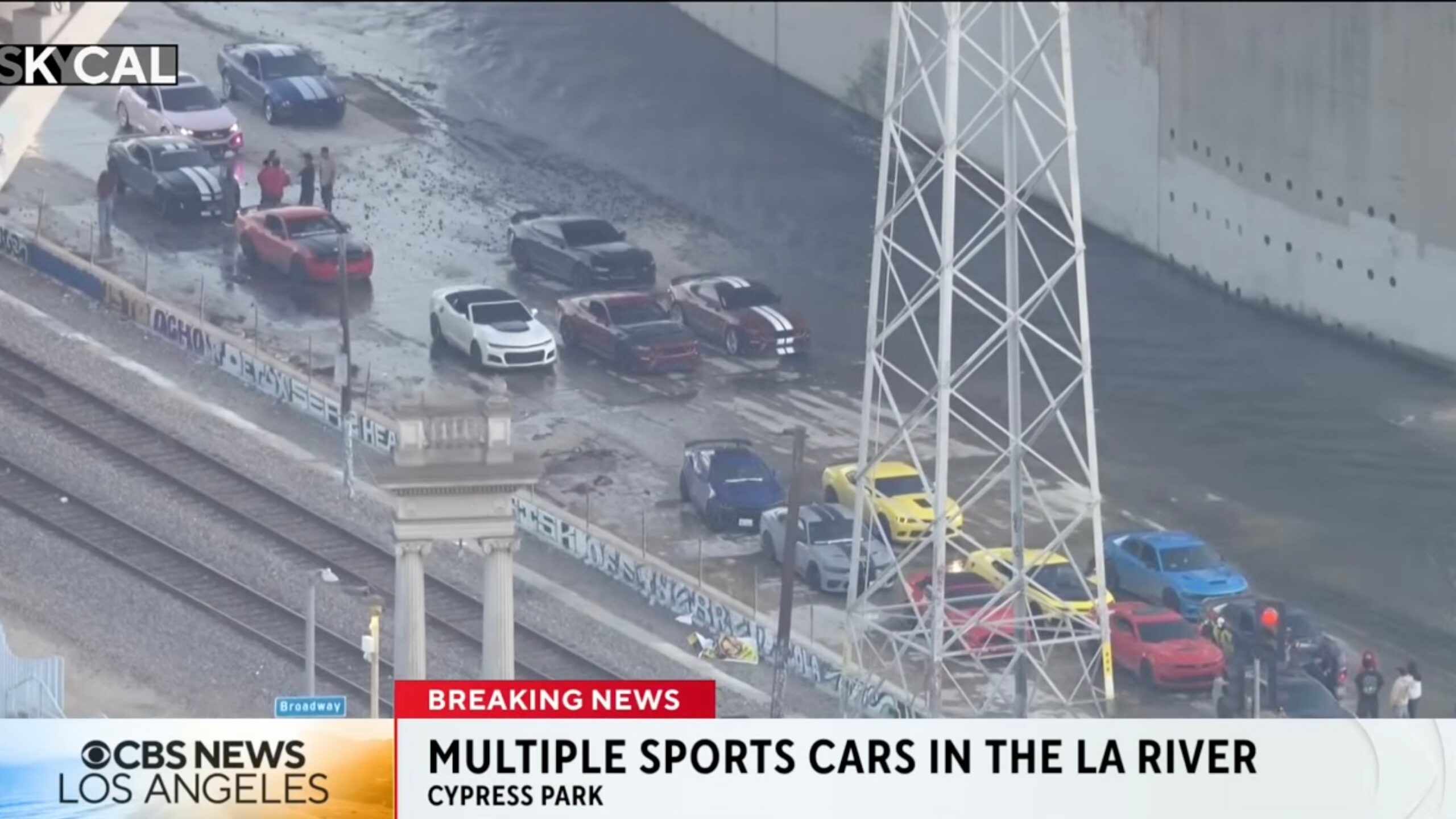


Seventy-two cars and motorcycles were towed out of the Los Angeles River channel this week after a social media-organized photoshoot turned into one of the most visually absurd impound operations the city has seen in years. News helicopter footage captured the scene: a parade of brightly modified cars lined up in the iconic concrete channel like a real-life loading screen from Grand Theft Auto V.
The drivers told local news crews the same thing. They were there for photos, not a street race or a takeover. They didn’t know it was illegal. The no-trespassing sign was small.
LAPD didn’t buy any of it.
The LA River’s concrete half-pipe has been an unofficial backdrop for car culture since before Instagram existed. Grease. Gone in 60 Seconds. Midnight Club. GTA V. The spot is practically a character in Southern California’s automotive mythology.
For decades, sneaking down to grab a quick photo with your car was treated like rolling through a stop sign in a quiet neighborhood — technically illegal, universally tolerated.
But there is a canyon-wide difference between one or two cars slipping in and out unnoticed and a 72-vehicle convoy of Skittles-colored builds clogging the channel in broad daylight. That distinction is apparently lost on a generation that treats every flat surface as a content studio.
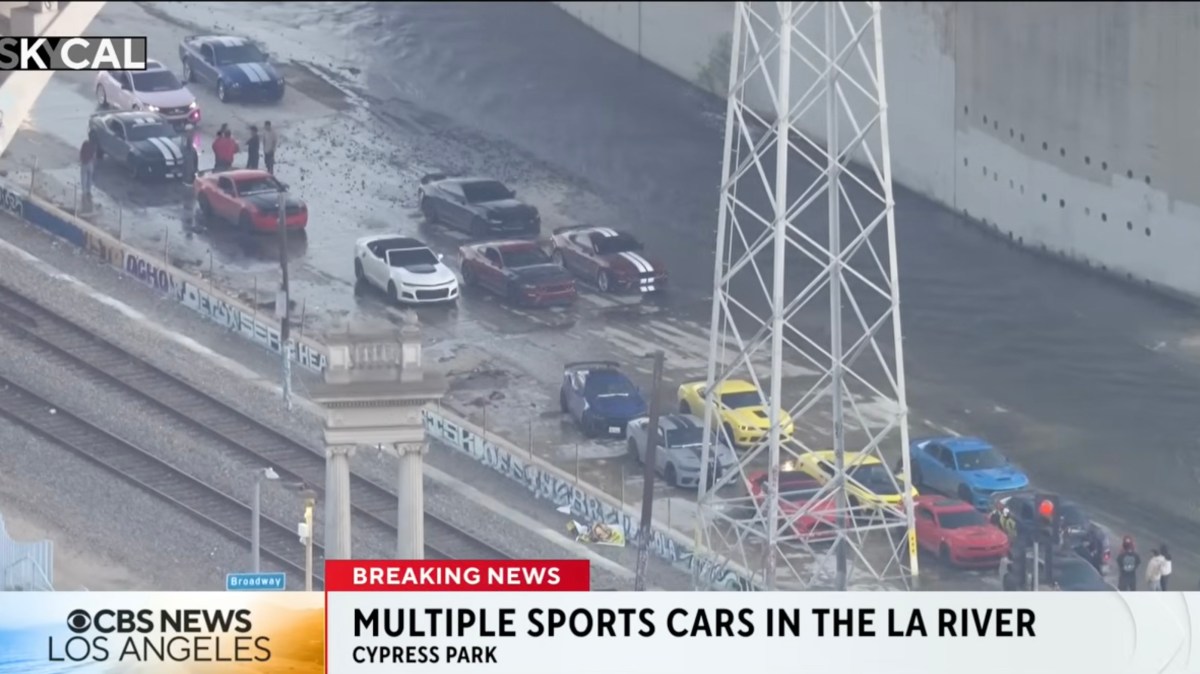
The drivers now face impound fees that will likely run into the thousands per vehicle, plus potential trespassing charges. For some of those modded cars, the impound bill alone could rival a month’s worth of car payments. The irony is thick: these are enthusiasts who pour real money into their machines, and they’re about to pour a lot more into getting them back from a city tow yard.
The gather-and-shoot format has become a fixture of car culture’s social media economy. Organizers promote locations through group chats and Instagram stories, crowds materialize, content gets created, and everyone scatters. It works when the location is a parking lot or a backroad at dawn. It falls apart spectacularly when 72 cars descend on a restricted flood control channel that happens to sit under regular helicopter patrol routes.
There is already speculation that the event’s visibility was no accident — that perhaps the sheer scale was spotted by a roaming news chopper and law enforcement simply capitalized. Others have floated the idea that police were tipped off or that the whole thing was a setup designed to generate impound revenue. Neither theory has any evidence behind it, but the cynicism says something about the relationship between LA car culture and LAPD right now.
The more predictable outcome is physical. The access points that have been quasi-open secrets for years will almost certainly be barricaded or fenced off. One massive, highly publicized bust tends to trigger that kind of infrastructure response.
It’s a self-inflicted wound. Discretion kept the LA River accessible to car enthusiasts for generations. A 72-car Instagram circus killed it in an afternoon.
The river will still be there, still gross, still cinematic. But the days of casually rolling down the embankment for a quick snap are almost certainly over, and everyone who wasn’t in that channel on Tuesday has the people who were to thank for it.
Share this Story