
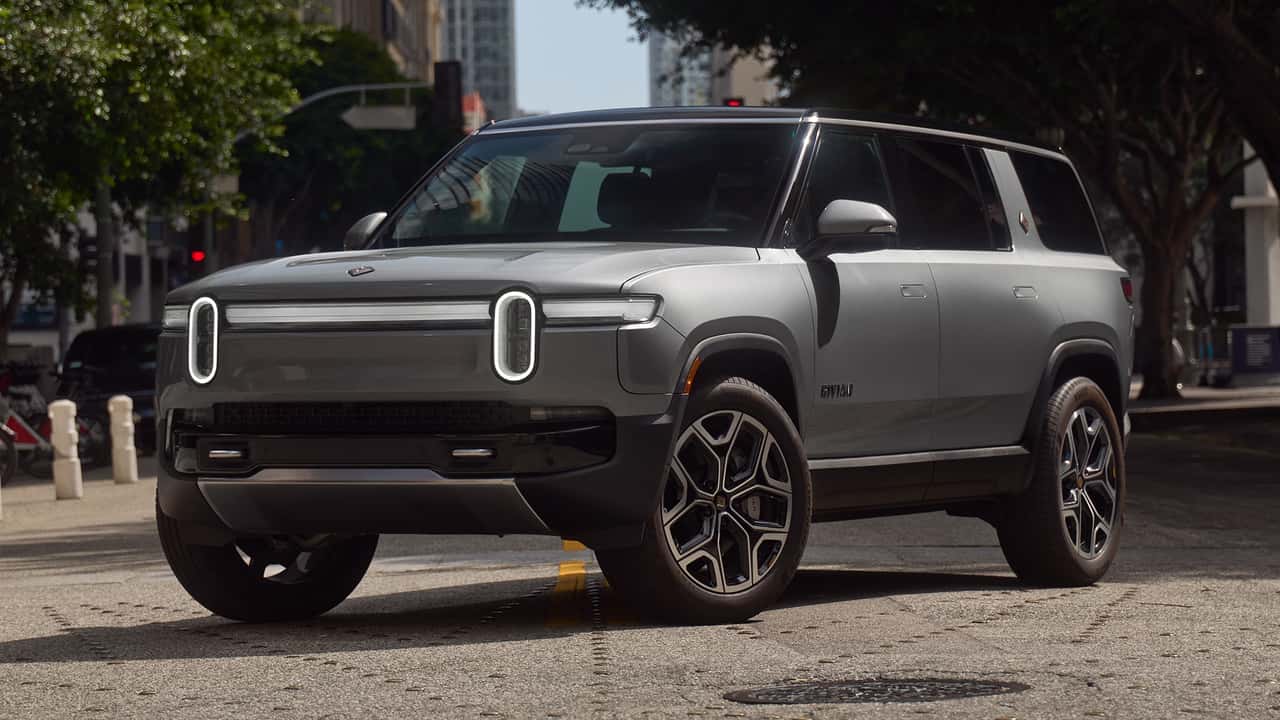


Rivian’s 2027 R1S and R1T aren’t getting a redesign. They’re getting a rename, a reorganization, and one interior option that customers apparently wouldn’t stop asking about.
The biggest news is that the R1S SUV will finally offer second-row captain’s chairs, giving buyers a six-seat layout with a center pass-through. Rivian calls it the “most requested interior feature to date,” which says something about the kind of buyer gravitating toward an $84,000 electric SUV. These aren’t people who want to squeeze three across the middle row.
They want armrests, cupholders, and the ability to walk straight back to the third row without climbing over anyone. The chairs are heated, fold flat, and tuck their armrests flush when not in use. Seven-seat configurations remain available on the Premium trim and on Performance and Quad models equipped with the Black Mountain Signature interior.
The other change worth understanding is the trim restructure. Rivian killed the Dual and Tri names, which were based on motor count, and replaced them with Premium, Performance, and Quad. The logic here is alignment with the upcoming R2, Rivian’s mass-market play.
If you’re building a brand, your naming conventions shouldn’t require a powertrain engineering degree to decode.
Premium sits at the bottom with 533 horsepower and a 4.5-second zero-to-60 time. A $5,000 power upgrade bumps that to 655 hp and 3.4 seconds. The Long Range battery option stretches the R1T to 420 miles.
Performance lands in the middle at 850 hp and 2.9 seconds. Quad remains the absurd one: 1,025 hp, 2.5 seconds to 60, and a 10.5-second quarter-mile.
Pricing holds steady from 2026. The R1T Premium starts at $79,990. The R1S Premium opens at $83,990.
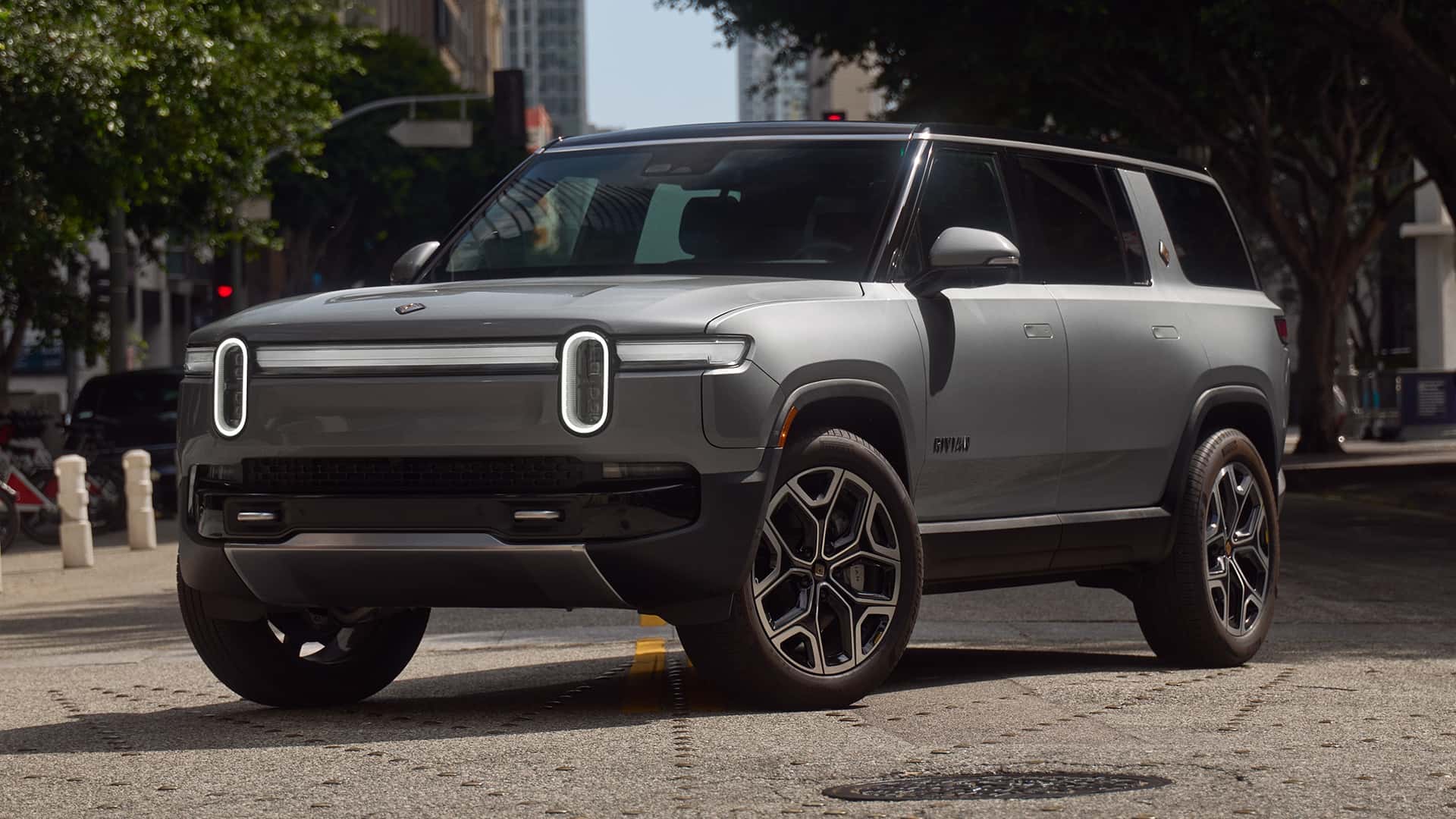
Both top out with the Quad trim at $115,990 and $121,990, respectively. In a market where EV prices have been sliding under competitive pressure, holding the line suggests Rivian feels confident about where its vehicles sit relative to the competition.
Interior naming also gets the R2 treatment. Premium buyers choose between Ocean Coast and Black Mountain. Performance and Quad get three Signature-level options: Slate Sky with gray plaid and walnut, Black Mountain with warm ash, and Ocean Coast with soft grays and dark ash wood.
The materials palette is clearly targeting the premium-but-not-pretentious buyer who wants something that feels designed without feeling overwrought. The R1T picks up new 20-inch Adventure All-Season wheels with more capable tires, and both body styles get a new color called Esker Silver, borrowed from the R2.
None of this is dramatic. Rivian did its heavy lifting with the 2025 refresh, which brought new motors, a new electrical architecture, and meaningful cost reductions to the production line. What the 2027 updates reveal is a company shifting its attention from engineering spectacle to retail polish.
Trim names that make sense. Interior options that feel curated. A feature customers kept requesting, now delivered.
The real question hovering over all of this is volume. Rivian has been burning cash for years, and the R2 is the vehicle that’s supposed to change the math. Making the R1 lineup feel like part of a coherent brand family, rather than a standalone experiment, is the kind of groundwork you lay when you’re planning to sell a lot more cars soon.
Deliveries of the 2027 R1S and R1T haven’t been dated yet.

Share this Story