
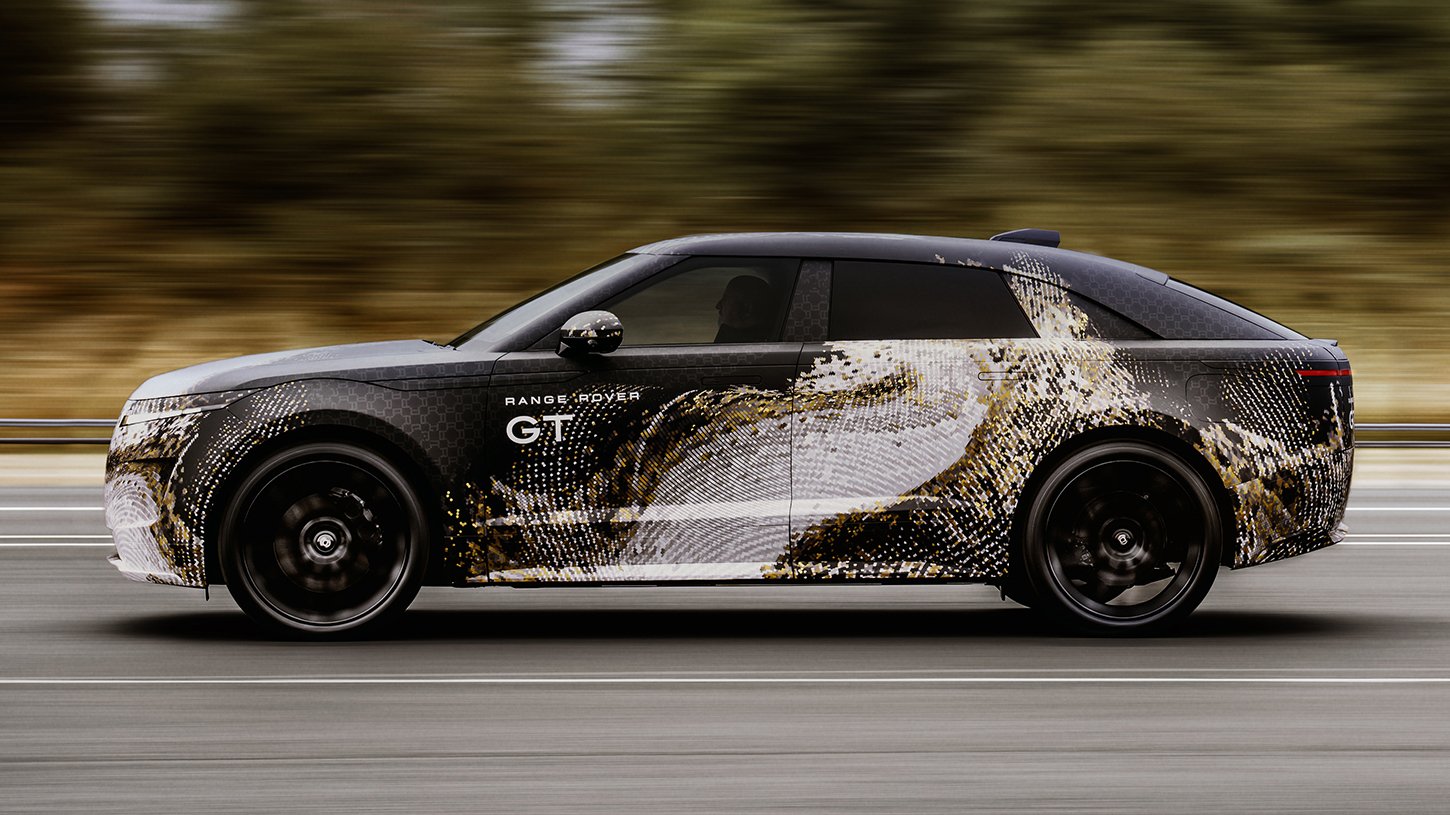


Land Rover just did something it’s been flirting with for more than a decade. The Range Rover GT is real — a grand touring coupe riding on JLR’s new EMA electric platform, built in Halewood, UK, and pitched as “the most car-like Range Rover ever created.” That’s a loaded phrase from a brand that has never made a car.
The GT launches as a full EV, though a hybrid variant is already confirmed. Hard specs — range, power, weight — remain under wraps. Expect the usual luxury-EV math: north of 300 miles, sub-four-second sprints to 60, and a curb weight that would make a Range Rover Sport blush.
Prototypes are in final on-road testing now, with JLR promising more details later this year. Range Rover Managing Director Martin Limpert couldn’t help himself with the superlatives: “The Range Rover GT will redefine the grand-touring segment with the ability to deliver beautiful and engaging GT poise, proportions and long-distance refinement while offering capabilities no conventional GT can match.”
JLR wants this to fight Porsche Cayenne coupes, BMW XMs, and the Cadillac Lyriq while claiming terrain-conquering credibility none of those rivals can touch. Four independent electric motors combined with Land Rover’s traction management systems could theoretically deliver serious grip on loose surfaces. But that low, swept roofline and minimal ground clearance suggest the GT’s “all-terrain capability” will top out somewhere around a muddy polo field.
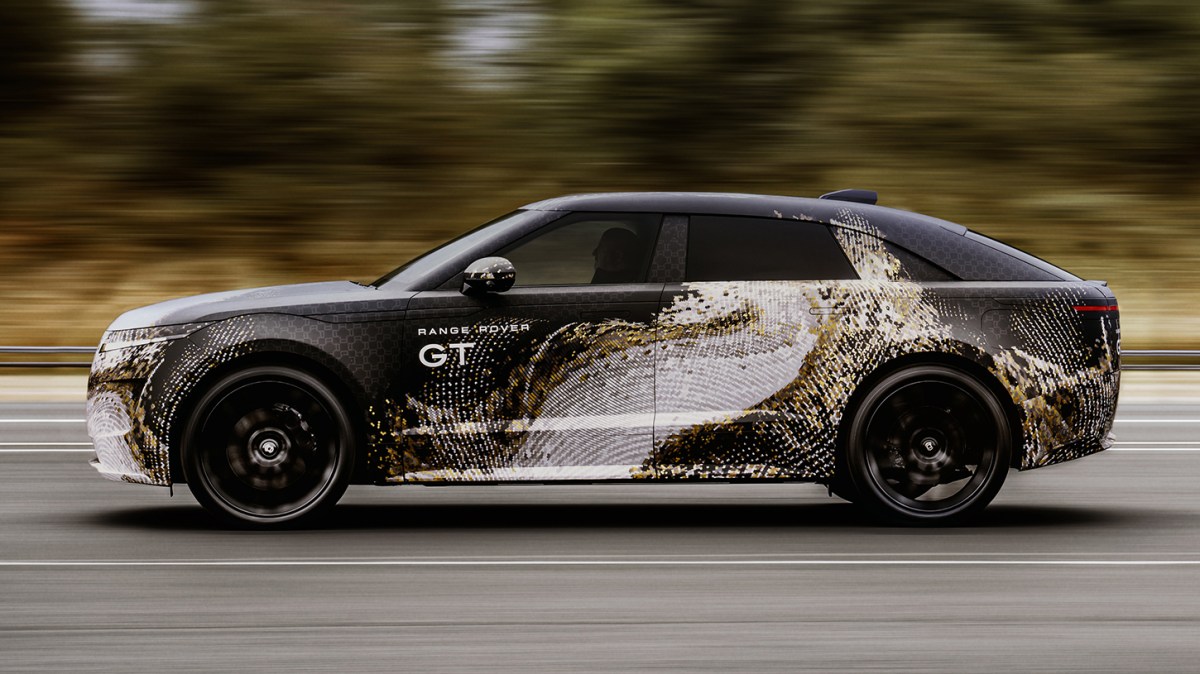
The design reads like a more aggressive Velar — squinty headlights, a long hood, and what JLR calls “coupé proportions.” There’s a passing resemblance to the Jaguar Type 01, though the two ride on different platforms. It slots neatly into the 2026 aesthetic playbook: smooth, minimal, devoid of ornamentation.
Inside, the GT doubles down on that philosophy. Vast, empty surfaces. Screens where buttons used to live. JLR calls it a “sanctuary of calm,” though critics might call it a sanctuary of nothing.
The relentless pursuit of visual silence — pioneered by Apple, weaponized by Tesla, and now adopted by every luxury marque on the planet — has reached the point where interiors feel less like cockpits and more like sensory deprivation chambers. Whether Range Rover’s clientele sees that as a feature or a bug will determine a lot about this car’s future.
And make no mistake, Range Rover’s clientele is the whole game here. The brand has spent the last two decades migrating from agricultural utility to Knightsbridge status symbol. The GT is the logical terminus of that journey — a vehicle that abandons even the pretense of serious off-road duty in favor of grand touring refinement.
It’s not a truck anymore. It’s barely an SUV. The timing is risky. JLR’s EV pivot has been slow and halting compared to rivals.
Jaguar’s own electric reinvention with the Type 00 concept drew mixed reactions. The EMA platform needs to prove itself — not just in range and performance, but in the kind of polished, effortless driving experience that justifies a Range Rover price tag. No numbers have been announced, but expect six figures as the starting point.
Rumors about a Range Rover car have circulated since at least 2014. A 2016 report suggested the brand might simply rebadge a Jaguar sedan. That never materialized. Instead, JLR spent years developing a bespoke electric architecture to underpin something genuinely new — or at least, new for Range Rover.
Whether the GT redefines grand touring or simply adds another luxury crossover to an already crowded field depends entirely on execution. The concept is sound. The brand equity is enormous. The question is whether JLR can deliver the substance to match the silhouette.

Share this Story