
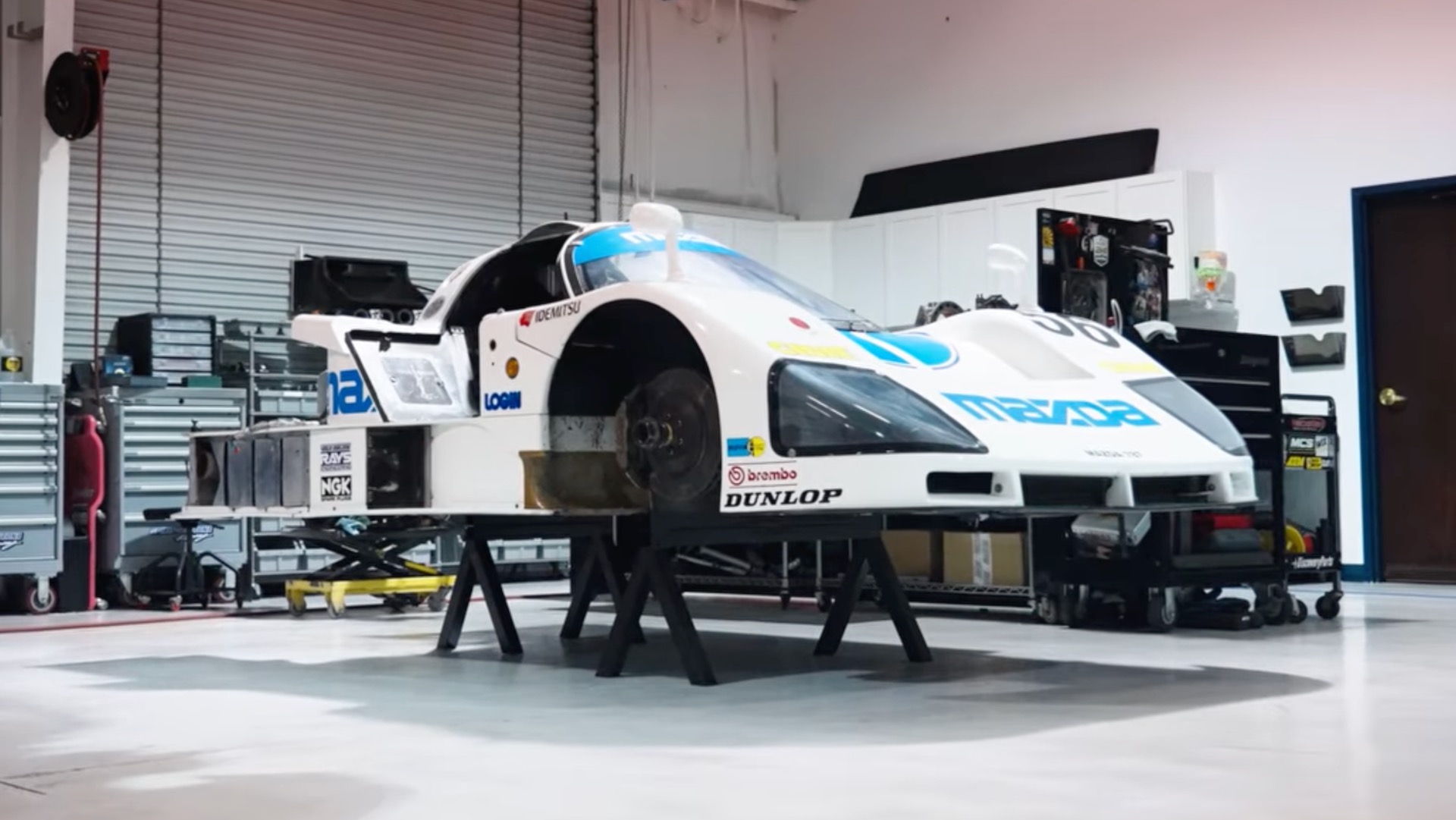


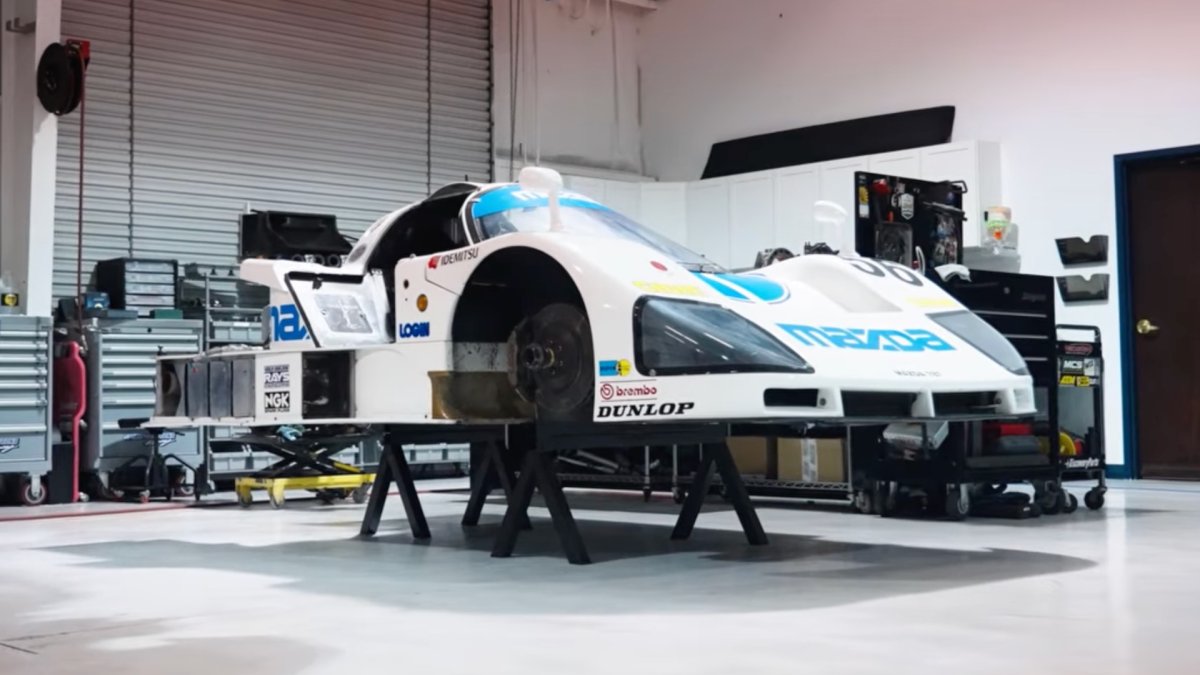
Thirty-four years after a four-rotor Mazda 787B crossed the finish line at Le Mans and rewrote the record books, a small team of Mazda Heritage engineers is still pulling that engine apart, measuring its guts with micrometers, and bolting it back together. A six-minute documentary posted to Mazda Motorsports’ YouTube channel this month shows the painstaking process in detail. It reveals just how alive this supposedly retired powertrain remains.
The R26B four-rotor is the only rotary engine to ever win the 24 Hours of Le Mans. It revs to 9,000 rpm, spits flames from its exhaust, and was deliberately detuned from 900 to 700 horsepower for the 1991 race so it would survive the full distance. That bet on durability paid off. While competitors broke, the 787B kept spinning.
After the victory, Mazda disassembled the engine in front of media to prove a point: the internals were still in race-worthy condition. Engineers claimed it could run another 24 hours. The rules committee apparently agreed it was too good, and rotary engines were effectively banned from Le Mans competition the following year, making the 787B’s achievement permanently singular.
What makes the ongoing rebuild work remarkable is scarcity. The R26B was a bespoke racing unit with almost nothing shared with the two-rotor 13B found in the FD RX-7 that launched the same year. The rotors themselves are similar to period Mazda road-car pieces, but nearly everything else was purpose-built for this program.
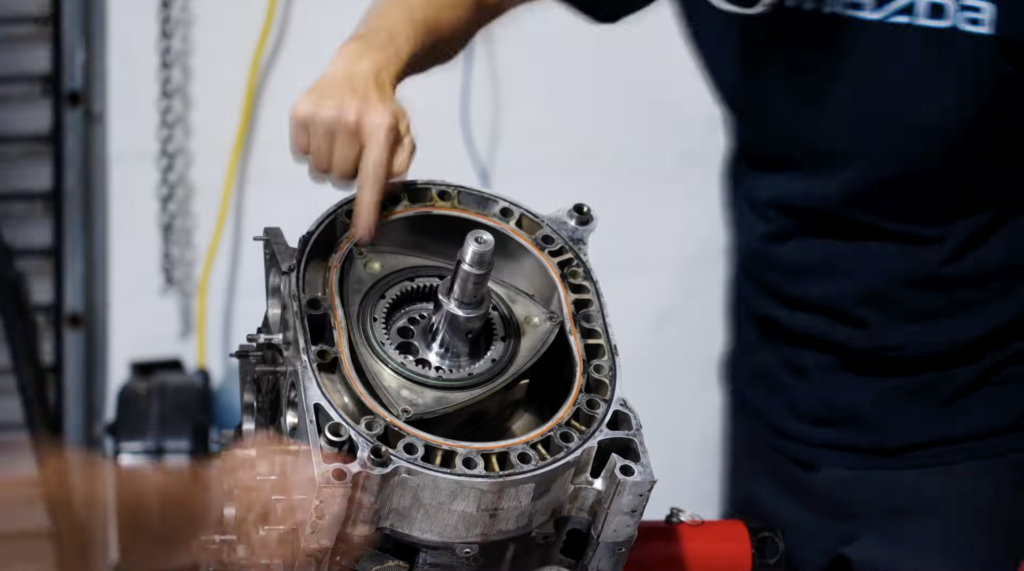
Triple spark plugs per rotor housing instead of the usual two, ceramic apex seals, beefed-up tension springs—all of it was made in finite quantities. There is no catalog to call.
Apex seals are the Achilles’ heel of every rotary engine. Located at each tip of the triangular rotor, they maintain compression against the housing wall, and in road cars, the steel versions are notorious for chatter and wear at high rpm. The 787B’s ceramic seals are lighter and more durable, paired with stronger springs to keep them pressed firmly against the housing. It’s one reason these engines have aged so gracefully.
The rebuild footage also highlights a subtler check: measuring the inner surface thickness of each rotor housing against the outer surface. Overheating can cause the inner wall to shrink, breaking the seal interface. Comparing the two surfaces confirms whether the housing is still within spec. It’s meticulous, unglamorous work—the kind that keeps a legend from becoming a lawn ornament.
Mazda still fires these cars up for events like its annual Fan Festa in Japan, where the 787B’s banshee wail introduces a new generation to a sound no turbocharged four-cylinder or hybrid powertrain will ever replicate. With Mazda having exited top-level IMSA sports car racing after 2021 and no factory prototype program on the horizon, these heritage machines carry the full weight of the brand’s racing credibility.
The timing feels deliberate. Mazda recently filed a fresh trademark for the RX-8 name, fueling speculation about a rotary sports car revival. But the current business climate makes a new rotary-powered competition car nearly impossible, and even a road car remains a long shot. The 787B rebuild video is less a teaser for the future than a love letter to something that cannot be repeated.
There’s an honest melancholy in watching engineers care for an engine that has no successor and no spiritual heir in development. The R26B exists in a category of one. Mazda knows it.
The ceramic seals are holding. The housings are in spec. And somewhere in a workshop, a four-rotor rotary is waiting to scream again—even if only for a demonstration lap that nobody in the grandstands will ever forget.


Share this Story