



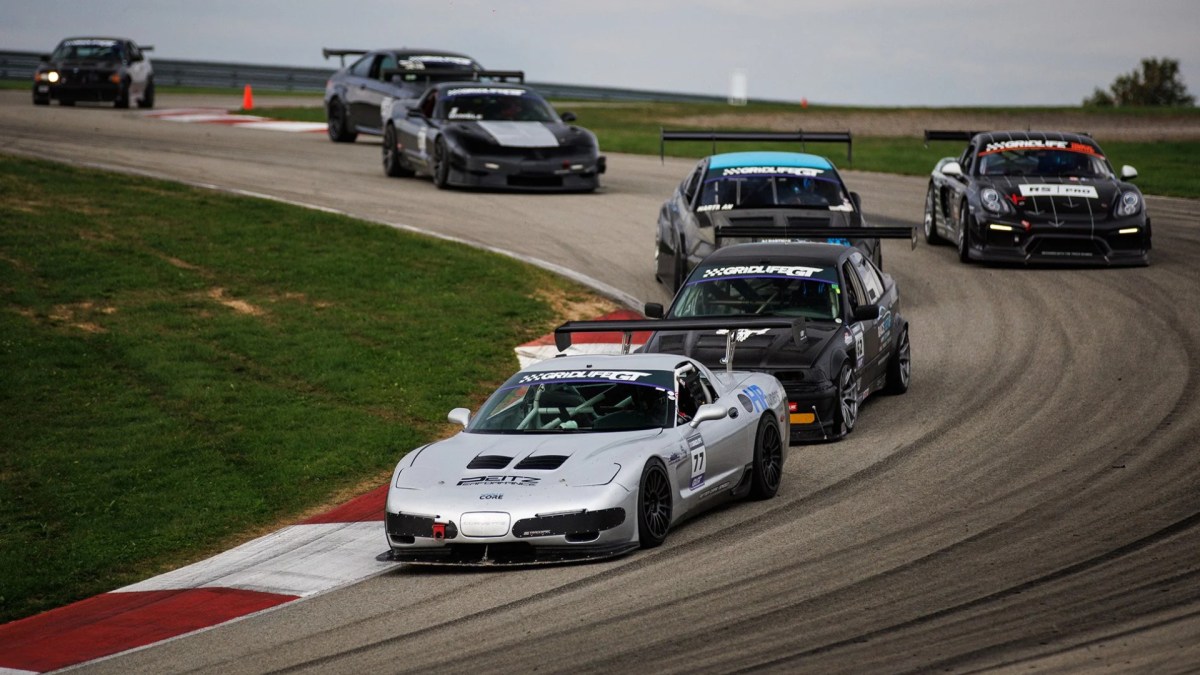
A newly formed company called F=ma has acquired Gridlife, the grassroots motorsport and festival organization, bundling it alongside racing media outlet Racer and automotive PR firm The ID Agency under a single corporate umbrella. The deal, confirmed in early March, is either the best thing to happen to amateur racing in years or the beginning of the end of what made it special.
F=ma isn’t some faceless holding company. Its chairman is Chris Dyson, a two-time American Le Mans Series champion and son of IMSA hall-of-famer Rob Dyson. CEO James Schiefer co-founded Torque.TV, which eventually became MotorTrend on Demand. The executive roster reads like a who’s-who of people who’ve actually turned laps at speed, not just watched from a hospitality suite.
Gridlife founder Chris Stewart stays on as president and chief creative officer. Co-founder Adam Jabaay remains as motorsports director, and Michael Hurczyn continues as Gridlife’s CEO. The message from the top is clear: nothing changes, everything gets better.
The real play here is distribution. Racer acquired MavTV last year and rebranded it as Racer Network, giving F=ma a broadcast pipeline straight into American living rooms. Stewart is already talking about it. “There isn’t anyone that presents club racing from a broadcast perspective like we do,” he said. “This is an immediate accelerant because of the reach of the Racer Network.”
Pair that with The ID Agency, which represents Porsche, Bridgestone, and Hot Wheels, and the business logic snaps into focus. One company runs the events. Another films and broadcasts them. A third sells the sponsorships. That’s not synergy, that’s vertical integration.
For Stewart and Jabaay, the deal is supposed to mean freedom. Gridlife learned a hard lesson in 2022 when it expanded to 12 events and nearly burned itself out. This year it scaled back to six festivals. “You can only burn so hot for so long,” Jabaay admitted. The F=ma structure, in theory, lets the founders focus on the product instead of drowning in operations and accounting.
But the grassroots community isn’t uniformly thrilled. Long-time participants on the Grassroots Motorsports forums are already voicing concern. Ticket prices have roughly tripled since 2020. The series has gone national, and adding television coverage with bigger sponsors makes the worry predictable: the people who built Gridlife from a mortgaged house and a dream get priced out by the people who show up once the cameras are rolling.
One commenter put it bluntly: “Everything is better with PE, said nobody ever.” Others pointed to the World Racing League as a cautionary tale, a series that grew until the cars got faster, the budgets got bigger, and the original community started feeling unwelcome.
F=ma insists this isn’t private equity in the traditional sense. The leadership team’s motorsport credentials are legitimate, and Stewart’s continued involvement is a genuine safeguard. More events are planned down the road, with the stated goal of growing the racing community, not just the revenue line.
The tension is baked into the DNA of every grassroots series that scales up. Gridlife’s identity was forged in parking-lot drift sessions, beat-up Miatas on track, and music festivals where the bass hit harder than the braking zones. That identity doesn’t automatically survive a corporate parent, broadcast deals, and blue-chip sponsors, no matter how many racing trophies the new owners have on their shelves.
Gridlife’s 2026 season opens next month at Carolina Motorsports Park in South Carolina. The vibes, they promise, will be the same. The question is whether vibes scale.


Share this Story