
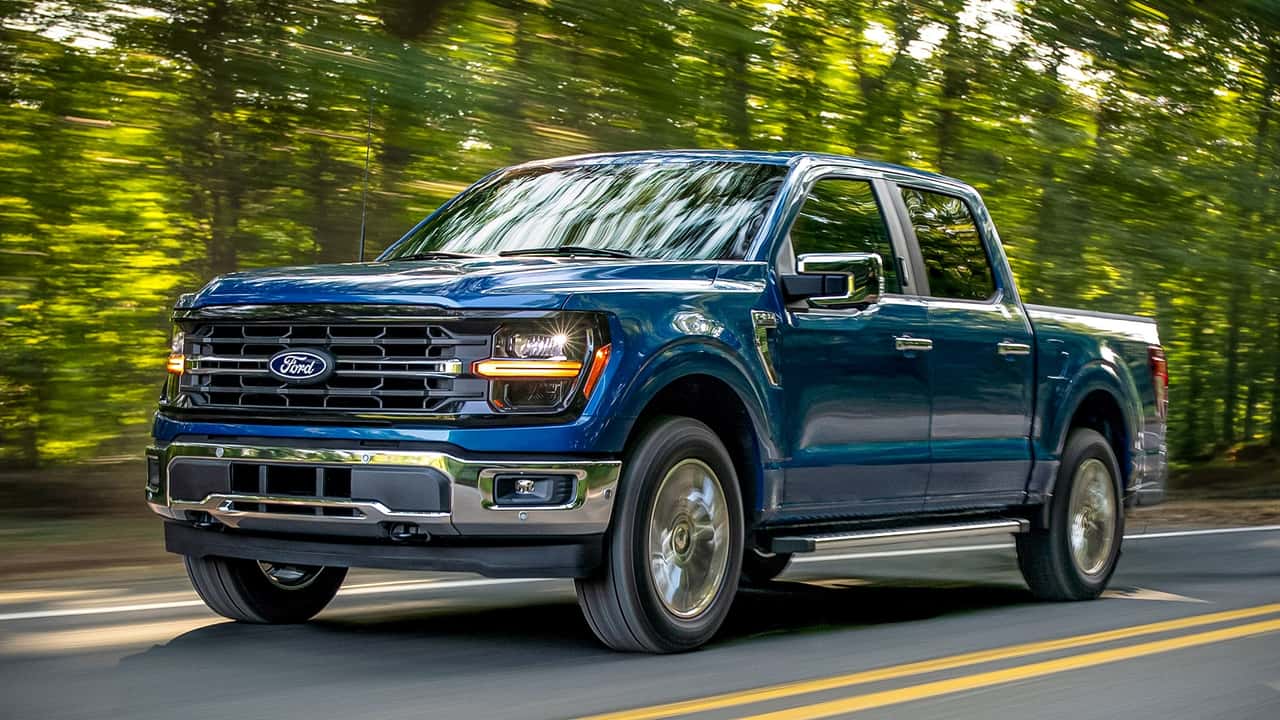


Ford has found a new frontier for its best-selling truck, and it’s across the Atlantic. The 2026 F-150 XLT is officially going on sale in Europe, powered by a 5.0-liter Coyote V8, priced from €76,500 — roughly $89,000 at current exchange rates — and sold through a distributor called Hedin US Motor.
Let that price sink in. The same XLT trim starts around $44,000 in the United States. European buyers will pay double for the privilege of navigating a truck that stretches past 19 feet through streets designed for horse carts.
This isn’t Ford’s first flirtation with selling American iron overseas. Gray-market F-150s have trickled into Europe for years, brought in by independent importers and sold at steep markups to buyers who wanted something nobody else on their block had. What’s different now is the official channel — a legitimate distribution network with warranty support and proper homologation.
The spec sheet reads like a love letter to internal combustion. The 5.0-liter V8 makes 406 horsepower and 410 pound-feet of torque, mated to a 10-speed automatic and standard four-wheel drive. No turbo-four option. No hybrid. No plug.
In a market where EU emissions regulations are tightening by the quarter, Ford is shipping a naturally aspirated V8 pickup and daring someone to buy it. And some will. The F-150’s 7,700-pound tow rating gives it a genuine functional argument in a continent where caravanning is practically a religion.
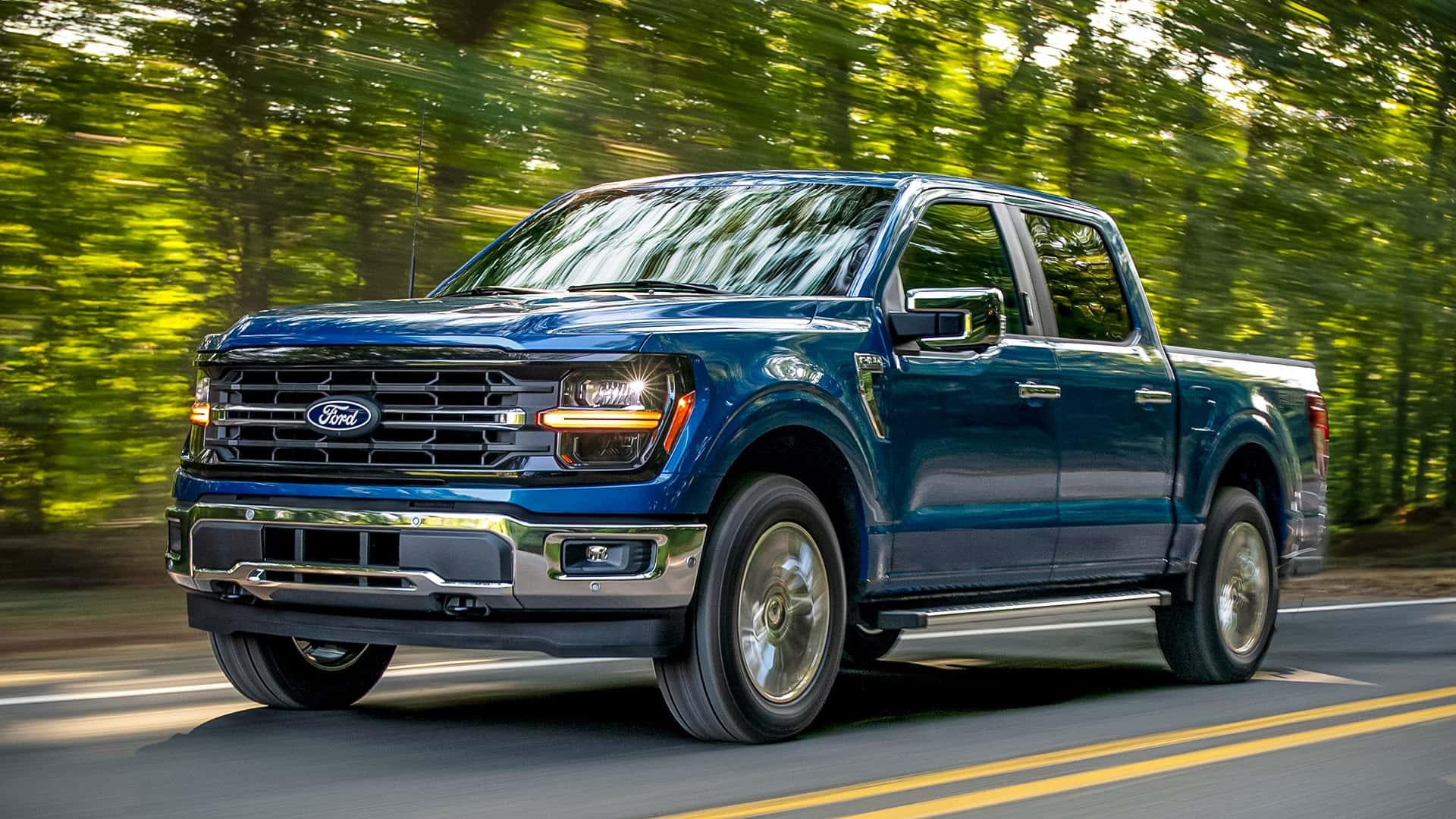
European-market pickups like the Toyota Hilux and Ford’s own Ranger can tow, but nothing in that class matches the sheer capacity of a full-size American truck. For someone pulling a large travel trailer or a boat across the Alps, the math starts to make sense — if you can stomach the fuel bills and the parking anxiety.
Inside, the XLT comes loaded by European standards: heated power seats, a 360-degree camera, blind-spot monitoring, lane-keeping assist, Apple CarPlay, Android Auto, and a large touchscreen flanked by actual physical buttons. Ford clearly understood that at this price, the truck needed to feel premium, not agricultural.
The SuperCrew cab’s rear-seat space rivals a large SUV, which matters in Europe where families often run a single vehicle. A truck that doubles as a family hauler has broader appeal than one that lives on a job site.
Still, the obstacles are real. European fuel prices hover around $7 a gallon. Parking structures weren’t built for vehicles this wide. City centers across the continent are actively banning or taxing large vehicles.
Paris charges SUVs triple parking rates. London’s ultra-low emission zone charges daily fees for thirsty engines. The F-150 isn’t just big — it’s a rolling political statement in cities that are legislating against its very existence.
Ford knows this will be a niche play. Hedin US Motor is launching in “select markets,” not blanketing the continent. The buyer here is specific: someone with land, a trailer, disposable income, and zero interest in downsizing.
Think rural Scandinavia, the Dutch countryside, or southern Germany — places where space isn’t the constraint and a V8 isn’t an offense. The timing is curious. Ford already sells the electric F-150 Lightning, which would seem a more natural fit for Europe’s regulatory environment.
Instead, it’s leading with the Coyote V8 — the engine most likely to draw regulatory scrutiny and the one most likely to stir desire. That tells you everything about who Ford thinks the European F-150 buyer actually is. This isn’t transportation — it’s aspiration, sold by the cubic inch.

Share this Story