
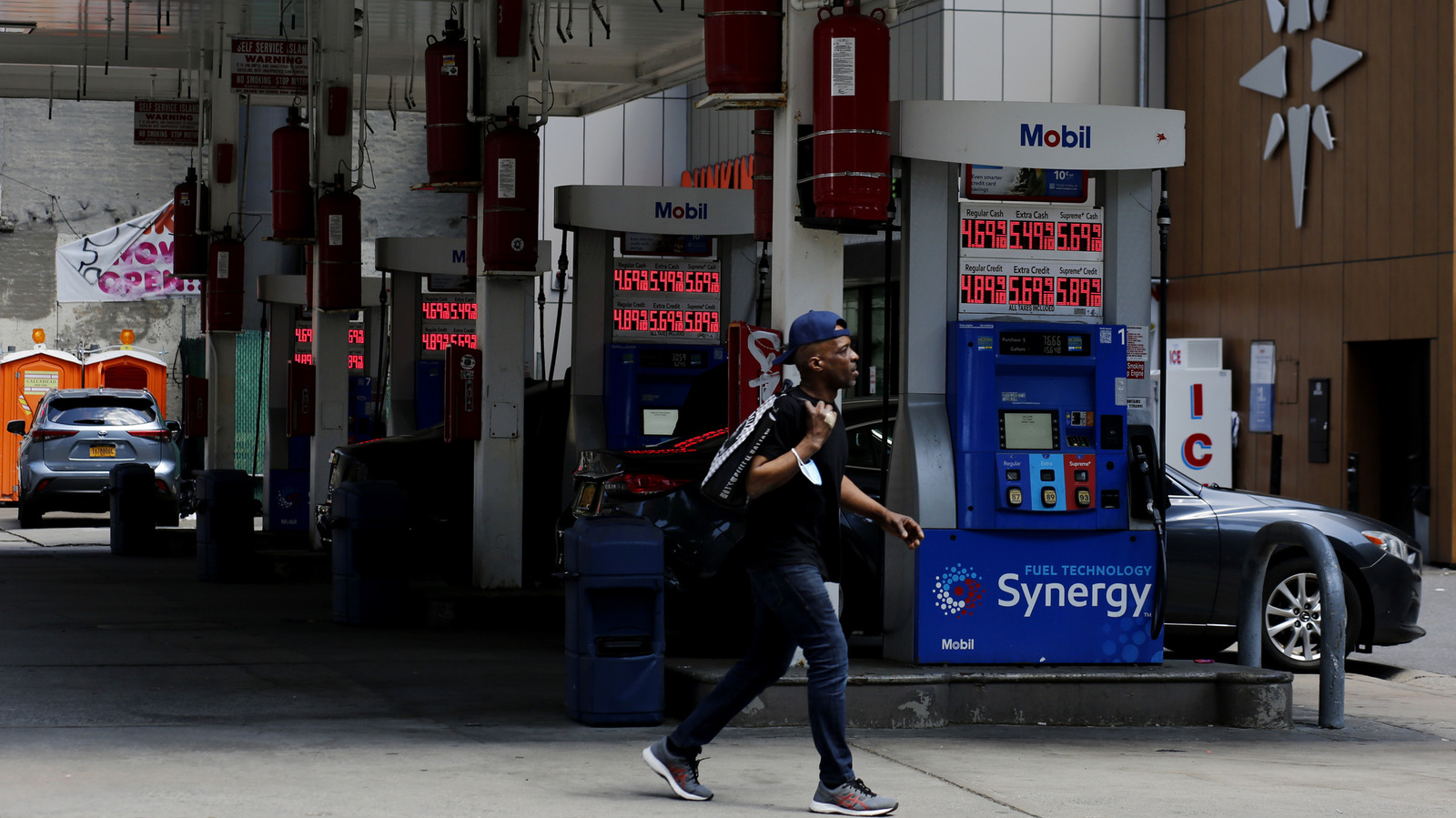


If you’ve ever filled up in New York City and felt like something was off, you weren’t imagining things. A staggering 96 percent of gas stations inspected across the five boroughs failed tests for octane levels, fuel blends, or signage over a two-year period. That’s 702 out of 729 stations checked by the city’s Department of Consumer and Worker Protection between mid-2023 and mid-2025.
Let that number sink in. This isn’t a handful of shady corner stations cutting corners. This is essentially the entire city.
Data reviewed by The City, a local news outlet that broke the story, shows that failed octane samples were the primary offender, racking up 1,135 condemnations. When a pump fails an octane test, it gets shut down until the issue is resolved. Other violations included incorrect fuel blends, bad diesel, and wrong pricing on signage, but those were minor compared to the octane fraud.
The big question is whether this is incompetence or deliberate theft. Most people familiar with the industry lean toward the latter.
“My theory is that whoever’s operating this station is cheating and putting a lower-grade gas in the high-priced tank,” one automotive professional with 63 ASE certifications told The City. The math supports that suspicion. Regular gas in New York currently averages $2.99 a gallon according to AAA, while premium runs $3.88.
That’s an 89-cent spread per gallon. Pump regular into the premium tank and charge premium prices, and you’re printing money.
Octane doesn’t degrade sitting in underground storage tanks. It doesn’t mysteriously change grade. Someone has to put the wrong fuel in the wrong tank, and when it’s happening at nearly every station in the city, it’s hard to chalk it up to honest mistakes.
Robert Sinclair Jr., senior public affairs manager for AAA Northeast, said he was unaware of the scope of the problem until a reporter told him. “I think people should be getting what they pay for,” he said. “That’s why various government services exist — to make sure consumers aren’t getting ripped off.”
The people who notice it most are the ones burning through fuel the fastest. Ride-share drivers in New York City, many of whom go through a full tank every single day, told The City they can tell the difference between stations. Some reported check engine lights after filling up at certain locations. Others described engine knocking and cars that suddenly started acting up.
Majed Zegrar, a former driver and advocate for the Independent Drivers Guild in Astoria, Queens, said even his bulletproof 2018 Toyota Camry had problems. “For seven years I rent the car. It’s a Camry. I’m talking about a very strong car. It takes any gas for the engine. To tell you there is a problem, that means that gas is very bad,” he said.
The issue is particularly dangerous for modern turbocharged and high-compression naturally aspirated engines, which are tuned to run on higher-octane fuel. Feed them low-octane gas and you risk pre-ignition, detonation, and engine knock. All of that can cause real mechanical damage over time.
This kind of fraud isn’t unheard of elsewhere, but the scale in New York City is extraordinary. One forum commenter recalled a gas station owner in Fort Collins, Colorado, who got hit with a roughly $720,000 fine about twenty years ago for pumping cheap fuel into premium tanks. That was one station. New York has over 700 that failed inspections.
Driving in New York City already costs a fortune between congestion pricing, insurance rates, and parking. Now add the possibility that the premium fuel you’re paying nearly four bucks a gallon for is actually regular. The whole thing starts to feel like a citywide grift.
The Department of Consumer and Worker Protection has the authority to shut down individual pumps and issue violations, but with a failure rate this high, the question becomes whether enforcement is anywhere close to sufficient. When 96 percent of an industry is failing inspections, the problem isn’t a few bad actors. It’s the system itself.


Share this Story