
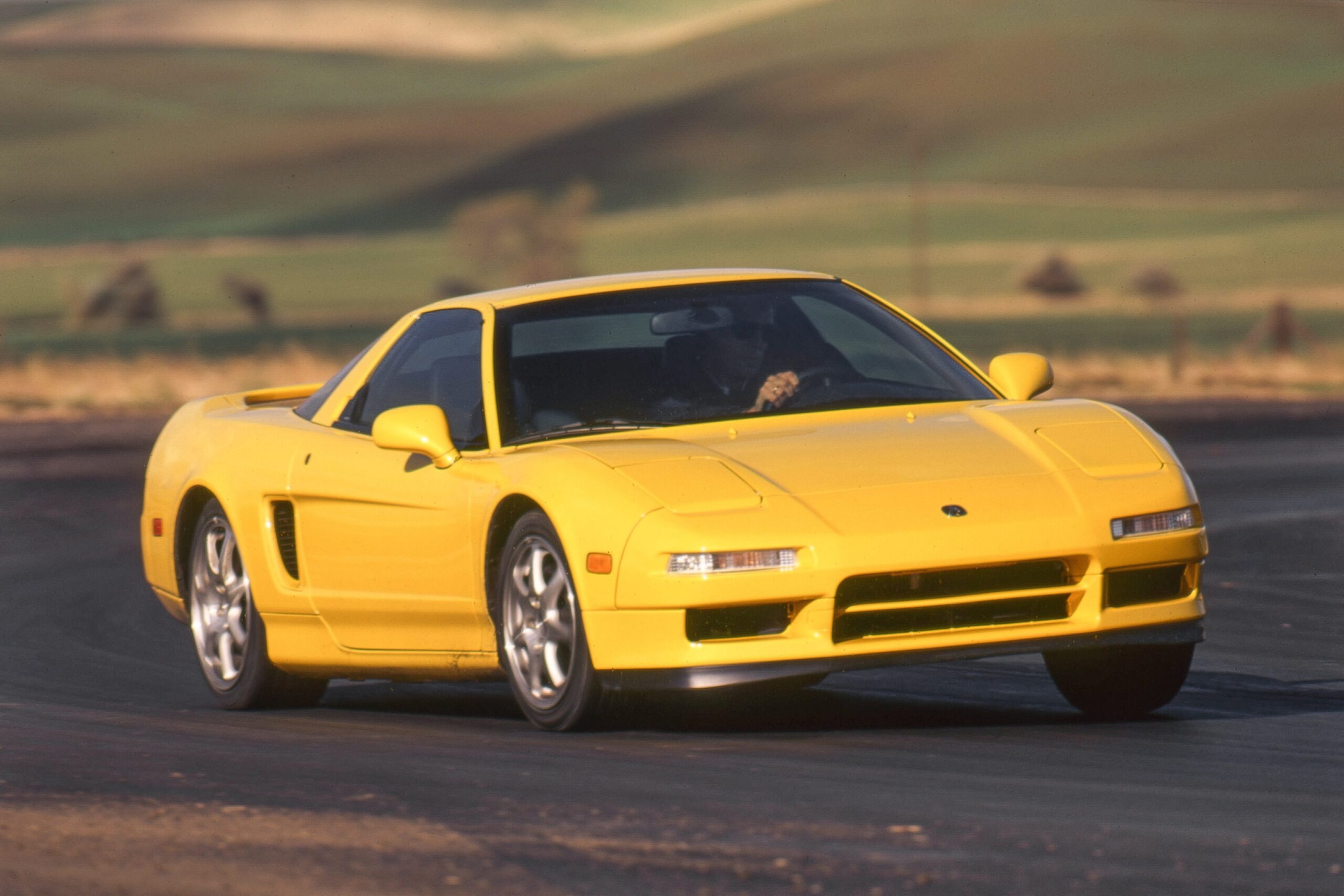


In May 1997, Car and Driver published a test of the updated Acura NSX-T that read less like a review and more like a thank-you note. Two years earlier, the magazine had openly wished for more power and a six-speed gearbox. Honda delivered both.
The 3.0-liter V-6 grew to 3.2 liters, picking up 20 horsepower to reach 290. A new six-speed manual replaced the old five-speed. The first five ratios were shortened for sharper response, while sixth gear sat seven percent taller than the previous top cog, dropping highway revs to a lazy 2,850 rpm at 70 mph.
The results on the test track were predictable but satisfying. Zero to 60 fell from 5.2 seconds to a flat 5.0. The quarter-mile dropped from 13.8 seconds at 103 mph to 13.5 at 106. Not seismic gains, but the 1995 car was already fast.
How Honda found the extra displacement tells you everything about the company’s engineering culture in the 1990s. A 3.0-millimeter bore increase was made possible by fiber-reinforced-metal cylinder liners, a technology that replaced heavier steel units with thin aluminum pieces reinforced by carbon and aluminum-oxide fiber. The pistons got iron coatings to compensate.
Intake valves grew one millimeter. A new stainless-steel exhaust manifold replaced the old cast-iron piece. Acura’s engineers said those breathing changes mattered more than anything else for the power bump.
The rest of the car got similar obsessive attention. Body panels were now formed from an alloy that bake-hardened to greater strength, allowing thinner gauges without sacrificing rigidity. Bigger brake rotors and calipers shortened a 70 mph panic stop by two feet, down to 171 feet.
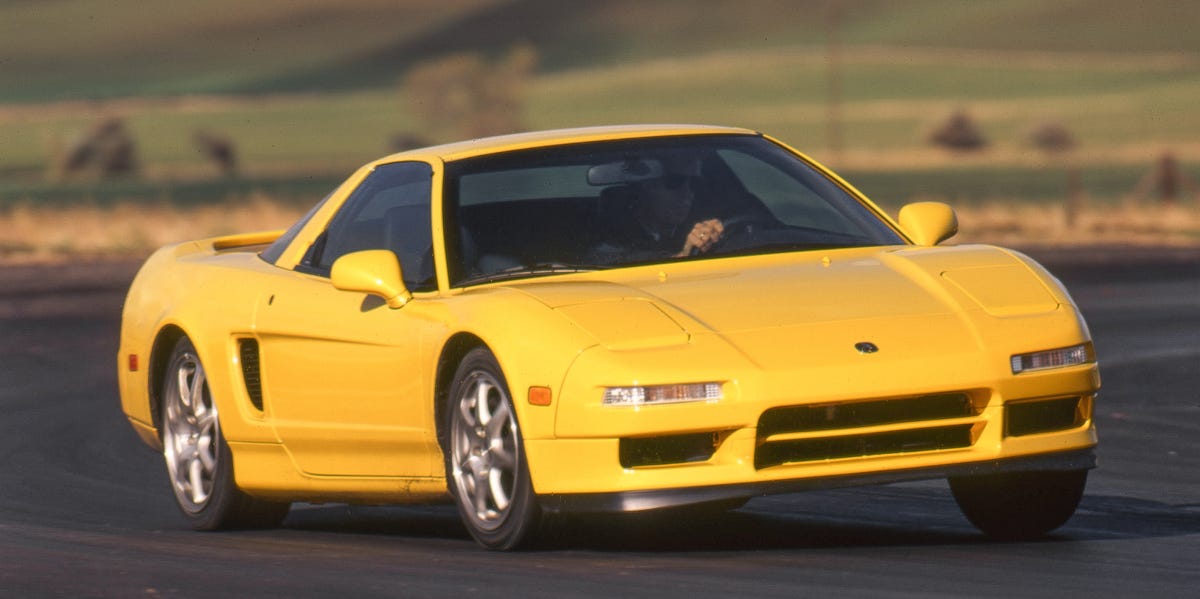
Shift effort dropped by nearly half thanks to dual-cone synchronizers on first through fourth gears. Car and Driver noted the shifter still felt slightly mechanical rather than buttery, and the targa roof squeaked over bumps. These were not complaints so much as observations that even a near-perfect car has tells.
The steering, fitted with Honda’s electric assist, remained a jewel. No slop on center. Loads up naturally in corners.
The NSX in 1997 occupied a strange and lonely space in the supercar world. It was mid-engined and aluminum-bodied, but it started every morning and didn’t punish its owner with repair bills. It offered exotic performance wrapped in Japanese reliability, a combination that no European rival could match and that most didn’t even attempt.
The catch was the price. At $92,943, the 1997 NSX-T cost $4,198 more than the previous year’s car. In 1997 dollars, that put it squarely in Porsche 911 Turbo territory, a neighborhood where buyers expected either raw brutality or a prestigious badge.
The NSX offered neither. It offered precision, balance, and an engine that revved to 7,100 rpm with the mechanical sweetness of a Swiss watch.
Time has proven how right Honda got it. Clean examples now trade for multiples of that original sticker price, and the first-generation NSX is routinely cited as one of the finest driver’s cars ever built. But in 1997, the market wasn’t so sure. Sales were modest.
The car was too refined for thrill-seekers and too exotic for the country-club crowd. Honda kept building them anyway, all the way through 2005, making incremental improvements and never chasing horsepower for its own sake.
The 1997 update was the most substantial mechanical revision the car ever received, and it arrived not with a press conference but with quiet confidence that the right buyers would find it. They did. It just took them 25 years.
Share this Story