
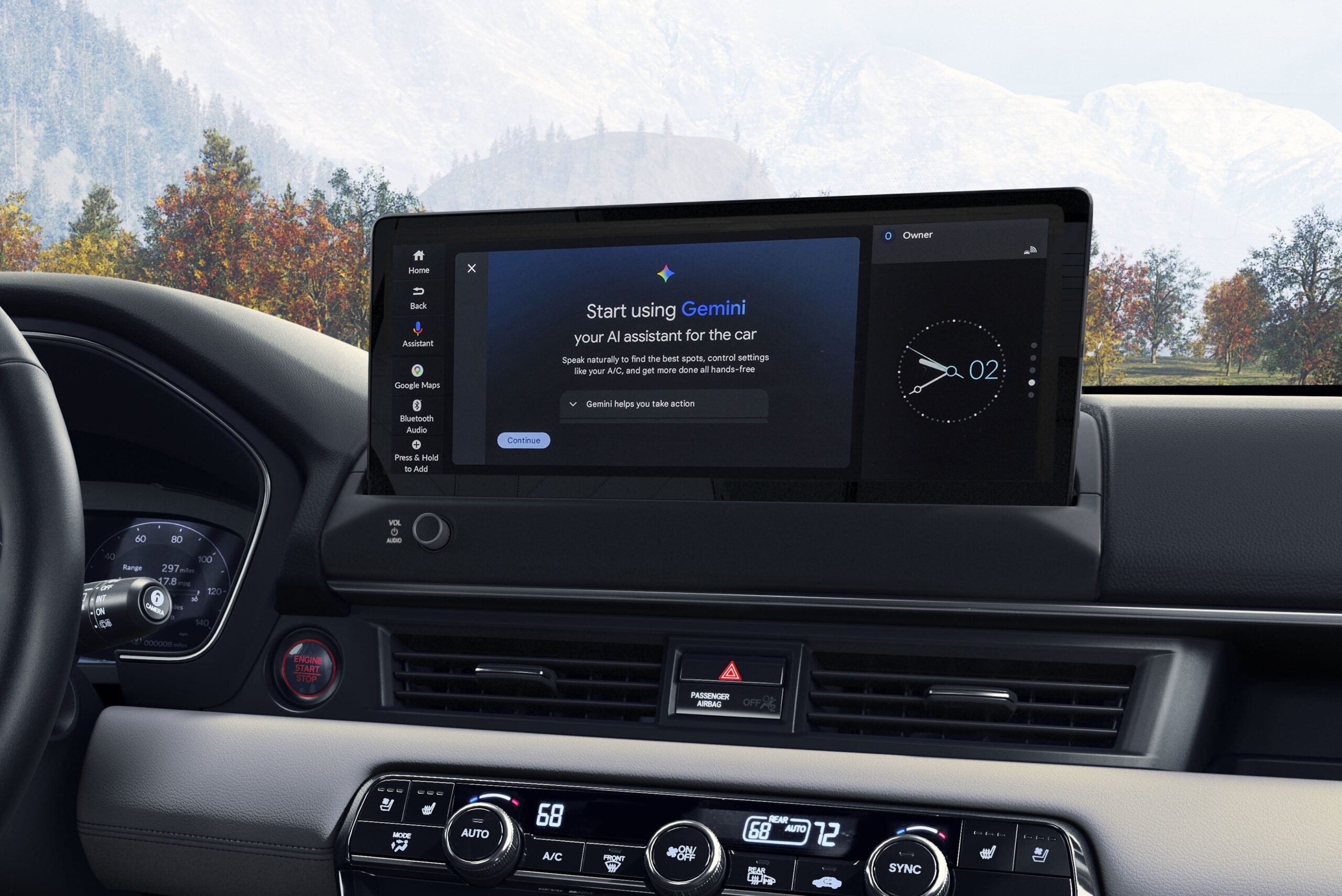


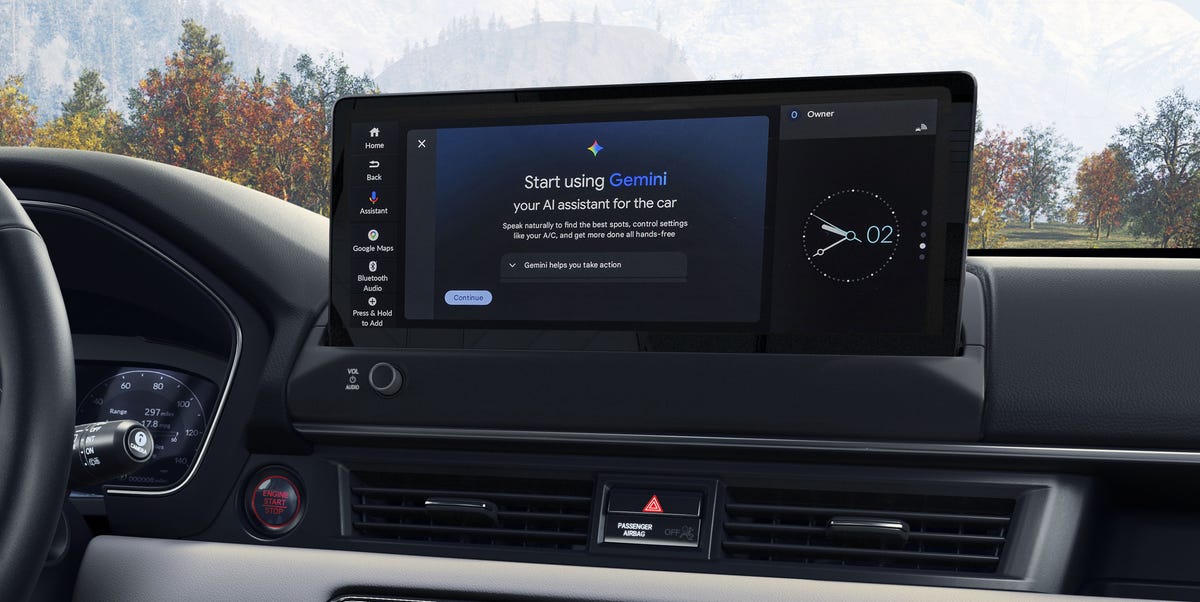
Google Assistant is out. Google Gemini is in. Honda and Acura are pushing an over-the-air update to twelve models across both brands, replacing the old voice command system with an AI assistant that promises something automakers have been chasing for a decade: a conversation that doesn’t feel like yelling at a machine.
The update lands automatically on vehicles already running Google’s built-in software. Drivers signed into a Google account will get Gemini’s ability to handle layered, multi-step questions instead of the rigid one-command-at-a-time structure that made Google Assistant feel like talking to a particularly literal toddler.
Honda says Gemini can summarize news, plan trips, brainstorm ideas, and maintain context across a conversation. Ask it for a restaurant recommendation, then follow up with “what about something cheaper?” and it should understand you’re still talking about dinner. That’s the pitch, anyway.
The model list is specific and worth reading carefully, because not every trim qualifies. On the Acura side, it’s the 2024 ZDX, 2025-and-newer MDX, and the 2026 ADX, but only in A-Spec Advance trim. Honda’s roster is broader: 2023-and-newer Accord Touring Hybrid, 2025-and-newer Civic Si and Sport Touring Hybrid, 2024-and-newer Prologue, 2026-and-newer Pilot, Passport, CR-V Sport Touring Hybrid, and the new Prelude.
Notice what’s missing. Base trims on most Hondas don’t make the cut. The CR-V, America’s bestselling Honda, only qualifies in Sport Touring Hybrid form.
The Civic only in Si and Sport Touring Hybrid. If you bought a well-equipped but not top-trim CR-V in 2025, you’re watching from the outside.
That trim-gating is a familiar play. Automakers have learned that software features make excellent upsell tools, and Honda is no different. Calling connected technology “no longer a convenience” but “an essential part of the driving experience” while simultaneously limiting it to higher trims is a contradiction the company seems comfortable with.
The real question is whether Gemini in a car actually delivers. Google has been aggressive about pushing Gemini across its ecosystem, from phones to Chromebooks to now dashboards. In a phone, a clumsy AI response is a minor annoyance.
At 70 mph, trying to parse a hallucinated direction or a misunderstood request is something else entirely. Honda hasn’t detailed what guardrails, if any, exist to keep Gemini’s responses driving-appropriate.
There’s also the matter of what Google gets out of this. Every Gemini interaction feeds data back into Google’s models. Your car becomes another node in the ecosystem, another source of queries and preferences and behavioral patterns.
Honda frames this as enhancing “every journey.” Google frames it as progress. Both are correct, and neither is telling the whole story.
The technology gap between what luxury brands offer and what mainstream brands deliver continues to narrow. Three years ago, having any kind of functional voice AI in a $32,000 Civic would have been a stretch. Now Honda is rolling Gemini into vehicles that start under $35,000, at least in the right trim.
The update is rolling out now. No dealer visit required. If your car qualifies, Gemini will simply appear, ready to chat. Whether it listens better than the system it replaced is something thousands of Honda and Acura owners are about to find out for themselves.


Share this Story