
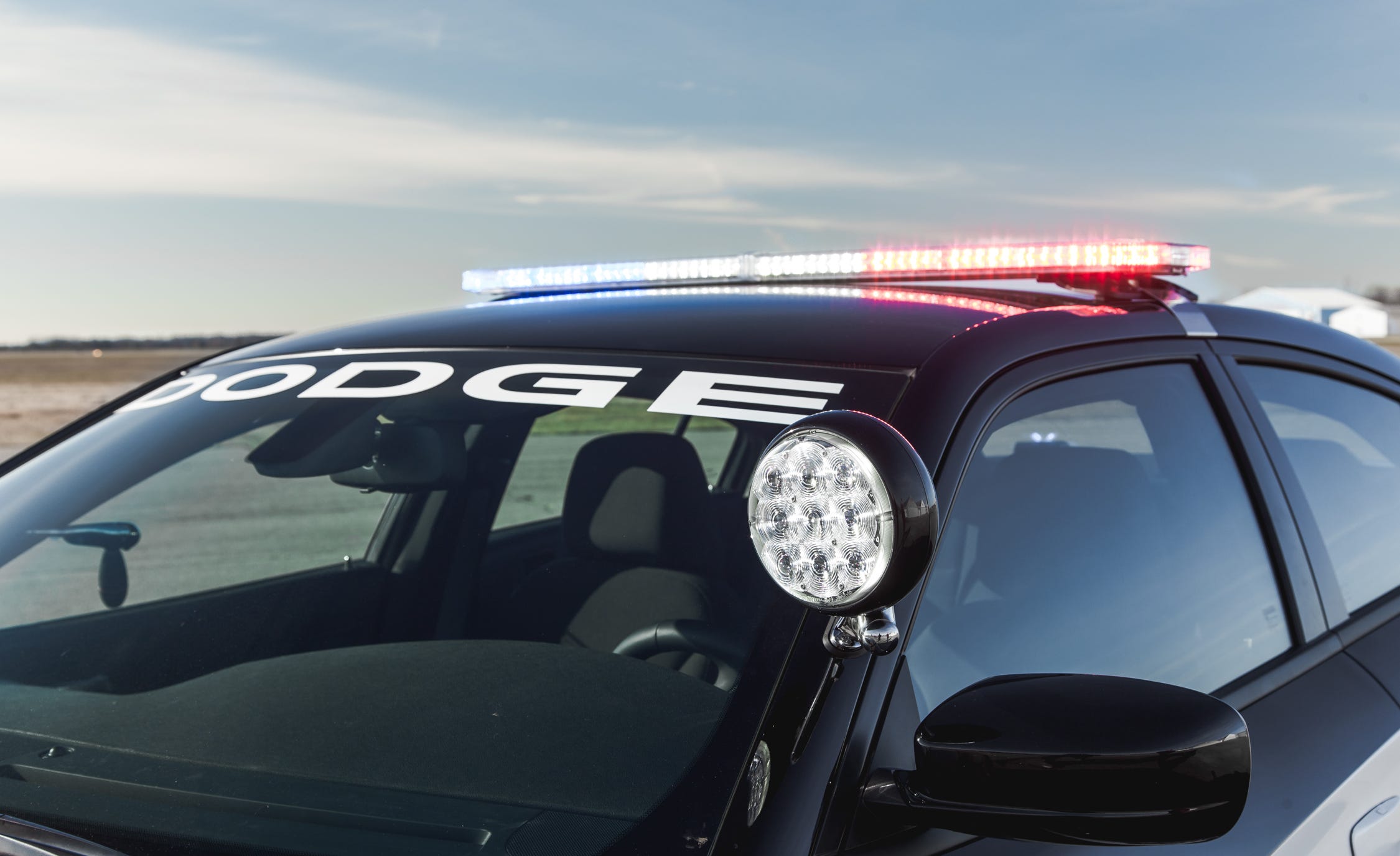


The old Charger cop car spent decades as a fixture in rearview mirrors across America. Then the seventh-generation model aged out, Ford killed the Taurus, and suddenly every police fleet in the country was rolling in Explorer crossovers. Now Dodge wants back in.
Dodge Law just unveiled a prototype of its 2027 Charger Police Pursuit Vehicle at a law-enforcement fleet event in Daytona. It packs a Hurricane turbocharged 3.0-liter inline-six and comes with standard all-wheel drive. No V-8, and no option for one, apparently.
If you’re expecting the high-output version of that Hurricane motor, temper those expectations. Fleet managers care about regular-octane fuel and maintenance budgets, not quarter-mile times.
The new Charger PPV will be the only police-specification sedan on the market when it arrives, likely sometime in 2027. Every competitor wears the crossover uniform now. That makes this car either a throwback or a calculated bet that some departments still want a low-slung pursuit vehicle with a center of gravity that doesn’t remind you of an SUV.
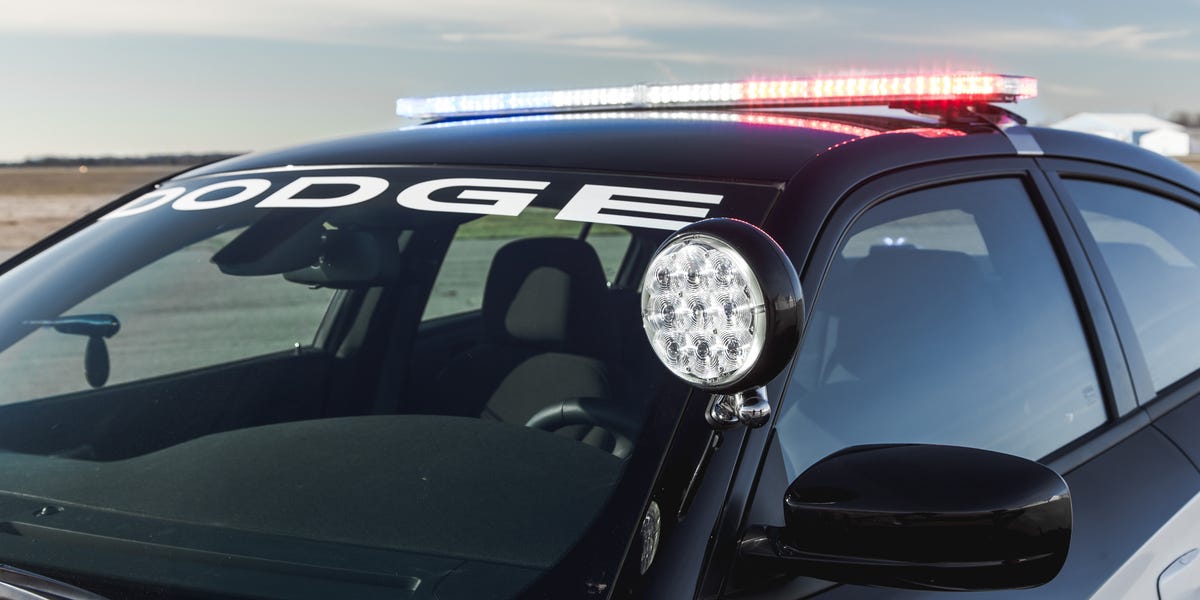
The hatchback layout gives it a practical edge over the old Crown Vic formula. Gear, medical supplies, communication equipment, all of it has to fit somewhere. A hatch swallows more than a traditional trunk ever could.
Standard all-wheel drive checks the box for departments in northern states where rear-drive patrol cars spent winters sliding into ditches.
What Dodge showed in Daytona was still a prototype, meaning it hasn’t yet cleared the gauntlet of law-enforcement certification requirements. These are not small hurdles. Seat designs have to accommodate officers wearing loaded utility belts, which means ditching the aggressive side bolstering civilians enjoy.
Equipment racks, wiring provisions, idle-hour durability ratings, all of it has to be engineered and validated before a single unit rolls into a motor pool.
The timing is interesting. Ford has owned the police vehicle market almost by default since the Crown Victoria era gave way to the Explorer and its Interceptor variants. Chevrolet still fields the Tahoe PPV, and both are truck-based platforms.
Dodge is betting that a turbocharged six-cylinder sedan can carve out a niche in a segment dominated by vehicles that sit eight inches higher off the pavement.
Fleet purchasing decisions are ruthlessly pragmatic. Fuel economy, total cost of ownership, parts availability, resale value after 100,000 hard miles. The romance of a Charger with a light bar means nothing to the procurement officer running spreadsheets.
Dodge will have to prove the numbers work, not just the silhouette.
But there is something to the psychology of it. A black Explorer blends into traffic. A low, wide Charger in the mirror still triggers a different kind of recognition.
Departments that value visible deterrence might find that worth a line item.
Dodge has not released specific horsepower figures, fuel economy numbers, or pricing for the PPV. The production timeline points to 2027, but prototypes shown at fleet events have a way of slipping schedules when certification testing gets complicated. The company is clearly courting interest early, trying to build momentum before a single order sheet gets signed.
Whether law enforcement actually buys it depends on answers Dodge hasn’t provided yet. The sedan cop car has been functionally dead for years. Bringing it back requires more than nostalgia and a turbocharged six. It requires a business case that survives contact with a fleet manager’s calculator.
Share this Story