
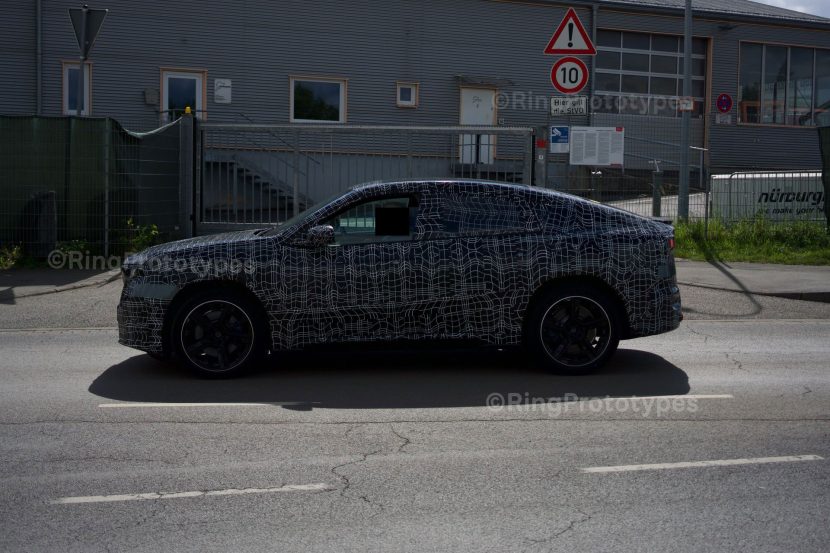


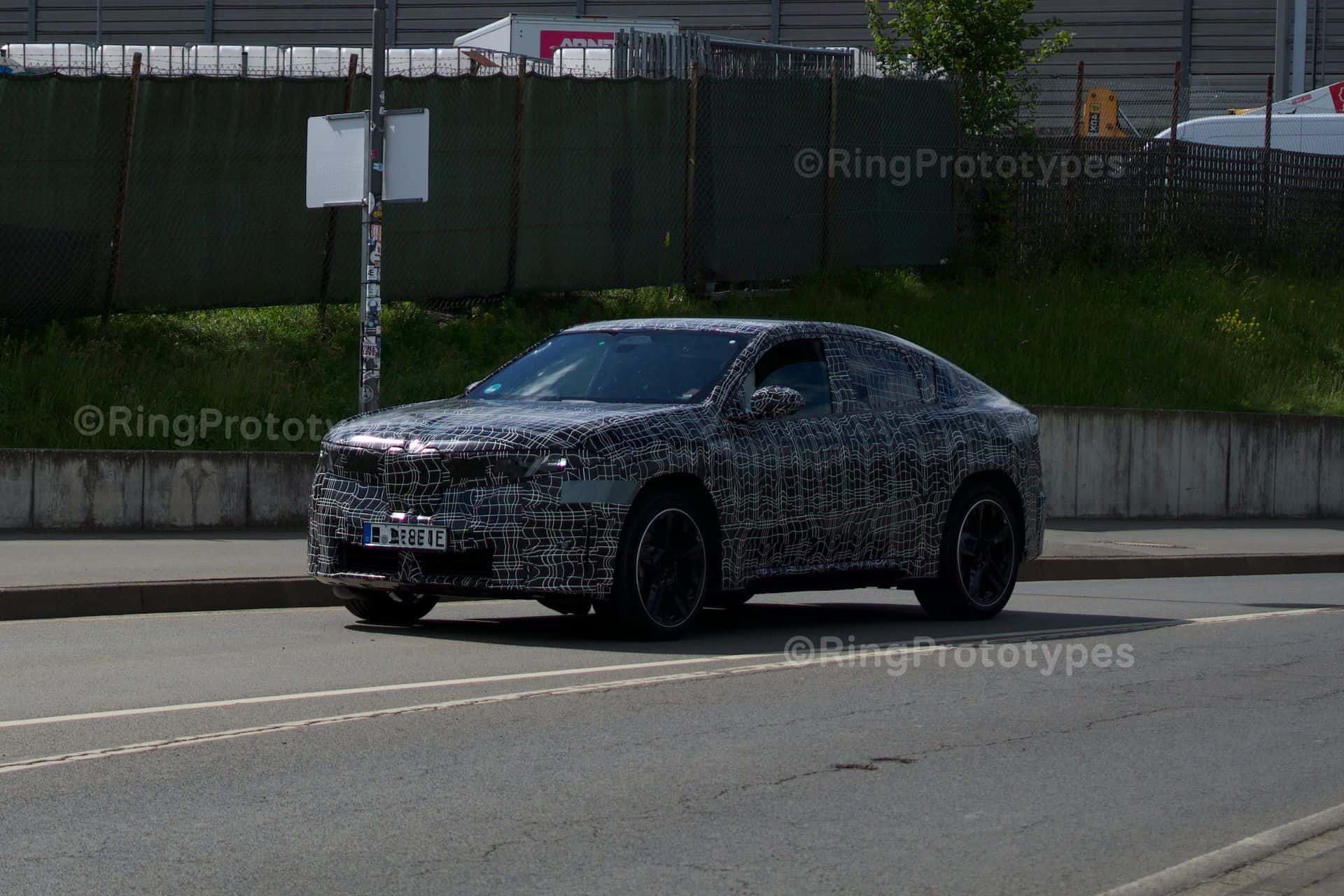
A camouflaged BMW iX4 prototype, internally tagged NA7, showed up testing near the Nürburgring this week with wrap that hid almost nothing. The roofline drops hard after the B-pillars. The rear overhang is chopped shorter than the iX3, and the front end looks lifted panel-for-panel from its boxier sibling without so much as a revised bumper corner.
This is BMW’s next electric coupe-SUV, and it arrives in November with two variants: the iX4 40 xDrive and the iX4 50 xDrive. A hotter M60 xDrive follows in March 2027.
The iX4 replaces the gas-powered X4, which ended production earlier this year without a combustion successor. That’s a clean break. Every previous X4 since the F26 launched in 2014 offered at least one internal combustion option.
This one doesn’t. BMW is betting the coupe-SUV customer — the buyer who already prioritizes style over cargo space — will follow the brand into a fully electric lineup without hesitation.
There’s some history behind that bet. BMW invented this segment with the X6 in 2007, a vehicle most of the industry dismissed as absurd. Then Audi, Mercedes, and Porsche built their own versions.
The X4 followed, then the X2. Now the entire coupe-SUV ladder is getting rewired for Neue Klasse, and the iX4 is the second rung.
Mechanically, there’s almost nothing new here. The iX4 rides on the same Neue Klasse platform as the iX3 NA5, shares its battery pack, and uses identical 800-volt charging architecture capable of pulling 400 kW from a compatible DC fast charger. BMW says the iX3 can recover 171 miles of EPA range in ten minutes, and the iX4 should match that figure given the shared underpinnings.
Power numbers will mirror the iX3 too. The 50 xDrive dual-motor setup makes 463 horsepower and 473 pound-feet of torque, enough for a 4.9-second sprint to 62 mph. The 40 xDrive slots in below as the volume play.
Where it gets interesting is further down the road. An electric X4 M, codenamed ZA7, is expected to borrow a quad-motor layout BMW is developing across its M lineup, including the next M3 and X3 M. Output rumors start north of 800 horsepower, but that car is nowhere near launch, so treat those numbers accordingly.
The production story matters as much as the hardware. Every X4 before this one rolled off the line in Spartanburg, South Carolina. The iX4 won’t — it’s built exclusively at BMW’s Debrecen plant in Hungary, the same factory producing the iX3.
No Spartanburg allocation, no San Luis Potosí backup. For American buyers, that means an import and exposure to whatever tariff math applies at the time of delivery.
BMW is consolidating its Neue Klasse electric production in Hungary rather than spreading it across existing plants. Debrecen was purpose-built for this architecture. Spartanburg still handles the combustion and plug-in hybrid X models that continue to sell in massive volume in North America.
The split is clean, deliberate, and tells you exactly where BMW sees the future of each factory.
The rakier roofline should deliver a marginal aerodynamic advantage over the iX3, which could translate to a few extra miles of range or slightly better efficiency at highway speed. BMW hasn’t published those numbers yet. The company will almost certainly lean into whatever coefficient advantage the shape provides when the marketing push begins later this year.
For now, the iX4 is a known quantity wearing unfamiliar clothes — same platform, same powertrain, same factory, different roofline. November isn’t far off.

Share this Story