
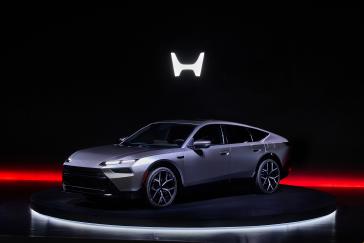


Honda just showed its hand in Japan, and it’s not the all-electric future the industry has been breathlessly promising. During a global business briefing on May 14, CEO Toshihiro Mibe unveiled a next-generation Hybrid Sedan Prototype. It’s the first visible piece of a 15-model hybrid offensive aimed primarily at North America by the end of the decade.
The pivot is unmistakable. Honda is pulling development and production resources away from other priorities and shoveling them into hybrids. Mibe didn’t dance around it: “Hybrid models will continue to be the key to addressing environmental challenges.” Not battery-electric. Hybrids.
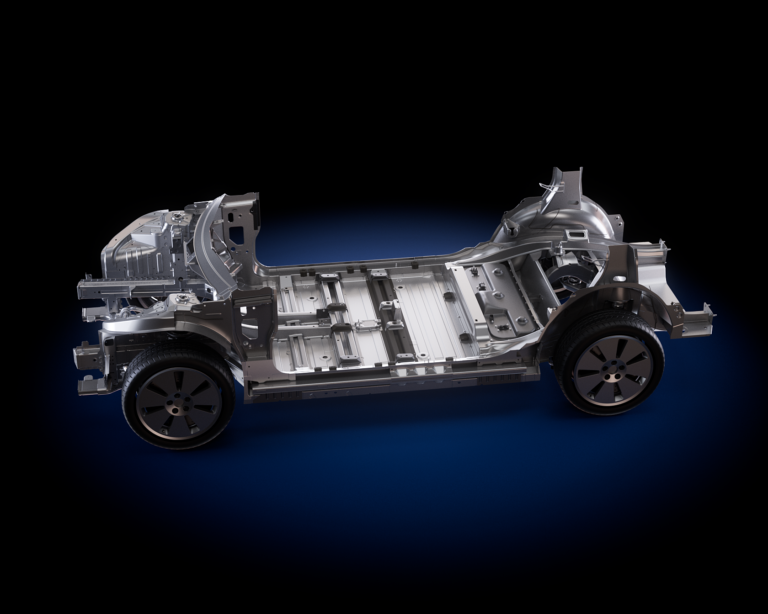
The company plans to start launching vehicles on an all-new hybrid platform with an overhauled powertrain beginning in 2027. The next-generation two-motor hybrid system — an evolution of the architecture already powering the Accord, CR-V, and Civic — targets a 10% improvement in fuel economy. More striking is the cost target: a 30% reduction in system costs. That’s the kind of number that changes transaction prices on dealer lots.
A new electric all-wheel-drive unit is part of the package, promising sharper motor control and more responsive handling. Honda clearly wants these hybrids to feel like driver’s cars, not efficiency appliances.
The production commitment is just as aggressive. Honda will upgrade every North American auto plant to build hybrid models. The Marysville and East Liberty facilities in Ohio — the backbone of Honda’s American manufacturing — will see hybrid output increase.
By 2029, the lineup expands into the D-segment with large hybrid sedans and SUVs. That’s a space currently dominated by Toyota’s Camry and Highlander hybrids.
There’s also a next-generation ADAS system penciled in for 2028. Honda described it as capable of assisting with acceleration and steering across an entire route — expressways and surface roads — based on navigation inputs. It stops short of claiming full autonomy, but the ambition is clear: pair the hybrid drivetrain with enough driver-assist tech to make the daily commute nearly hands-free.
None of this happens in a vacuum. Honda’s electrified vehicles already account for nearly a third of its U.S. sales in 2025. The Prologue EV exists, but the volume is in hybrids.
The company is reading the market correctly. American buyers have shown consistent appetite for hybrids while EV adoption has plateaued in key segments. Toyota proved this years ago, and Honda is now sprinting to match that reality with product.
The sedan prototype shown in Japan hints at what could be a next-generation Accord or a new nameplate entirely. Honda didn’t specify. But it did confirm that 2027 is when metal starts hitting showrooms.
Fifteen hybrid models in roughly four years is an enormous product cadence for a company that has historically been deliberate — sometimes painfully so — about new launches. The 30% cost reduction target suggests Honda’s engineering teams have found real efficiencies, not just incremental tweaks. If those savings translate to sticker prices, Honda could undercut competitors still betting heavily on pricier battery-electric platforms.
Nearly 99% of Honda vehicles sold in the U.S. last year were built in North America. That supply chain advantage becomes a weapon when tariff uncertainty looms and competitors scramble to localize production. Building hybrids in Ohio with an established workforce is a fundamentally different risk profile than standing up new EV assembly lines.
Honda spent years quietly refining its two-motor hybrid technology while louder voices in the industry declared the internal combustion engine dead. Now it’s accelerating the calendar and betting billions that the engine still has a long, efficient life ahead of it.
Share this Story