
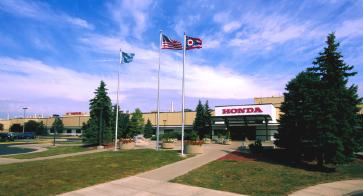


Twenty consecutive years. That’s how long Honda’s Marysville and East Liberty auto plants in Ohio have earned EPA ENERGY STAR certification, every single year since the agency’s Industrial Program began handing out the designation in 2006.
They weren’t alone. Seven Honda U.S. manufacturing facilities earned the 2025 certification, announced March 11, along with Honda of Canada Mfg., which picked up its seventh award across its auto and engine operations.
The full roster: Indiana Auto Plant, 14 years running. Anna Engine Plant in Ohio, eight. Alabama Auto Plant’s engine facility, seven. Honda’s transmission plants in Ohio and Georgia, six each. That’s not a one-off PR stunt. That’s a pattern.
ENERGY STAR certification goes to plants in the top 25th percentile nationally for energy performance, measured by energy consumed per unit produced. It’s a relative benchmark, meaning Honda’s facilities aren’t just hitting a static target. They’re staying ahead of an industry that, on the whole, keeps tightening its efficiency.
The backbone of much of this is Honda’s Green Factory initiative, launched in 2021 to attack energy use, water consumption, waste, and emissions at the plant level. The list of recent projects reads less like a corporate brochure and more like an industrial retrofit playbook. Gas heat sources swapped for electric heat pumps, waste heat captured and reused, compressed air leaks repaired, paint oven modifications to cut natural gas, cooling tower and boiler control upgrades, and reverse osmosis water recovery in the paint shop.
Then there’s the heavier equipment. Honda has installed electric boilers, an electric arc furnace, and an electric regenerative thermal oxidizer at its facilities. Forklifts have gone electric, and EV charging stations are in place. These aren’t token gestures. They represent the kind of deep electrification of factory operations that actually moves the needle on industrial carbon output.
On the energy sourcing side, Honda says long-term virtual power purchase agreements for renewable wind and solar now cover more than 80 percent of the electricity consumed across its North American manufacturing footprint. That’s a significant number for any automaker. It insulates the company from the volatility of fossil fuel pricing while steadily decarbonizing the grid load behind its production lines.
“In addition to energy efficiency, we are very proud of our commitment to minimize waste and water use as part of our comprehensive approach toward reducing environmental impact,” said Jeff Waid, Honda’s Environmental Department Manager.
What rarely gets discussed in these annual award cycles is cumulative effect. A plant that earns top-quartile efficiency status once might be riding a good year. A plant that does it 20 times straight has baked efficiency into its operating DNA.
The Marysville and East Liberty facilities build vehicles, which are complex, high-energy operations involving stamping, welding, painting, and assembly. Staying in the top 25 percent year after year while production demands shift and product lines change requires constant reinvestment and relentless attention to process.
Honda’s broader corporate target is 100 percent battery-electric and fuel cell-electric vehicle sales globally by 2040. Getting there means electrifying not just what rolls off the line but how the line itself runs. The factory floor is where that transition either proves itself or falls apart.
Seven plants, two decades of consistency at the leaders, and an industrial decarbonization strategy that keeps expanding. The cars get the headlines. The factories do the work.
Share this Story