


Honda just posted its first annual loss since going public in 1957. That’s not a typo. Sixty-eight years of unbroken profitability, gone.
The company’s response, unveiled at its annual business update conference, tells you everything about where the auto industry’s electrification fever dream actually stands.
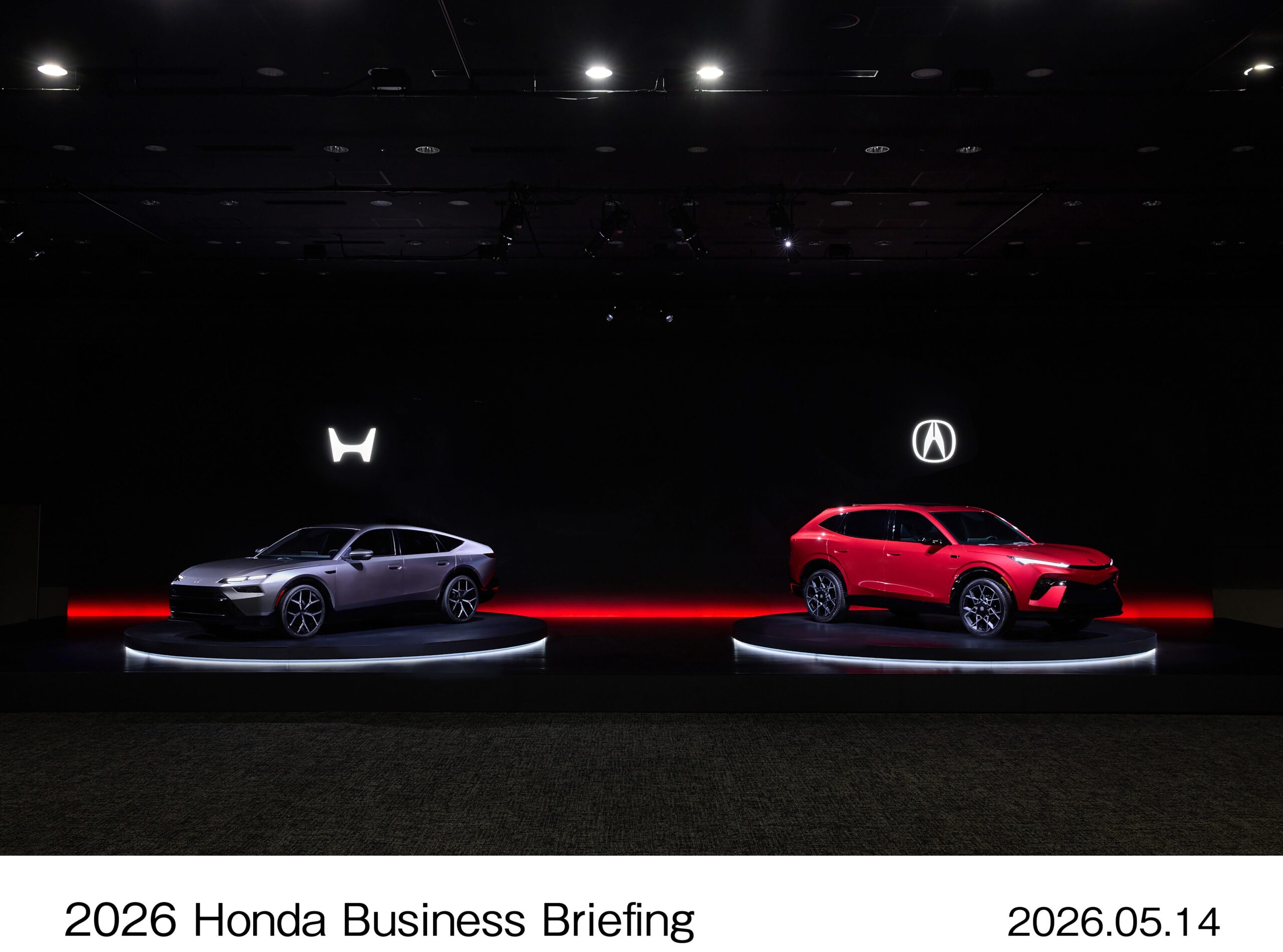
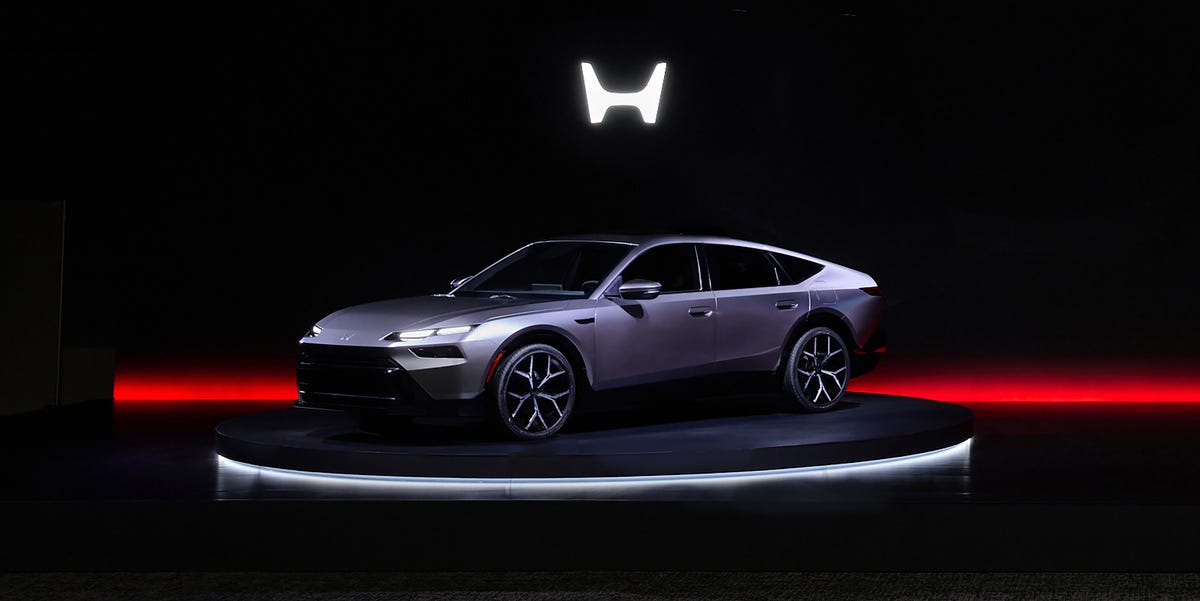
Two prototype vehicles rolled out: a Honda Hybrid Sedan that’s clearly the next-generation Accord, and an Acura Hybrid SUV that previews the next RDX. Both are scheduled for global release within two years. Both run Honda’s next-generation hybrid powertrain. Neither plugs in.
The pivot is breathtaking in its scale. Honda announced plans to launch 15 models globally by 2029, with production beginning as early as 2027. The company’s Ohio assembly plant will dedicate all surplus capacity to internal-combustion and hybrid vehicles.
Meanwhile, the 0-series — Honda’s multi-billion-dollar purpose-built EV platform — is effectively dead on arrival. All three made-in-America electric vehicles have been canceled. CEO Toshihiro Mibe said the company plans to salvage what it can, repurposing architectures and components from the 0-series into the new hybrid lineup. That’s corporate-speak for cutting losses.
The new hybrid system itself sounds promising on paper. Honda claims a 30 percent cost reduction and more than 10 percent improvement in fuel efficiency over current hardware. A newly developed electric all-wheel-drive unit is part of the package, though Honda offered zero specifications.
The powertrain reportedly pairs a revised 2.0-liter Atkinson-cycle four-cylinder with more compact electric motors and a new battery designed to be shared across compact and mid-size models. Sharing that battery pack between vehicle classes is a cost play — exactly the kind of engineering discipline Honda needed two years ago when it was throwing cash at an EV future American buyers weren’t ready to buy.
The Accord and RDX are smart choices to lead this charge. The Accord remains one of the best-selling sedans in the country, a nameplate with decades of built-in loyalty. The RDX is Acura’s volume crossover, and neither needs an introduction.
Honda isn’t alone in this recalibration. Toyota’s hybrid-first strategy, mocked by EV purists for years, now looks prescient. Hyundai and Ford have both quietly expanded hybrid offerings while softening EV production targets. But none of those companies had to absorb a historic annual loss to reach the same conclusion.
The math was never complicated. Battery-electric vehicles remain expensive to build, margins are thin to nonexistent for most manufacturers, and charging infrastructure is still spotty outside major metros. Consumer demand has plateaued well below the projections that fueled billions in factory investments.
Hybrids deliver most of the fuel-economy benefit at a fraction of the cost and complexity. Buyers figured that out before boardrooms did.
Honda’s reversal is the loudest admission yet that the industry’s EV timeline was built on ambition, not demand. Fifteen hybrid models in three years is an aggressive target for a company still nursing financial wounds. But it’s a bet grounded in what customers are actually purchasing today, not what analysts projected they’d want by 2030.
The prototypes look sharp. The strategy looks sharper. Whether Honda can execute fast enough to recover from a year that broke a 68-year streak — that’s the only question left worth asking.
Share this Story