
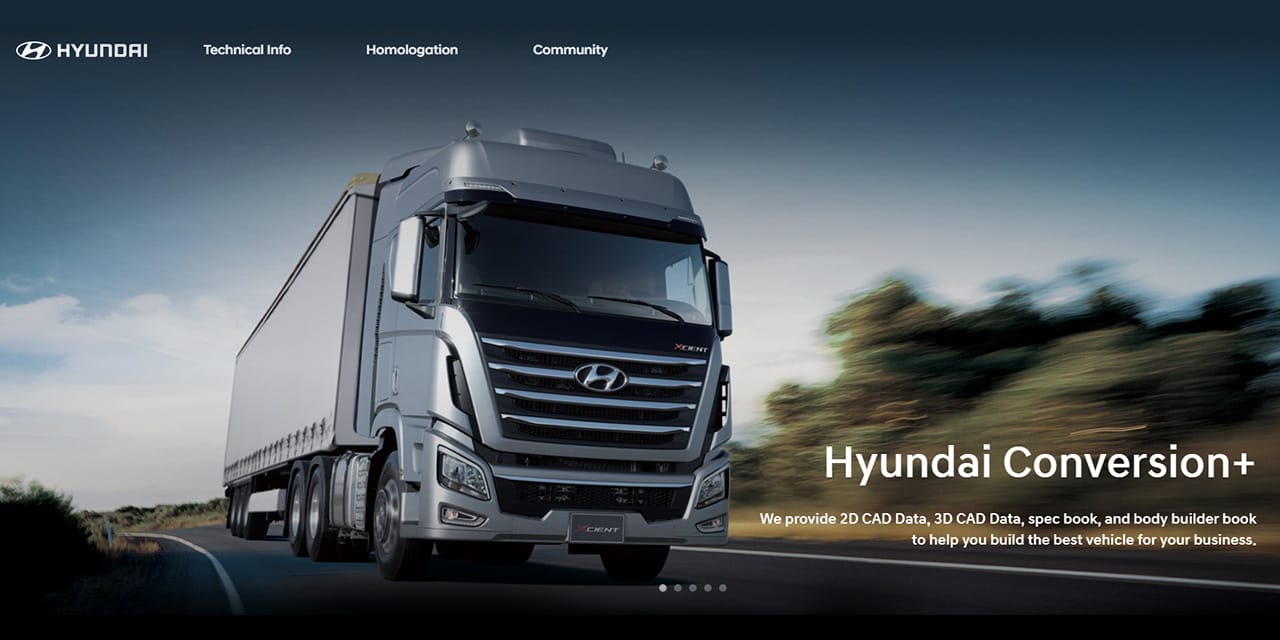


Hyundai Motor just launched a digital platform for the people who actually turn its commercial vehicles into working machines. It’s called Hyundai Conversion+, and it went live April 20 across roughly 120 countries in 15 languages.
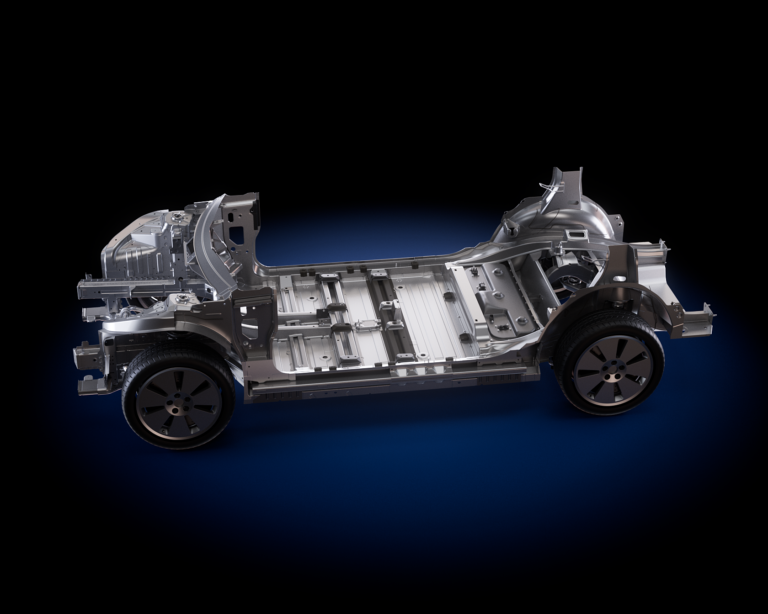
The platform targets bodybuilders and conversion partners — the companies that take a bare Hyundai truck chassis and transform it into a refrigerated delivery van, a fire engine, a mobile crane, or any of the thousands of specialized configurations the commercial world demands. These partners have historically operated in an information vacuum, chasing down technical drawings and spec sheets through regional contacts and outdated portals. That changes now, at least on paper.
Conversion+ offers a centralized library of specification books, bodybuilder manuals, frame modification drawings, and blueprints. It includes a technical hotline that connects regional Hyundai offices directly to global headquarters and R&D centers for real-time problem-solving. The whole thing is responsive across desktop and mobile, which matters when your user is standing in a fabrication shop, not sitting at a desk.
“The launch of Hyundai Conversion+ marks a meaningful step in strengthening Hyundai Motor’s role as a mobility industry partner,” said Chul Youn Park, Senior Vice President and Head of Global CV&LCV Business Division. The platform, he added, aims to “deepen cooperation with vehicle bodybuilders and advance the overall conversion ecosystem.
Six regional portals cover Africa and the Middle East, Asia-Pacific, Eurasia, Europe, Korea, and Latin America. For the Korean market specifically, the platform replaces and redesigns a domestic portal that has served local bodybuilders since 2018. Everywhere else, it’s entirely new.
The timing is deliberate. Hyundai has been pushing hard into commercial vehicles globally, from its XCIENT hydrogen fuel cell trucks now running in Uruguay to an expanding lineup of light commercial vehicles in emerging markets. But selling a chassis is only half the battle.
The real revenue multiplier in commercial vehicles comes from the conversion ecosystem — the downstream business where third-party specialists build out the final product. If those partners can’t access accurate technical data quickly, they go elsewhere.
This is the part of the truck business that rarely makes headlines but drives enormous volume. A single heavy-duty platform might spawn dozens of specialized configurations, each requiring precise engineering data to ensure structural integrity, warranty compliance, and regulatory approval. The companies doing this work range from multinational coachbuilders to small regional fabricators. Reaching all of them through a single digital channel is ambitious.
Hyundai says the “Plus” in the name signals two-way communication and co-creation. That language suggests the platform won’t just push documents outward but will collect feedback, track common technical issues, and potentially shape future vehicle design around conversion needs. The company has also signaled plans to expand beyond technical support into sales support and networking for partners.
The commercial vehicle conversion market is fiercely competitive, and the major players — Daimler Truck, Volvo, MAN — have run sophisticated bodybuilder portals for years. Hyundai arriving with a global platform in 2026 is less innovation than it is catching up. But catching up matters when you’re trying to convince a bodybuilder in Lagos or Lima that your chassis is the one worth betting a business on.
Whether Conversion+ delivers on its promise depends entirely on execution. A library is only as good as its contents. A hotline is only as useful as the engineers answering it. Hyundai has built the front door. Now it has to make sure someone’s home when partners knock.
Share this Story