


Mazda is taking a bold step towards electrification with plans for a new manufacturing plant in Japan. This facility will specialize in producing batteries for its upcoming electric vehicles. The move marks a significant investment in the future of mobility for the Japanese automaker.
The factory will be located in Iwakuni City, Yamaguchi Prefecture, with Panasonic Energy as its primary partner. Panasonic will supply cylindrical battery modules for Mazda, which aims to achieve an annual production capacity of 10 GWh once the plant is fully operational. These batteries are set to power Mazda’s first-ever EV built from the ground up on a dedicated electric vehicle platform, expected to be ready by 2027.
 Artist’s rendering of Mazda’s upcoming EV platform concept
An illustration of a Mazda EV concept car, representing the future of its electric lineup.
Mazda’s CEO, Masahiro Moro, has emphasized that this new EV platform will deliver vehicles with “advanced design, superior convenience, and extended driving ranges.” By developing the architecture in-house, Mazda ensures comprehensive integration of its next-gen electric drivetrain and design philosophy.
Current Lineup and Transition to Electrification
Mazda may not yet have a dedicated EV platform, but it has already made strides in the electric vehicle segment. The Mazda MX-30, first launched in 2019, is one example. Although discontinued in North America, the MX-30 is still a significant milestone for the brand’s electrification efforts. It utilizes a modified SkyActiv platform originally designed for combustion engines.
More recently, Mazda debuted the EZ-6 in China, a fully electric midsize sedan. This model is available as both a fully electric version and a range extender variant. Built on underpinnings sourced from Changan Automotive, it shares its platform with the Deepal/Shenlan SL03. This collaboration highlights how Mazda is tapping into innovative technology partnerships to accelerate its EV development.
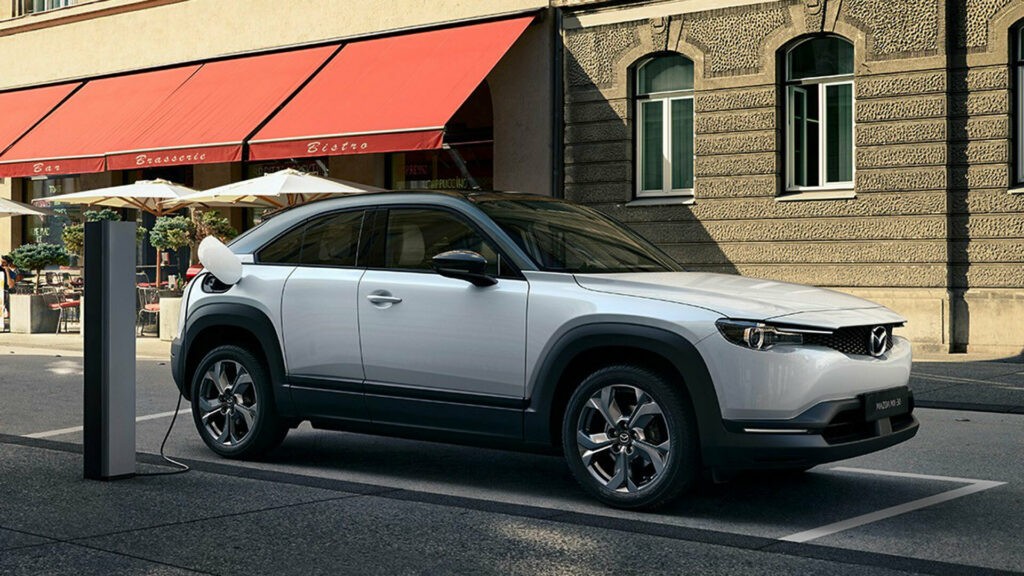 Mazda MX-30 in action during a charging session
Looking ahead, the next key model in Mazda’s EV lineup will be the production version of its Arata EV Concept, which is rumored to debut in 2025. This vehicle is expected to compete in the compact SUV segment as a sibling to the Deepal SL07.
Pioneering Advanced Battery Technologies
Mazda’s ambitions extend beyond just platforms and vehicles. The company is investing in cutting-edge battery technology to maintain competitiveness in a rapidly evolving market. Here’s what to expect from Mazda’s R&D pipeline:
- High-Density Lithium-Ion Batteries: These are being developed in-house, with plans to integrate them into plug-in hybrid (PHEV) and fully electric models by 2030.
- Solid-State Batteries: Mazda is building a “very advanced research base” dedicated to this breakthrough technology. Solid-state batteries promise greater energy density, longer range, and faster charging times compared to current lithium-ion systems.
Mazda’s integration of next-gen battery systems with its vehicles highlights its commitment to creating efficient, reliable, and sustainable EV solutions for the future.
| Details | |
|---|---|
| Location of Battery Factory | Iwakuni City, Yamaguchi Prefecture |
| Annual Battery Production Capacity | 10 GWh |
| Battery Partner | Panasonic Energy |
| EV Platform Launch Year | 2027 |
| Advanced Research Areas | Solid-State and High-Density Batteries |
Mazda’s forward-thinking approach underscores its intent to remain competitive in the growing EV market while maintaining its strong reputation for innovation and reliability.


Share this Story