
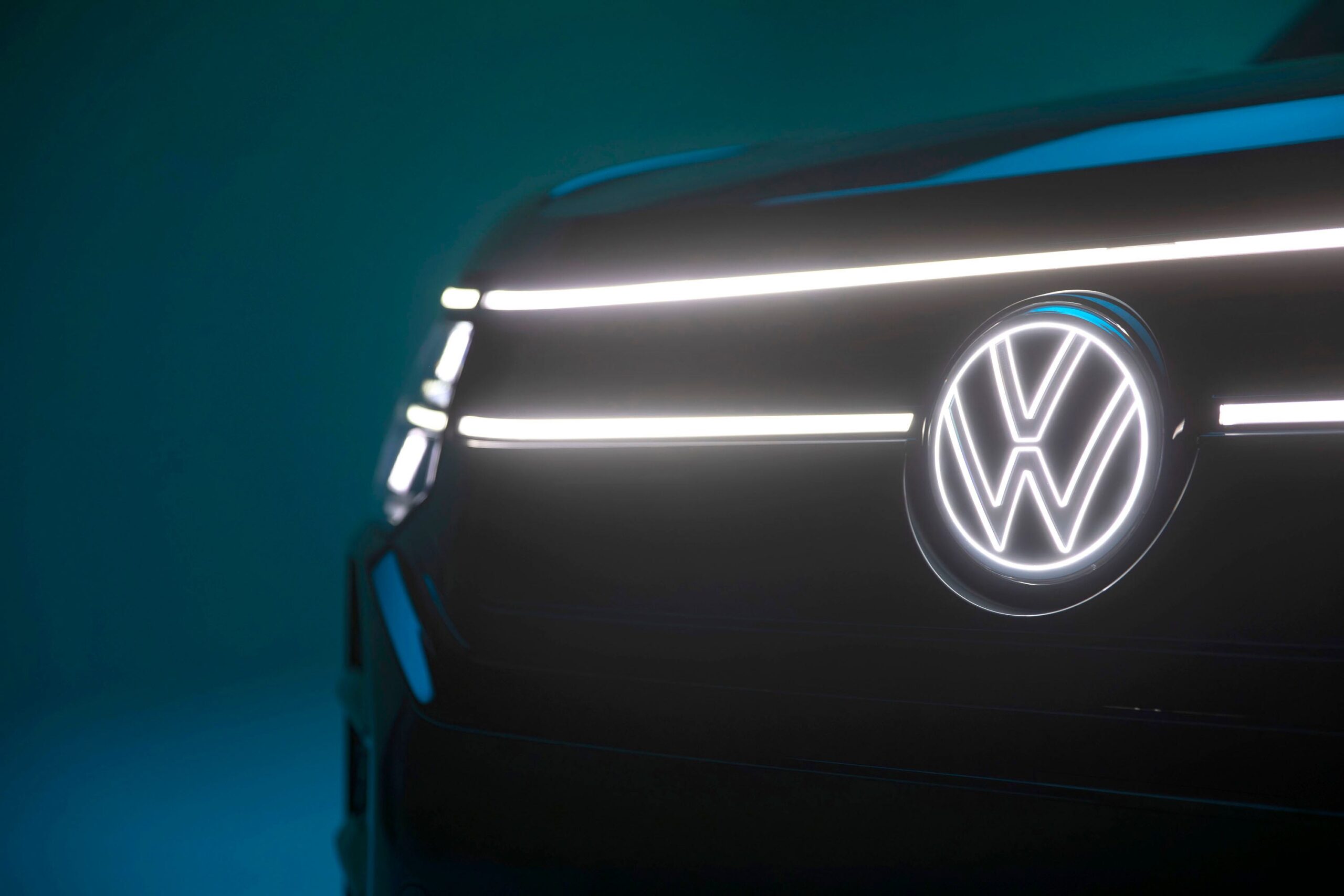


Volkswagen just committed to putting a hybrid powertrain in three of its most important American nameplates — the Atlas, the Tiguan, and the yet-to-be-revealed second-generation Atlas Cross Sport. The catch: none of it exists yet, the supply chain hasn’t been built, and customers won’t see any of it until roughly 2029.
VW Group of America CEO Kjell Gruner dropped the details at the New York auto show, one day after the company unveiled the second-generation 2027 Atlas with nothing but a turbocharged 2.0-liter four-cylinder under the hood. The hybrid, he confirmed, is coming at the mid-cycle refresh. Do the math and you land somewhere around three years out.
The reason for the wait is telling. “The hybrid needs to be U.S.-specific, so there’s nothing on the shelf that we can just take,” Gruner said. The powertrain is being engineered and produced domestically, which means VW has to stand up an entirely new supply chain — batteries, gearboxes, the works.
That’s a remarkable admission from a company that sells hybrid Tiguans in Europe right now. The American market’s requirements are apparently different enough that VW can’t simply transplant what it already has. Whether that’s a matter of emissions calibration, towing expectations, or consumer durability standards, Gruner didn’t elaborate. But it explains why a global automaker with decades of hybrid technology on the books is starting from zero in its largest profit market.
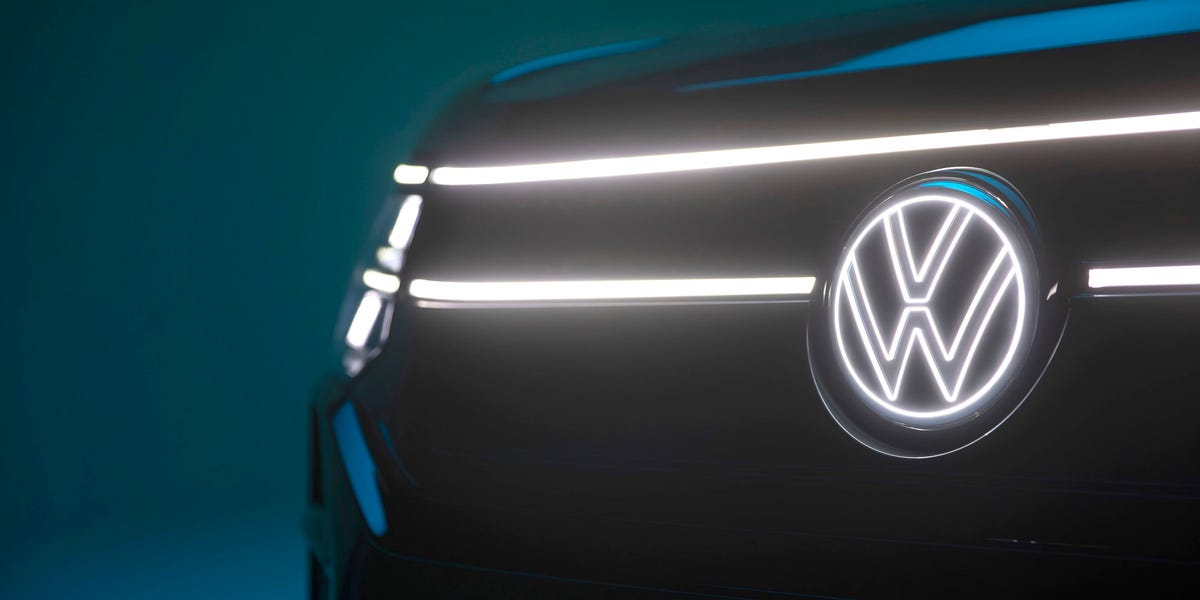
The Tiguan getting hybrid treatment makes obvious sense. VW moved 78,621 of them in the U.S. last year, even during a model transition that typically suppresses numbers. The Atlas family pushed 102,608 units in 2025, with the three-row version accounting for about 70 percent of that volume. These are VW’s bread-and-butter trucks, and electrifying them — even partially — is overdue.
Gruner was deliberate in specifying these will be traditional hybrids, not plug-ins. He cited the small PHEV market in the U.S. and the penalty of added weight and cost from a larger battery pack. Toyota has printed money with conventional hybrids in the RAV4 and Highlander for years while plug-in competitors struggle to find buyers willing to pay the premium.
The second-generation Atlas Cross Sport, meanwhile, is roughly a year away. When asked if it would arrive in one or two years, Gruner replied, “Not two years.” Expect it as a 2028 model with the same wheelbase as the Atlas, a more aggressive roofline, and two rows of seats. It too will eventually get the hybrid powertrain, bringing VW’s electrified SUV count to three.
Gruner framed the strategy as resilience. “Having ICE, full hybrid, EVs, I think then we’re going to be in a position where we are resilient against whatever happens,” he said. That’s the vocabulary of a CEO who has watched the EV market cool, tariff policies whipsaw, and consumer preferences refuse to follow a neat trajectory.
But resilience built on powertrains that won’t arrive for three years is a gamble. Toyota, Ford, and Hyundai already have hybrid SUVs on dealer lots today. Every month VW waits is another month those competitors lock in conquest buyers who might never come back.
Volkswagen sold the American market on turbocharged German engineering for years. Now it’s asking that same market to wait until the end of the decade for a hybrid it hasn’t finished designing, built on a supply chain it hasn’t finished constructing, in a regulatory environment nobody can predict. The ambition is clear. The execution is still a promise.
Share this Story