
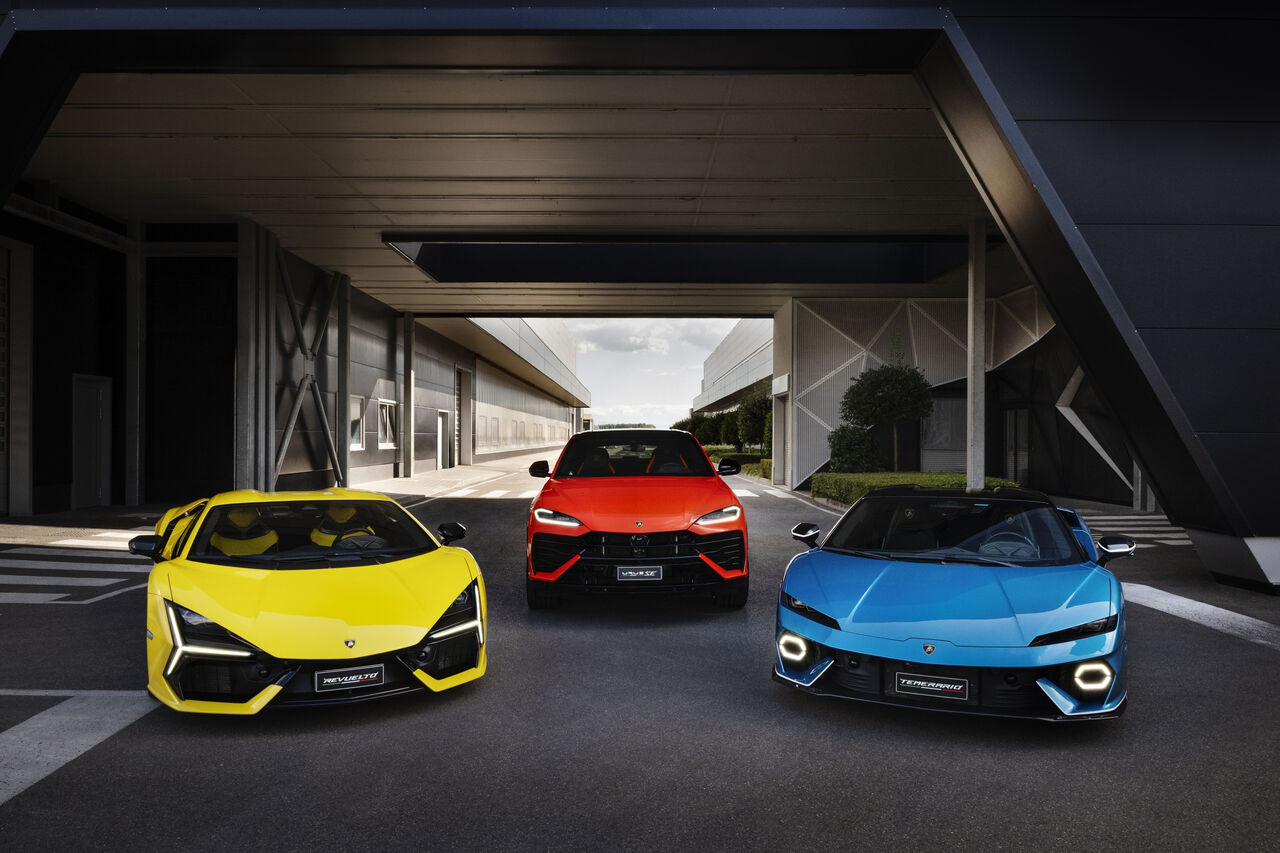


Lamborghini sold more cars and banked more revenue than in any year of its six-decade history in 2025. And still lost ground.
Operating income dropped to €768 million from €835 million the year before, a fall of 8%. The margin slid from 27% to 24%. Record deliveries of 10,747 cars and €3.2 billion in revenue couldn’t paper over two forces working against the Sant’Agata Bolognese brand: U.S. tariffs and the cost of abandoning its first electric car.
CEO Stephan Winkelmann, never one to sugarcoat, told reporters the company raised prices last year but not enough to offset tariff rates in what remains Lamborghini’s largest market. And he’s not raising them again. “We do not think this is something helping the market at this time,” he said.
That’s a telling admission from a company whose average transaction price starts north of half a million euros. There’s a ceiling, even in the ultra-luxury segment, and Lamborghini just bumped into it.
The other drag on the books was more self-inflicted. Lamborghini scrapped its planned 2030 fully electric sports car, and the write-down from reversing course on the Direzione Cor Tauri electrification strategy hit the 2025 financials. The company’s press release described these as “extraordinary items related to the adaptation” of its strategy. Translation: killing the EV cost real money.
Winkelmann was blunt about why. “Resistance to EVs has increased significantly worldwide in our segment,” he said. “Many customers have tried EVs, but let’s say their experience didn’t quite live up to their expectations.”
In place of the cancelled battery-electric model, Lamborghini will launch a plug-in hybrid called the Lanzador in 2030 — a 2+2 Grand Tourer that extends the hybrid-only lineup rather than breaking from it. The company says it’s still investing in EV technology internally, just in case demand materializes. But Winkelmann isn’t holding his breath. “I can’t see the trend today, and I don’t see it for tomorrow either.”
That puts Lamborghini on a sharply different trajectory from Ferrari, which plans to unveil its first full EV in May and targets 20% electric sales by decade’s end. Two Italian supercar makers, reading the same customer base, reaching opposite conclusions. One of them is wrong.
What kept 2025 from being worse was the product mix. The €515,000 Revuelto V12 hybrid ate up a growing share of deliveries, and the Ad Personam customization program reached staggering penetration — 94% of all cars delivered had at least one bespoke element. Personalization is pure margin, and Lamborghini is leaning into it harder than ever.
Deliveries of the new Temerario, with its 10,000-rpm hybrid powertrain, began in early 2026 and should further bolster the mix. More new models are promised for Goodwood and Monterey Car Week later this year.
But Winkelmann declined to offer any 2026 forecast. The Middle East conflict is disrupting logistics and oil markets. Tariff policy remains unpredictable. The luxury segment that fueled three consecutive years above 10,000 deliveries could soften.
Lamborghini is in an unusual position: commercially stronger than ever, strategically more cautious than it’s been in years. The hybridization of its entire lineup is complete. The electric future is indefinitely postponed. And a 24% operating margin — enviable by any normal standard — represents a step backward for a brand that had been climbing.
The numbers say growth. The details say a company bracing for turbulence it can’t control and betting that the internal combustion engine, electrified just enough, still has a decade left to run.
Share this Story