
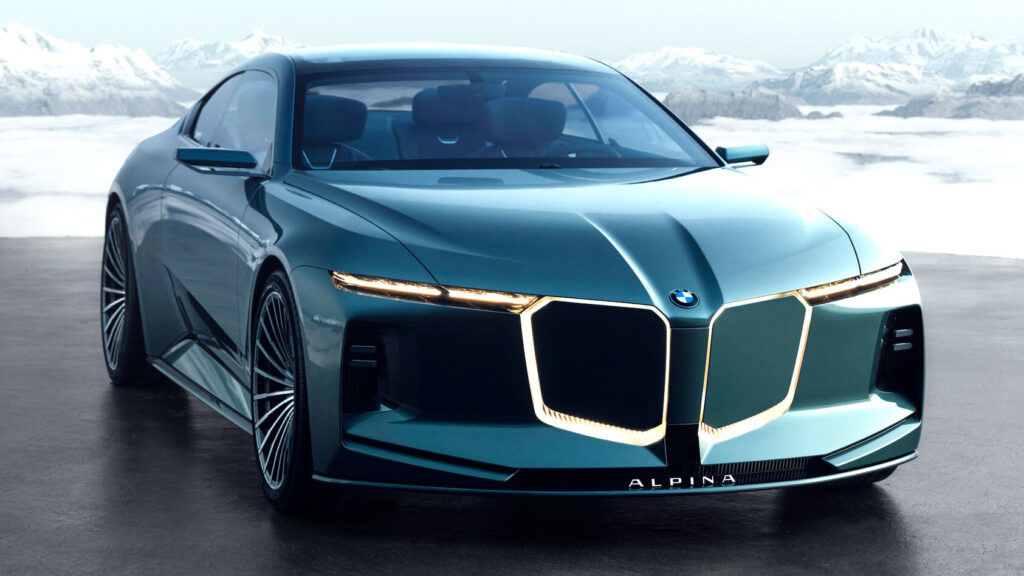


BMW didn’t bring an electric concept to Villa d’Este. It brought a 204.7-inch, V8-powered grand tourer wearing a badge it paid dearly to own outright. The Vision BMW Alpina, unveiled at the 2026 Concorso d’Eleganza, is the company’s first concept since fully absorbing Alpina, and it reads like a deliberate promise not to screw this up.
The concept is enormous. Over 17 feet long, with a coupe roofline stretched over a four-adult cabin, a low stance, and a hood that goes on forever. This isn’t a crossover with a luxury trim package. It’s a grand tourer in the oldest, most literal sense of the term, built to eat miles in silence and arrive looking better than anything else in the hotel lot.
Under that long hood sits a V8. BMW offered no displacement or output figures, but the smart money lands on some variant of the twin-turbocharged 4.4-liter already doing duty in the M5. Alpina’s tradition was never to engineer from scratch. It was to take BMW’s best and refine it into something quieter, faster in a straight line, and far more comfortable. The V8 choice signals BMW at least remembers that much.
The design team talks about “second read” sophistication, which is corporate speak for restraint. But the car actually delivers on the promise. There’s a modernized shark nose, an enclosed twin-kidney grille that tricks the eye into expecting an EV, 20-spoke wheels, and deco-inspired lines that nod to the 507.
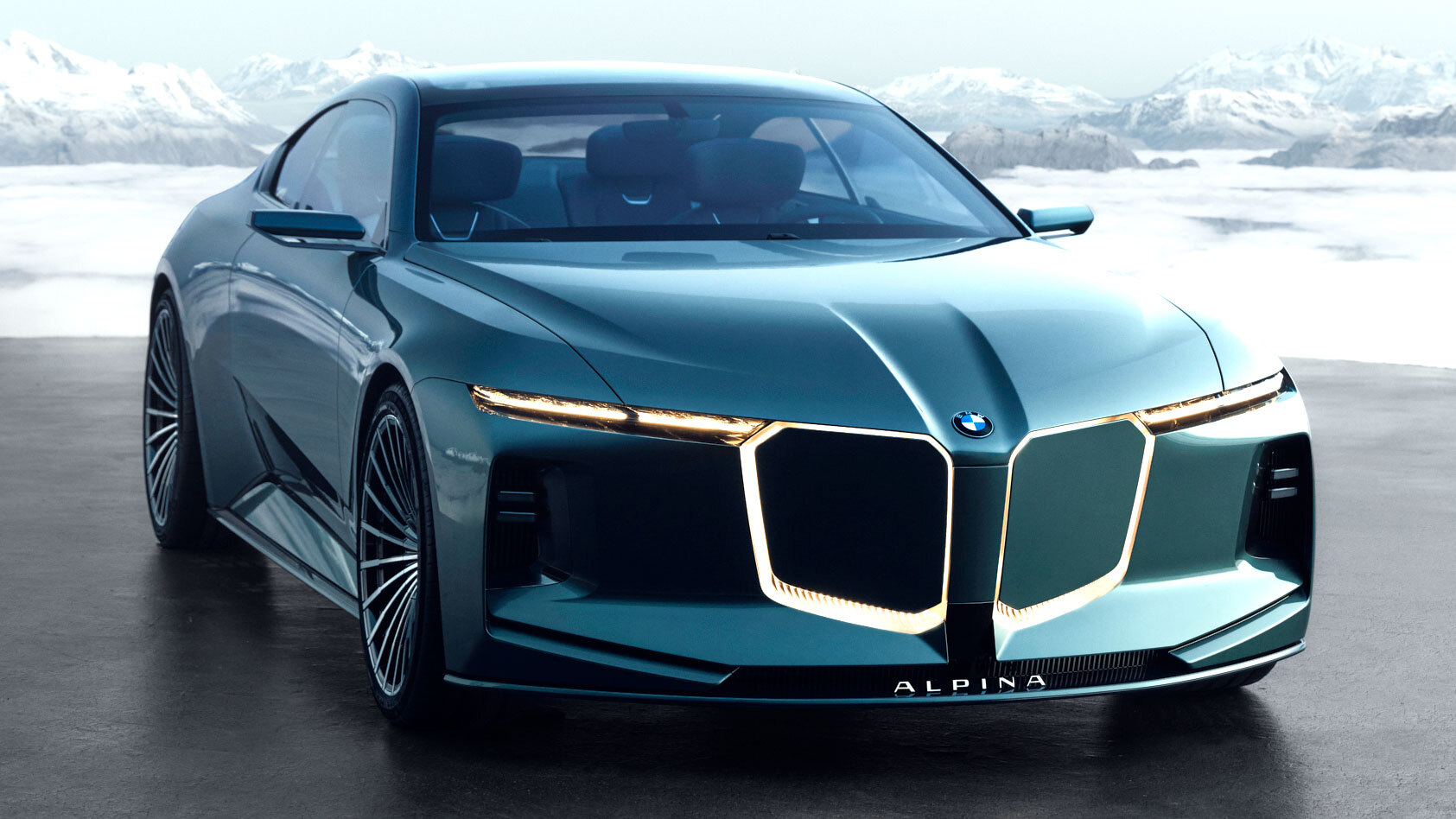
For a company that has spent the last decade producing some of the most polarizing front ends in automotive history, the Vision Alpina is almost shockingly beautiful.
Inside, things get interesting. Crystal switchgear, Alpine-sourced leather, and Alpina-specific graphics set the tone. Then there’s the party trick: self-deploying crystal glasses that rise from the rear center console next to a glass water bottle. Absurd? Completely. But Alpina was always about absurd luxury executed with a straight face, and that detail alone suggests someone inside BMW actually understands the brand they bought.
The cabin leans heavily on screens, which is the one area where corporate DNA shows through. But the overall presentation is clean rather than cluttered, more restrained than the current 7 Series interior and its theater-screen rear entertainment setup.
BMW says Alpina’s signature Comfort+ mode survives, softer and more forgiving than anything in the standard BMW chassis tuning playbook. Burkard Bovensiepen’s old maxim — “a comfortable driver is a faster driver” — gets explicit mention in the press materials. That’s not just nostalgia. It’s positioning. BMW is drawing a clear line between M and Alpina, which is exactly the thing enthusiasts feared it wouldn’t do.
The first production BMW Alpina arrives next year, based on the 7 Series. That makes sense. The 7 Series has the wheelbase, the technology, and the price point to support the kind of handcrafted differentiation Alpina always offered. Whether BMW can actually deliver bespoke-level execution at scale, from within its own factory walls, is the real test.
Alpina built its reputation as a family-run operation that could do things BMW’s corporate structure wouldn’t allow. Thinner tolerances, hand-finished details, a different philosophy of speed. BMW now owns all of that.
The Vision Alpina suggests the company knows what it bought. But concepts are easy. They exist in a world without bean counters, supplier negotiations, or quarterly earnings calls. The production car will tell us whether BMW acquired a brand or just a badge.
Share this Story