
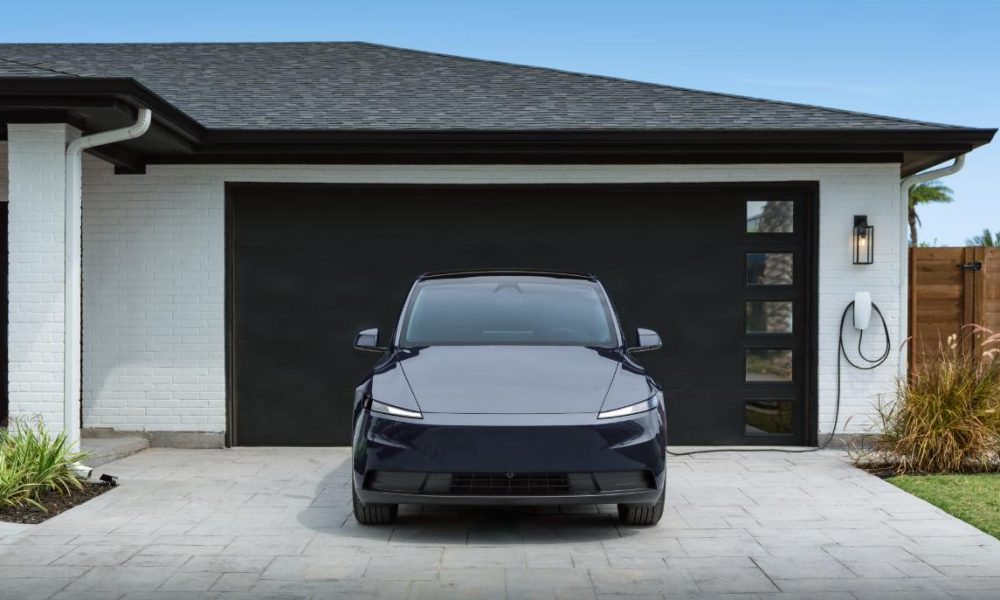


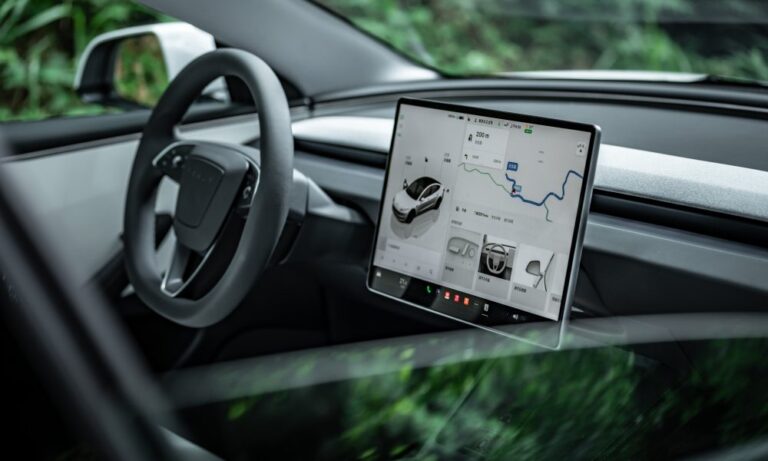
Tesla just gave the two most affordable versions of the Model Y an interior upgrade that nobody asked for but everyone will notice. The Rear-Wheel-Drive and All-Wheel-Drive trims, priced at $39,990 and $41,990, now come standard with the all-black headliner and the higher-resolution 16-inch center screen previously reserved for the Premium configurations.
It sounds minor. It isn’t.
These two features were the most visible tells that separated the budget Model Y from the one Tesla actually wanted you to buy. Walk into the cabin, see the lighter headliner and the older screen, and you knew immediately which version you were sitting in. That distinction is now gone.
The real story here is manufacturing, not generosity. Eliminating interior variation across trims simplifies production. One headliner color, one screen spec, fewer SKUs on the line.
Tesla has been steadily consolidating its build complexity ever since the refreshed Model Y launched, and this is the latest step in that direction. When every car rolling off the line has the same interior bones, you cut costs even while appearing to add value.
The affordable trims still lack plenty. No ventilated seats. No glass roof. No acoustic-laminated windows, which in real-world driving remains the single biggest difference between the budget and Premium versions. Road noise at highway speed is noticeably worse without them.
The stereo system is also a clear tier below. Tesla isn’t pretending these are the same cars. But by closing the visual gap inside the cabin, the company is making the $39,990 Model Y a much harder vehicle to dismiss on a showroom floor.
This move comes at an interesting moment. TD Cowen analyst Itay Michaeli reiterated a $490 price target and Buy rating on Tesla stock this week, arguing that the company’s best growth lever isn’t a new vehicle but bringing the Model Y L from China to the United States. He pegs the incremental demand at 60,000 to 135,000 units.
Elon Musk remains unconvinced. He has resisted a U.S. launch of the slightly larger Model Y L, citing the importance of autonomous driving in this market. The disconnect between what Tesla’s CEO wants to sell and what buyers want to drive has become a recurring theme.
So instead of a bigger vehicle, U.S. customers get a nicer interior on the smallest one. It’s a pattern Tesla has perfected: incremental upgrades that generate headlines and keep the existing lineup feeling fresh while the company focuses its real engineering energy on AI, robotics, and self-driving.
The Model Y remains the best-selling car on the planet by multiple measures. At under $40,000 with a 321-mile range and a now-unified interior spec, the RWD version in particular is going to be very difficult for competitors to match on pure value.
But the acoustic windows and glass roof still sit behind a paywall. Tesla knows exactly which features make people stretch for the Premium trim. The screen and headliner were easy to give away because they simplify production. The features that actually cost money to build stay right where they are.
This is Tesla doing what it does best, making the cheap version feel less cheap without actually making it expensive. Whether that’s enough to drive the kind of growth Wall Street is looking for, without a larger vehicle or a meaningful new model, is the question no interior upgrade can answer.
Share this Story