
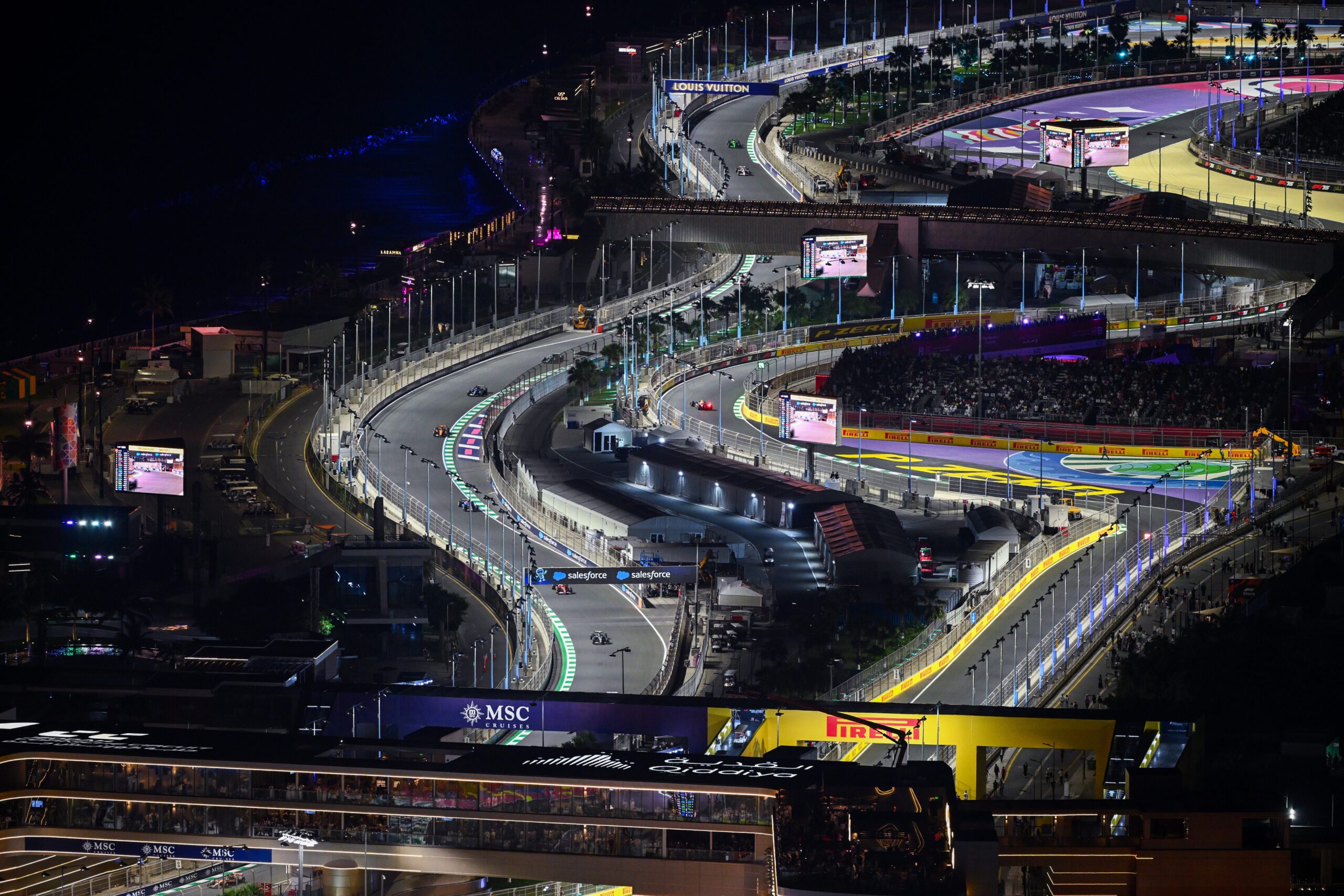


Formula 1 will not race in April. The sport confirmed Sunday morning in Shanghai that both the Bahrain and Saudi Arabian Grands Prix are off the schedule due to ongoing military conflict across the Middle East, leaving a gaping five-week hole in the 2026 calendar between the Japanese Grand Prix and the Miami opener in early May.
The announcement, while widely expected, still lands hard. Missile strikes in the region had already forced the cancellation of Pirelli’s wet weather tire test and the WEC’s Qatar 1812KM earlier this month. F2 teams were days away from shipping cars to Bahrain when the call finally came.
“While this was a difficult decision to take, it is unfortunately the right one at this stage considering the current situation in the Middle East,” said F1 CEO Stefano Domenicali.
The language throughout the joint statement is conspicuously hedged. The races “will not take place in April” — not cancelled outright. The door remains cracked for rescheduling or replacement rounds later in the season.
No substitutions will be made this month, and the carefully diplomatic tone cannot mask the logistical mess left behind.
The damage cascades well beyond F1 itself. Formula 2 loses rounds two and three, stranding its drivers with a two-month gap until Monaco on June 7. Formula 3 drops its Bahrain date but picks up again at Imola in May, while F1 Academy’s Saudi round evaporates with the next stop now Miami.
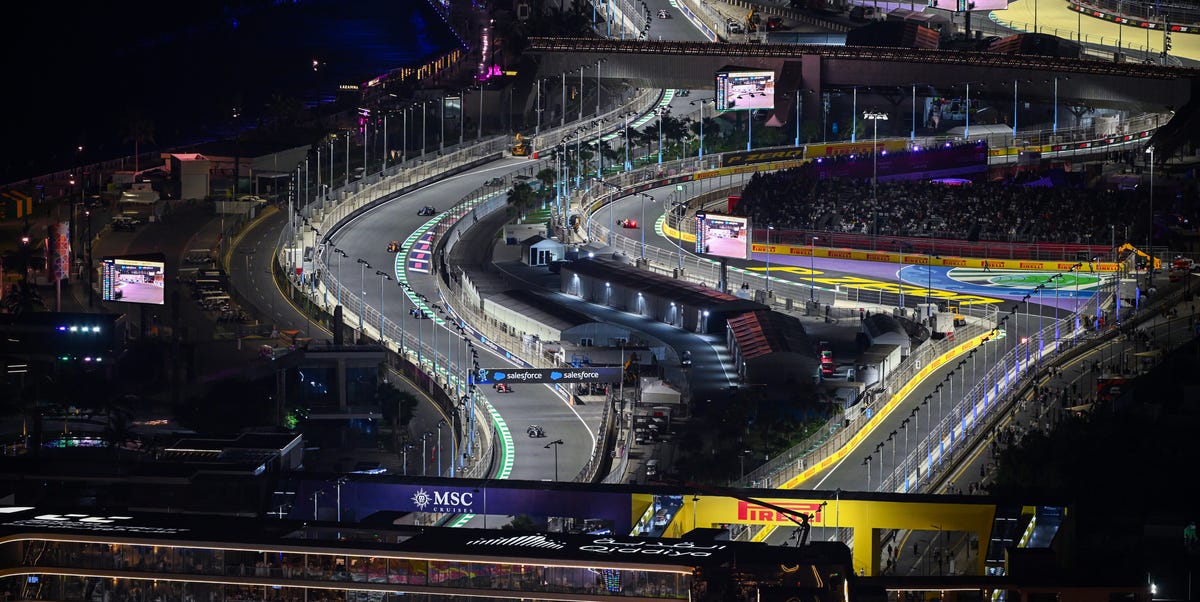
FIA President Mohammed Ben Sulayem framed the decision squarely around safety. “The FIA will always place the safety and well-being of our community and colleagues first,” he said. “Bahrain and Saudi Arabia are incredibly important to the ecosystem of our racing season.”
That word — ecosystem — does a lot of heavy lifting. Both countries pour enormous money into Formula 1. Saudi Arabia’s deal with F1 is reportedly worth north of $50 million annually, and Bahrain has been a cornerstone of the calendar since 2004.
Losing both in a single stroke is not just a scheduling inconvenience. It’s a financial hit the sport would rather not quantify publicly.
Both promoters issued statements dripping with understanding. Sheikh Salman bin Isa Al Khalifa of the Bahrain International Circuit said he “fully supports” the decision. Prince Khalid bin Sultan Al-Abdullah Al-Faisal, chairman of the Saudi Automobile and Motorcycle Federation, said fans “were once again looking forward” to the Jeddah race but that he understands the considerations.
The real question now is whether these rounds ever come back in 2026. The calendar is already packed. Finding open weekends that satisfy venue contracts, broadcast agreements, and team logistics borders on impossible once the European season hits full stride.
F1 saying it will explore “later dates” is one thing. Actually slotting two Middle Eastern races into an already bloated schedule is another.
This is the second time in recent memory that geopolitical reality has forced F1 to rip pages from its calendar. The Russian Grand Prix vanished permanently after the 2022 invasion of Ukraine. The difference here is that F1 clearly wants these races back — the money demands it, and the partnerships demand it.
For now, though, the circus moves from Shanghai to Suzuka and then goes quiet. Five weeks without a Grand Prix in the middle of a championship fight that saw Kimi Antonelli just claim his maiden victory in China. The momentum stalls, the paddock scatters, and F1 waits on a conflict it cannot control and cannot ignore.




Share this Story