
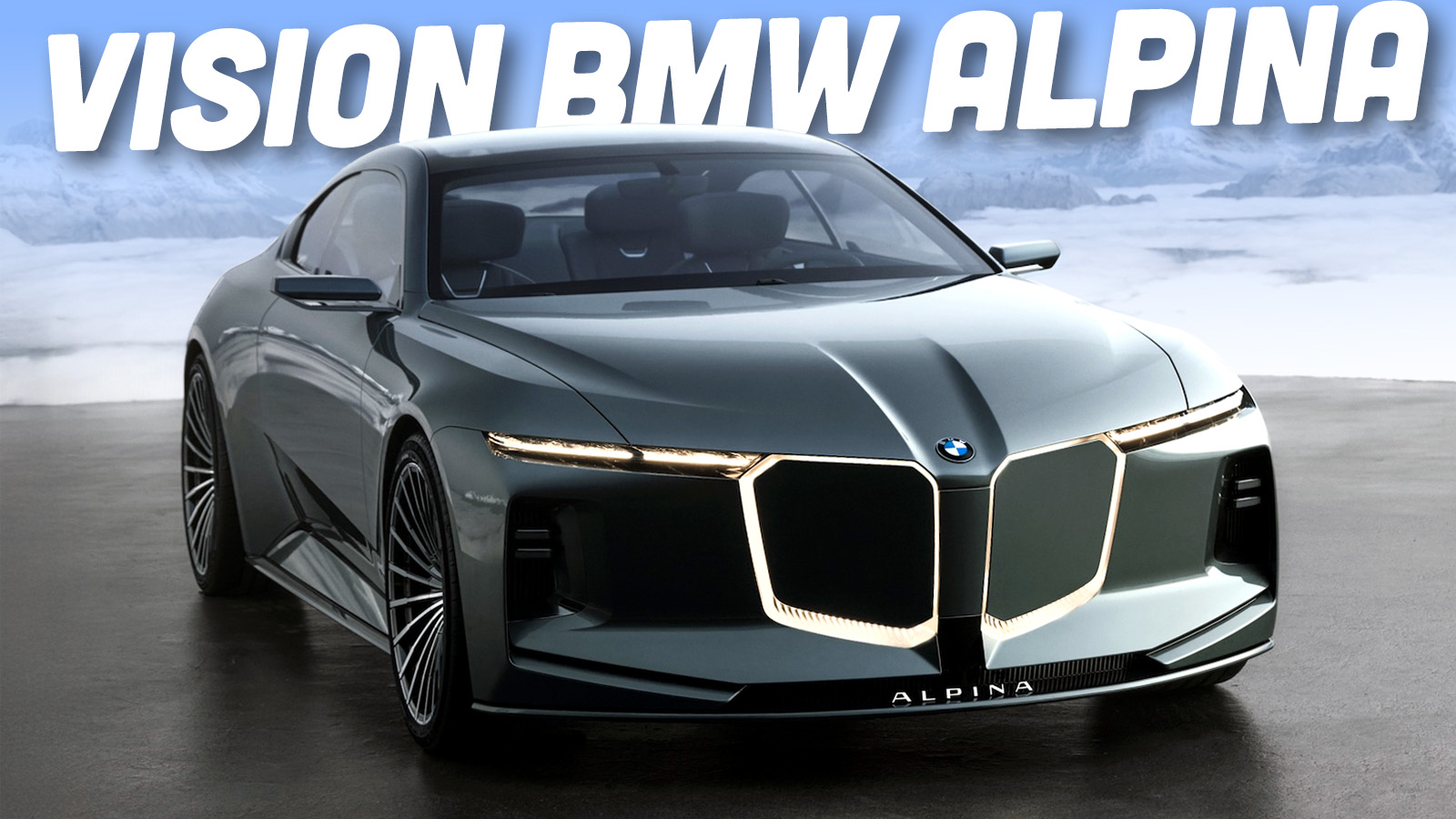


BMW unveiled its first Alpina concept designed fully in-house since absorbing the legendary independent tuner, and the internet responded exactly the way the internet does when BMW reveals a new face. With sarcasm, memes, and a Mandalorian reference.
The V8-powered coupe, reportedly as long as a Chrysler Pacifica, landed on enthusiast forums and comment sections like a grenade. The rear three-quarter view drew genuine praise. The front end drew comparisons to everything from jet fighter intakes to imagery too vulgar to print in polite company.
One commenter on The Autopian summed up the split personality neatly: “If you ignore the front end it looks pretty sweet.” That sentence has become the unofficial slogan of BMW design for the better part of a decade now.
The kidney grille, BMW’s most sacred and most abused styling element, has ballooned again. One reader compared the under-grille bumper line to Din Djarin’s Mandalorian helmet. “Ridiculous kidney shaped grills… This is the way,” wrote commenter Grayvee280. Another called it “the Goatse of grills” and suggested BMW should have included a trigger warning.
This is what happens when a brand keeps pushing a design language its core audience never asked for. BMW has been playing chicken with its own customers since the 4 Series debuted its buck-toothed face years ago, daring loyalists to walk away while banking on new buyers in China and the Middle East to fill the gap. The Alpina reveal suggests that strategy hasn’t changed, even as the sub-brand transitions from independent coachbuilder to corporate luxury division.
What did change is the context. Alpina, for decades, was the quiet counter-argument to BMW’s worst impulses. It smoothed edges and added refinement without shouting.
The old Alpinas whispered where M cars screamed. Now that BMW owns the brand outright and controls every pixel, the first concept out of the gate is louder and more polarizing than anything Burkard Bovensiepen ever would have sanctioned.
The interior details drew their own kind of attention. BMW’s press copy lovingly described crystal glasses with “20 deco-lines” and a “six-degree rim profile” that rise on a self-deploying mechanism behind the rear console, held by concealed magnets and softly lit. The purple prose was catnip for commenters.
“Enough about the car. How about some pictures of those kickass GLASSES!” one wrote. “BMW IS BACK, BABY!!!” Another reader quipped that “six degree rim profile” was their username on a website they decided not to name.
The mockery isn’t just noise. It’s a signal. BMW keeps investing enormous engineering talent and marketing budget into features designed to generate social media buzz and luxury-brand positioning, while the core product — the thing you see coming toward you in traffic — remains genuinely divisive among the people who grew up loving the brand.
There were defenders. One commenter said the front gave off F-15 intake vibes and genuinely dug it. Another suggested it wasn’t bad and might age well, comparing it favorably to Jaguar’s recent design catastrophe.
That’s the bar now: at least it’s better than Jaguar.
BMW has taught us to expect this cycle. Reveal a controversial design. Watch the internet convulse. Wait two years. Sell it anyway. The formula works commercially, even if it erodes something harder to measure.
The old Alpina earned its reputation by being the thinking person’s BMW. This new one arrives as a content-generation machine, a vehicle so deliberately polarizing that it practically writes its own coverage. Whether that is progress depends entirely on whether you think BMW’s job is to sell cars or to make ones worth wanting.
The comments section already voted.
Share this Story