
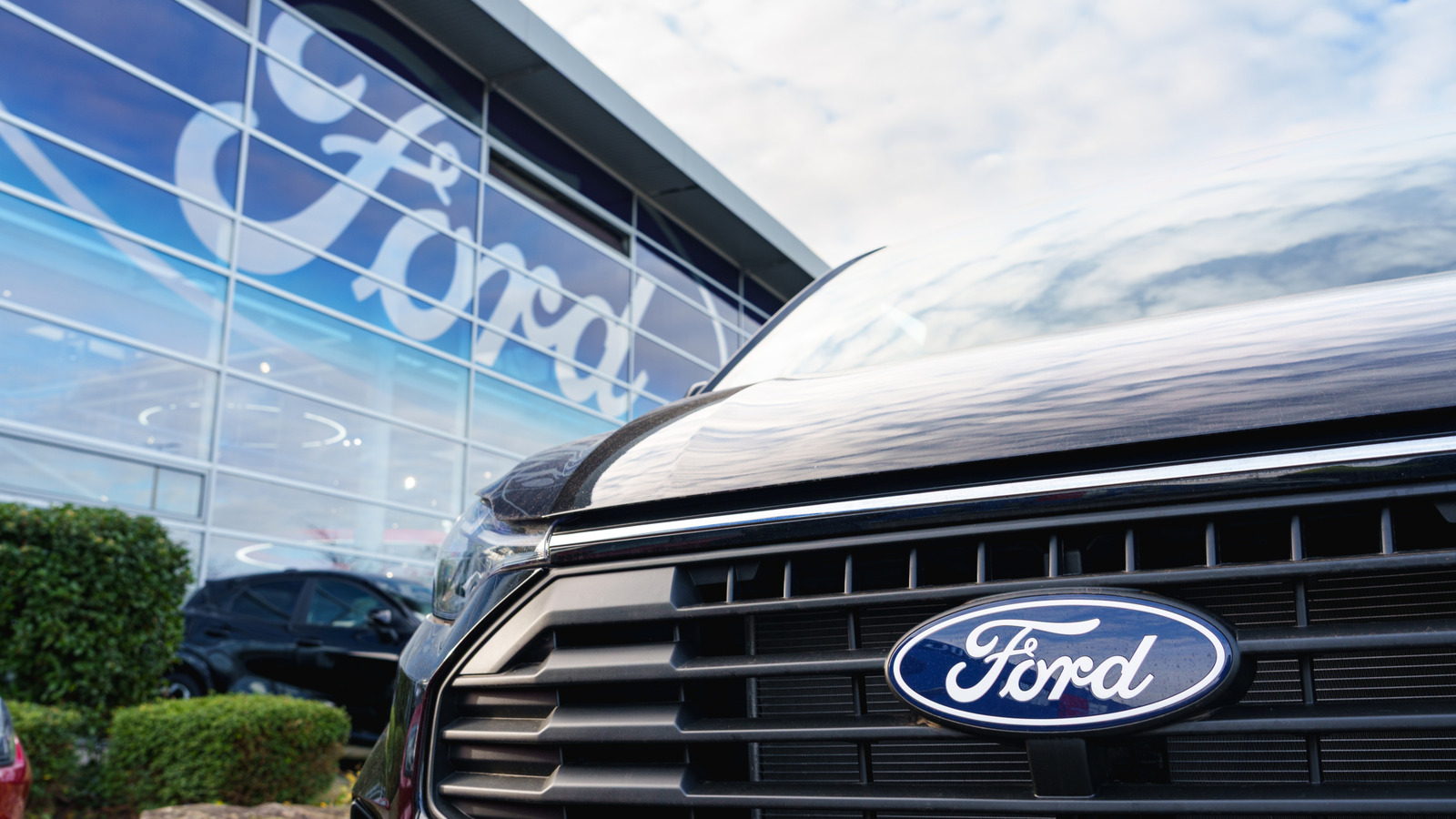


Ford moved 15 million Model Ts. The F-150 remains one of the best-selling vehicles in history. But when Jalopnik recently asked its readers to name their favorite Ford, the most compelling answer wasn’t a Shelby GT500 or a Boss 429. It was a midsize sedan that’s been dead for six years.
A reader named Mike-NB made the case for the second-generation Ford Fusion, built from 2013 to 2020. The Aston Martin-inspired grille. The power bulge on the hood. The sculpted character lines that still turn his head in traffic. He called it the right car at the wrong time, killed not by any flaw of its own but by America’s stampede toward crossovers.
He’s not wrong. Ford axed the Fusion — along with every other sedan in its North American lineup except the Mustang — in a bet that trucks and SUVs were the only future worth chasing. That was 2018. The company has spent every year since trying to figure out what comes next, lurching from electric vehicle moonshots to hybrid pivots to tariff mitigation strategies.
Meanwhile, the humble Fusion ages gracefully on used lots, a quiet rebuke to the idea that sedans stopped mattering.
Mike-NB drove one in Scotland recently. A Ford Mondeo wagon, the Fusion’s European twin, with a diesel engine and a manual transmission. Four hundred thousand miles on the clock. Still running. Still beautiful. That kind of durability doesn’t show up in quarterly earnings calls, but it builds the kind of brand loyalty no marketing campaign can manufacture.
The rest of the reader picks told a familiar story about Ford’s identity crisis. A 1967 Shelby GT500 — “100% brute, 100% attitude, 100% style.” A 1964 Lincoln Continental four-door convertible, the kind of boulevard cruiser no automaker would dare build today. A 1966 Mustang Fastback GT K-Code so rare and expensive it exists purely as aspiration.
A Ford GT90 concept inspired a middle-schooler to write a 10-page paper and eventually spend 20 years working in the auto business, mostly with Ford.
Even the oddball choices were telling. The Pinto sedan delivery. The Lincoln Continental Mark IV with its federally mandated bumpers. A Ford Capri RS 3100 with box arches. These are cars that provoke feeling — affection, nostalgia, desire — in ways that a Bronco Sport or an Explorer never will.
Ford’s current lineup is perfectly competent. The Maverick is clever. The Bronco is genuinely fun. The F-150 prints money. But nobody writes love letters to competence. Nobody pins magazine clippings of an Escape to their bedroom wall.
The tension running through every one of these reader picks is the gap between the Ford people remember and the Ford that exists today. One built sedans, coupes, wagons, and land yachts with enough personality to inspire lifelong devotion. The other builds what the spreadsheet says to build.
With vehicle prices now stretching beyond reach for millions of Americans, Mike-NB hopes cars come back. He suggested Ford use the Fusion as a guide. It is hard to imagine Dearborn listening. The company is busy navigating tariffs, managing an expensive EV transition, and defending truck margins.
A $28,000 sedan with an Aston Martin face doesn’t fit the five-year plan. But that taxi in Scotland with 400,000 miles on it tells a story Ford’s current strategy cannot.
People don’t just buy cars. They fall in love with them. And right now, Ford is building a lot of vehicles, but not many objects of affection.
Share this Story