
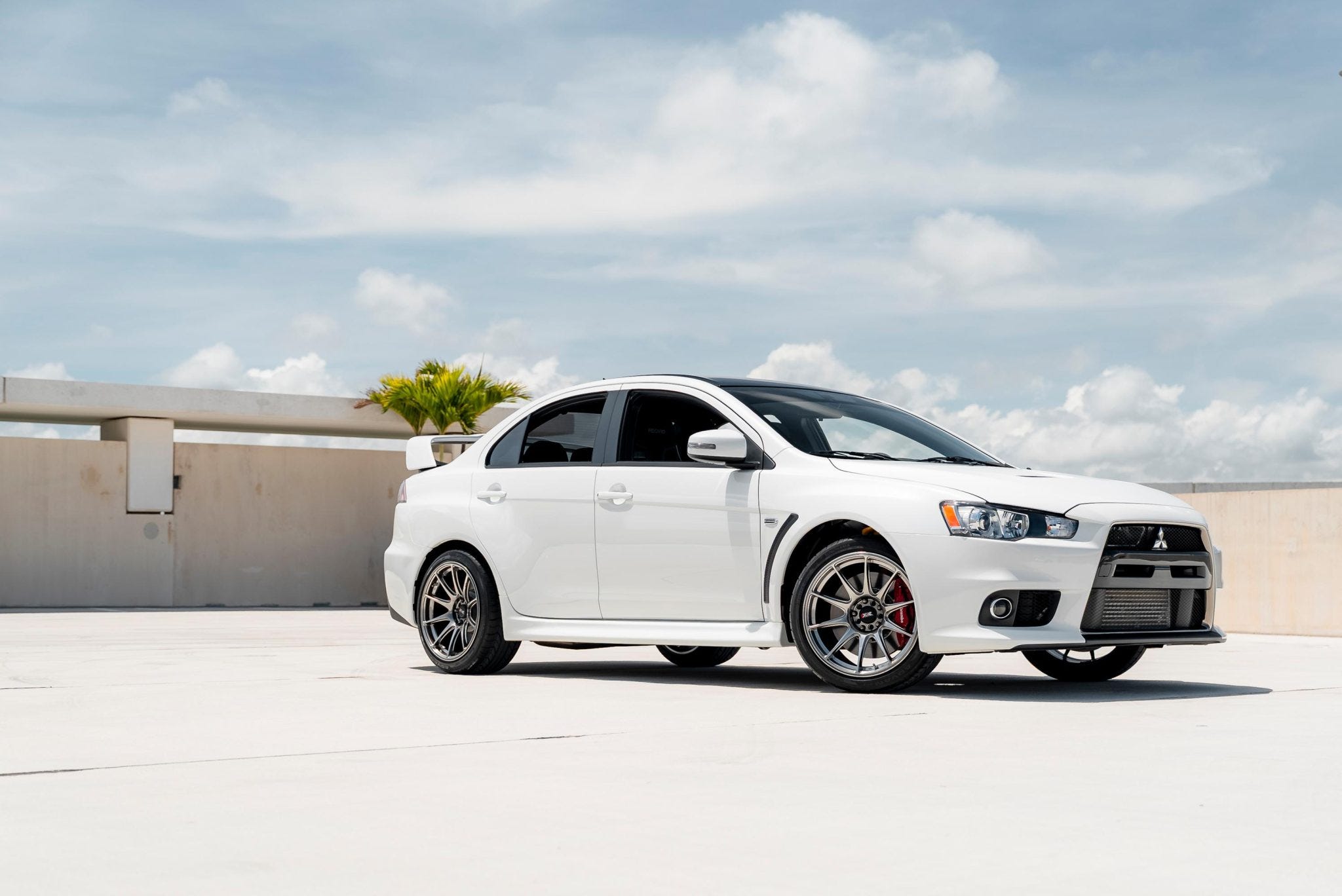


A 2015 Mitsubishi Lancer Evolution Final Edition with 722 miles on the odometer just surfaced on Bring a Trailer, and the auction closes May 21. It is, for all practical purposes, a brand-new car from a brand that no longer makes anything remotely like it.
Mitsubishi built 1,600 Final Edition models for the U.S. market in 2015, each packing a turbocharged 2.0-liter four-cylinder bumped to 303 horsepower and mated exclusively to a five-speed manual. No dual-clutch option. No apologies. The company knew what it was building and who it was building it for.
That was a decade ago. Today, Mitsubishi sells crossovers. The Outlander. The Eclipse Cross — a name that still stings purists.
The company pivoted hard toward survival, and survival meant abandoning every car that made enthusiasts care about three diamonds on a grille.
The Evo’s death left a hole that nobody filled. Its archrival, the Subaru WRX STI, limped on for a few more years before Subaru axed the STI as well. The current WRX soldiers on without its old sparring partner, and it shows.
Competition sharpens products. Without the Evo snapping at its heels, the WRX got softer, more mainstream, less desperate to prove itself. Iron sharpens iron, and Subaru lost its whetstone.
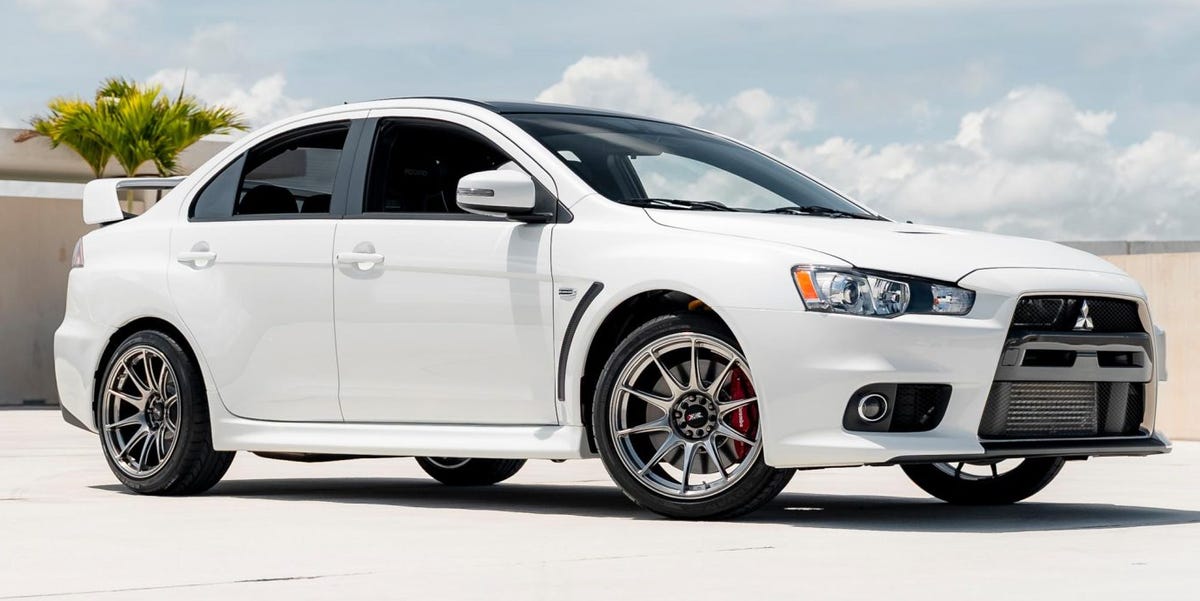
This particular car represents everything Mitsubishi crammed into its farewell. The Super All-Wheel Control system used three differentials, each independently tuned, with the rear diff reading oversteer and understeer inputs to redistribute torque in real time. Brembo brakes hauled it down. The steering was nervous, communicative, alive.
The whole package was unfiltered in a way that modern cars, suffocated by driver-assist nannies and turbo-lag-smoothing calibrations, simply are not.
The tenth-generation Lancer Evo was always the sharper blade compared to the STI. Subaru’s car felt like it belonged on a Finnish gravel stage, loose and playful. The Mitsubishi felt like a tarmac rally weapon — precise, twitchy, demanding full attention.
The boost came on hard and the short final drive kept the engine screaming. It was not relaxing transportation. It was a controlled emergency.
Seven hundred twenty-two miles means someone bought this car, parked it, and waited. That’s either remarkable discipline or a calculated bet that scarcity and nostalgia would eventually do what Mitsubishi’s accountants couldn’t — make the Evo worth more than its sticker price. Given what clean Final Editions have fetched in recent auctions, the bet looks solid.
The broader story is familiar. Automakers kill the cars that define them, chase volume in the crossover segment, and then watch as the ghosts of their performance lineage appreciate wildly on the secondary market. Mitsubishi isn’t alone here.
But the Evo’s extinction feels particularly permanent. There’s no electric successor in the pipeline, no spiritual revival rumored, no concept car teasing a return. The company that once battled Subaru across every continent for rally glory now competes for compact SUV buyers who want adaptive cruise control and a panoramic sunroof.
The Final Edition earned its name. This isn’t a pause. It’s a period at the end of a sentence Mitsubishi started writing in 1992.
Whoever wins this auction on May 21 gets a museum piece that still bites. Whether they’ll actually drive it is another question entirely — and probably says more about the state of enthusiast culture than any horsepower figure ever could.
Share this Story