


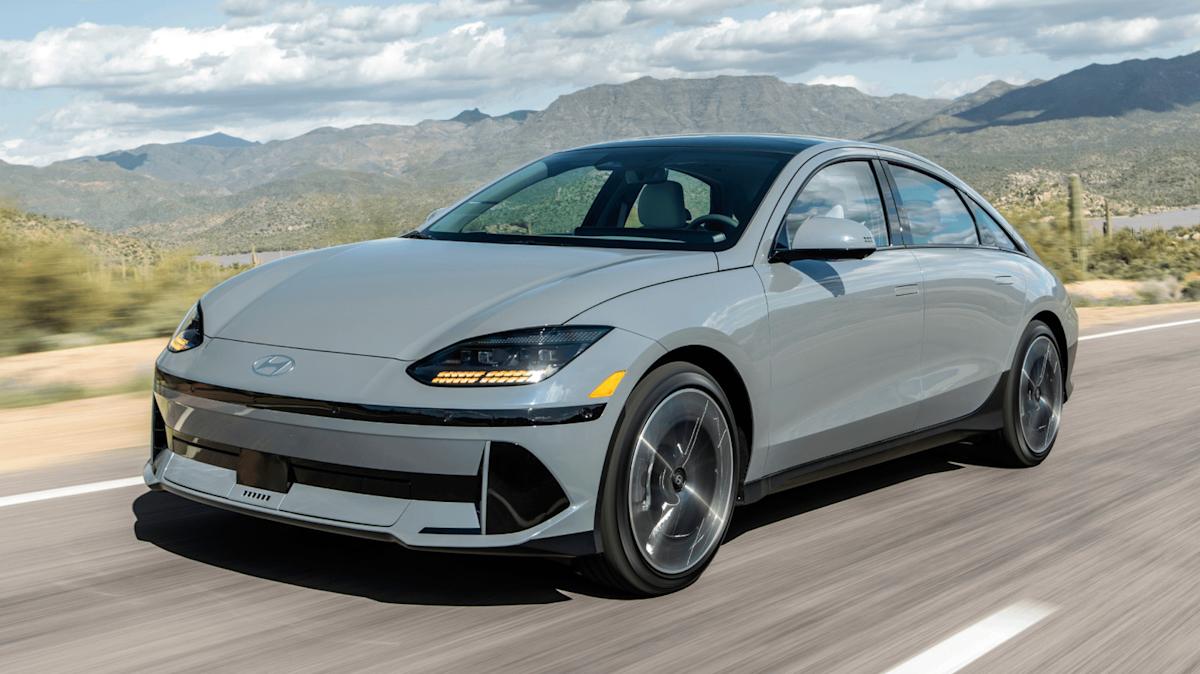
The Hyundai Ioniq 6 sold 10,478 units in the U.S. last year, down 15 percent from 2024. Hyundai pulled the regular version from the market, keeping only the forthcoming Ioniq 6 N for enthusiasts willing to pay performance-car money. It was, by most accounts, the last genuinely weird car you could buy new in America, and its quiet death triggered something raw among the people who still care about what they drive.
Jalopnik asked its readers a simple question: which cancellation left the biggest hole in the U.S. market? The answers poured in like a eulogy service nobody wanted to attend. Ford’s decision to kill the Fiesta, Focus, and Fusion came up first and loudest, and for good reason.
That wasn’t just a product decision. It was a signal flare to the entire industry that abandoning affordable cars for high-margin trucks and SUVs was not only acceptable but strategically brilliant.
The collateral damage stretched further than Dearborn. One commenter traced a direct line from Ford’s sedan exodus to Mazda’s troubled pivot toward larger crossovers. Mazda had planned to launch its rear-wheel-drive platform under a Mazda 6 replacement, but watching Ford chase truck profits, Mazda scrambled to build the CX-70 and CX-90 on a platform and plug-in hybrid system that wasn’t ready. The result: recalls, reliability nightmares, and a reputation hit Mazda is still absorbing.
The Honda Fit drew particular grief. A subcompact hatchback so ruthlessly practical it made everything around it look wasteful. Honda killed it because the math said so, and the Civic has since ballooned into something the Fit’s original buyers barely recognize.
Then there’s the small truck. A base 2003 Chevrolet S-10 cost $14,770, which is roughly $26,500 adjusted for inflation. The cheapest Colorado you can buy in 2026 starts at $34,495. Toyota’s gap is even more grotesque — a base 2003 Tacoma ran about $12,700, or $22,800 in today’s dollars, while the 2026 Tacoma starts north of $33,000. The affordable, no-nonsense work truck with a regular cab, manual transmission, and vinyl floors simply does not exist anymore.
Wagons took their beating too. The Cadillac CTS wagon, the Volkswagen Golf SportWagen — which offered more cargo room than comparably sized crossovers, better driving dynamics, and an available manual transmission. One reader noted his old SportWagen held more than his current Porsche Cayenne, and the only wagons left in America wear six-figure price tags and German badges.
The Lincoln Town Car earned a surprisingly emotional send-off. It was the last expression of a distinctly American idea of luxury — floaty, enormous, unapologetically soft — that died with the generation that loved it. Nothing replaced it. Nothing could.
The Mitsubishi Evo’s departure quietly hollowed out an entire enthusiast segment. The WRX soldiers on alone, joined occasionally by the GR Corolla, but the Evo-WRX rivalry gave both cars an edge that neither manufacturer can replicate solo. The World Rally Championship connection that fueled those cars evaporated years before the showroom models did.
What ties all of these together isn’t nostalgia. It’s a market failure disguised as a market correction. Automakers didn’t stop building these cars because people stopped wanting basic transportation, practical hatchbacks, or honest trucks. They stopped because margins on $60,000 SUVs looked better on quarterly earnings calls.
Every affordable car that disappeared made the next one easier to kill. The Ioniq 6 was just the latest tombstone, and the graveyard’s been filling up for a decade. The hole in the market isn’t shaped like any single car — it’s shaped like the entire bottom half of the price sheet, the part where normal people used to shop before the industry decided they weren’t worth serving.


Share this Story