
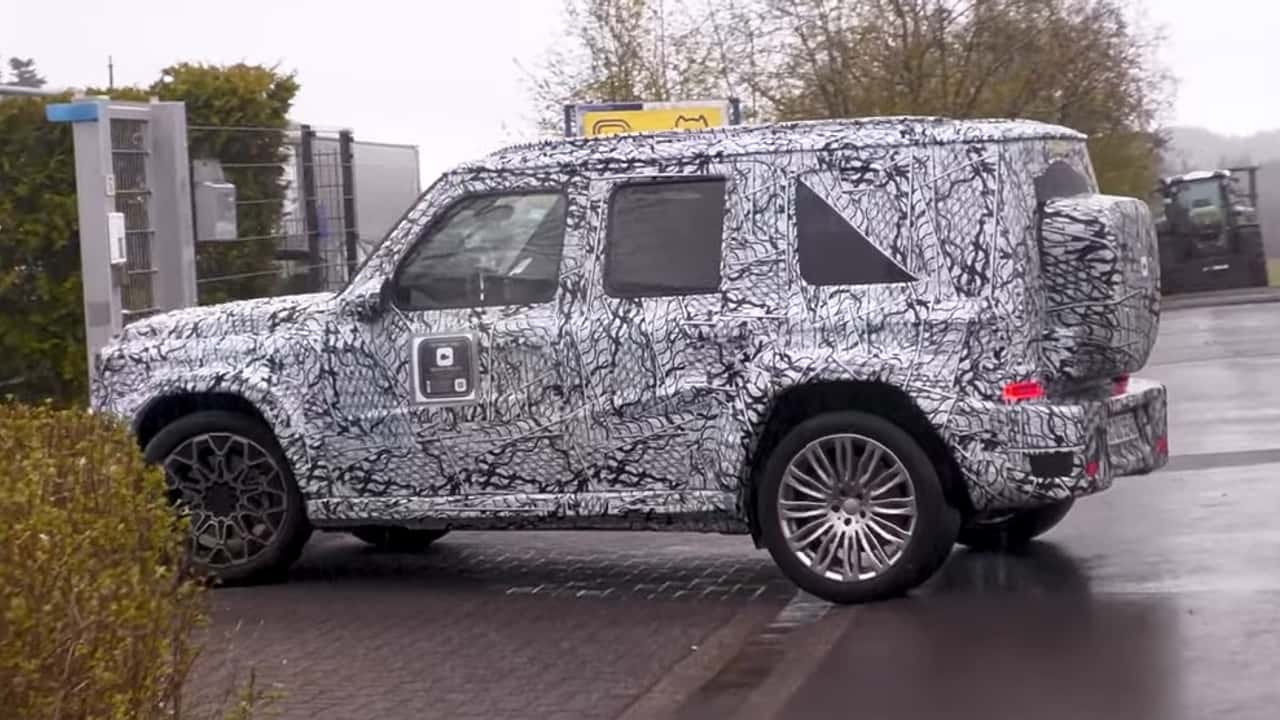


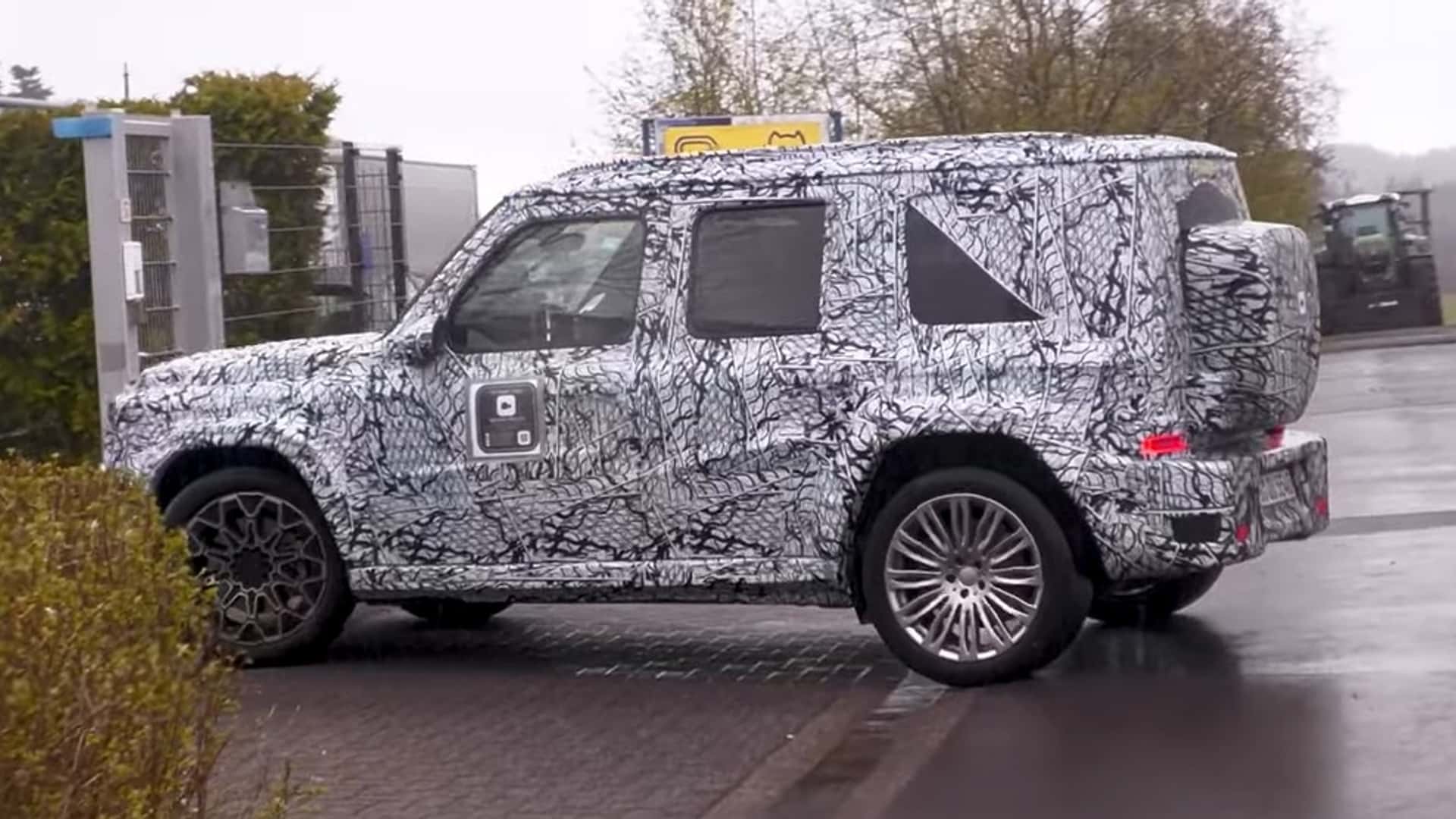
New spy footage of the downsized Mercedes G-Class just surfaced, and the camouflaged prototype looks exactly like a G-Wagen that got shrunk in the wash. Every signature detail is there — the flat roofline, the bulging wheel arches, the rear-mounted swing-out door — just compressed into a package roughly a foot shorter than the original.
CEO Ola Källenius has been calling it the “Little G” with the kind of affection executives reserve for products they know will sell themselves. And he’s probably right. The full-size G-Class just posted its best sales year ever in 2025, pushing nearly 50,000 units globally, and the cheapest one in America starts at $155,250.
A smaller, cheaper version aimed at buyers who love the look but can’t stomach the price? That’s not a product decision. That’s an ATM.
The prototype caught on video was silent, meaning it’s running a fully electric powertrain. But here’s where it gets interesting: Mercedes has apparently reversed course on making the Little G an EV-only play. A hybrid version is now in the pipeline, reportedly using the same turbocharged 1.5-liter four-cylinder from the new CLA, paired with electric assistance for a combined 208 horsepower and 280 pound-feet of torque.
The all-electric variant is rumored to carry an 85 kWh battery pack with a potential range of 450 miles — a massive leap over the existing G 580 with EQ Technology, which tops out around 280 miles. Dual electric motors and standard all-wheel drive are expected across the lineup.
At roughly 173 inches long, the Little G sits comfortably in compact SUV territory. It also appears to ride noticeably lower than the real Geländewagen, which suggests its off-road ground clearance won’t match the original’s. Mercedes has promised “genuine off-road capability” anyway, built on what Källenius calls a “completely new development” platform.
How much dirt-road credibility a vehicle needs when most of its buyers will never leave pavement is another question entirely. The decision to add a combustion option looks shrewd given the current North American market, where EV enthusiasm has cooled and hybrids are eating into battery-electric market share. Mercedes clearly read the room.
Launching the Little G as electric-only would have been a gamble. Launching it with both powertrains is insurance.
Renderings from digital artists have already imagined an AMG version with the Panamericana grille, aggressive bumpers, and side-exit exhaust tips borrowed from the G 63. Mercedes hasn’t confirmed any AMG variant, but given that the regular G-Class spawned a wildly profitable G 63 — and that AMG has never met a model it didn’t want to modify — betting against it would be foolish.
The Little G won’t arrive in a vacuum. Both Audi and BMW are reportedly developing G-Class competitors of their own, sensing the same demand for boxy, rugged-looking luxury SUVs that Mercedes has exploited for decades. The difference is that Mercedes has a 45-year head start in making the shape iconic.
Competitors will be selling a silhouette. Mercedes will be selling the original, just smaller.
Production is expected to begin in the second half of 2027, alongside another G-Class family expansion: the return of the Cabriolet, a four-door drop-top that’s already been teased and is expected in AMG G 63 guise.
Mercedes is betting that the G-Class nameplate can stretch further than it ever has — downward in size, outward in body style, and forward into electrification — without diluting the thing that makes people pay six figures for a military truck silhouette. The Little G will be the first real test of that theory. Given the brand’s track record with this shape, the odds are heavily in Stuttgart’s favor.

Share this Story