
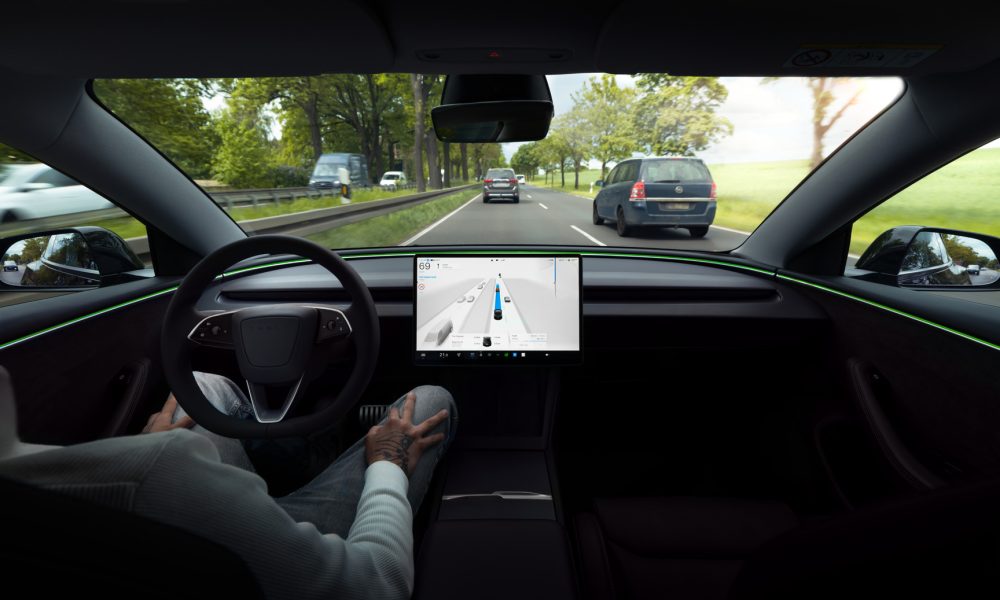


Estonia became the third European Union country to approve Tesla’s Full Self-Driving (Supervised) on May 29, joining the Netherlands and Lithuania in a rapid-fire regulatory cascade that took barely six weeks from start to finish.
The approval mechanism tells the real story. Estonia’s Transport Administration didn’t conduct its own exhaustive evaluation. It simply recognized the type certification already issued by the Dutch vehicle authority RDW, a mutual recognition shortcut baked into EU regulations.
Lithuania did the same thing in mid-May. One approval, three countries, minimal friction.
Tesla spent roughly 18 months getting FSD through the Dutch certification gauntlet. Now it’s replicating across borders at a pace that would have seemed impossible two years ago, when Europe looked like a regulatory dead zone for the technology.
FSD Supervised remains a Level 2 system. Hands on the wheel, eyes on the road, driver fully responsible. Estonian officials made sure to underline that distinction. Nobody is pretending this is autonomy, but the approvals matter because they establish a template. Every EU member state that accepts the Dutch certification makes the next one easier.
The European expansion is now running in parallel with far more aggressive moves in the United States. On the same day Estonia gave its nod, Texas Senate Bill 2807 took effect, establishing a statewide framework that lets companies self-certify their autonomous vehicles for commercial operation. Tesla immediately qualified.
The company can now legally launch driverless ride-hailing in Texas without waiting for a government agency to validate its technology.
Elon Musk punctuated the moment by posting video of Cybercab units driving themselves out of Gigafactory Texas. Mass production of the purpose-built robotaxi started in April. The vehicles are already leaving the factory under their own power.
Two continents, two very different regulatory philosophies, but both moving in Tesla’s direction simultaneously. Europe is cautiously validating a supervised driver-assistance system through bureaucratic reciprocity. Texas is handing Tesla the keys to unsupervised commercial autonomy through self-certification.
The gap between those two realities is enormous, but Tesla is playing both boards at once.
Underneath all of this sits a corporate picture that keeps getting more complicated. CNBC reported that Musk has discussed merging Tesla and SpaceX with people close to him, and SpaceX’s imminent IPO would give him the public market currency to execute a stock-for-stock deal. The two companies already share supply chains, a joint semiconductor fabrication facility in Austin, and billions in cross-company transactions.
Wedbush analyst Dan Ives puts merger odds at 80 to 90 percent, with a target in the first half of 2027.
FSD is now live in 11 countries worldwide. The European approvals open new subscription and purchase revenue. The Texas authorization clears the path for commercial robotaxi operations. And the SpaceX IPO potentially gives Musk the financial architecture to consolidate everything under one roof.
Each development looks incremental in isolation. Estonia is a small market. Texas self-certification is one state’s policy. A merger is still speculative.
But taken together, they describe a company that is simultaneously expanding its driver-assistance footprint across Europe, launching commercial autonomy in the U.S., and laying the corporate groundwork for something much larger. The FSD approvals trickling across the Baltics are the quiet part. The loud part is coming.
Share this Story