
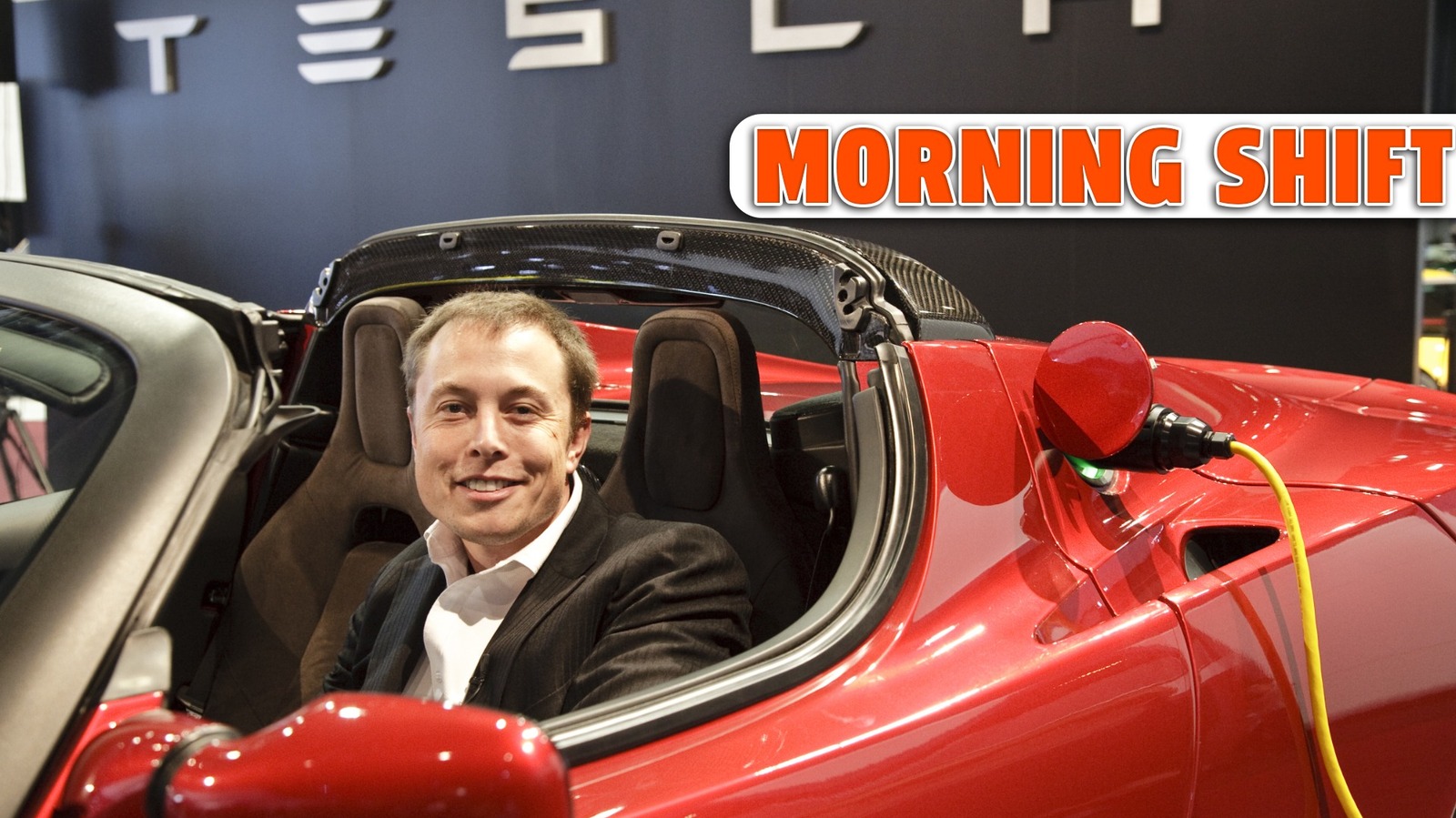


Tesla posted $477 million in first-quarter profit, a 17 percent jump from a year ago, with revenue climbing to $22.39 billion on the strength of a 16 percent bump in automotive sales. The rebound comes after a bruising 2025 that saw the brand hemorrhage goodwill and market share in roughly equal measure.
So naturally, Elon Musk started talking about the Roadster again.
The second-generation Roadster, first teased in 2017, is now supposedly a month or so from an unveiling. Musk said it in October. He said it again in November, penciling in an April 1 date.
In March, he pushed it to late April. Now it’s late April, and the goalposts have moved once more. At this point the Roadster isn’t a car. It’s a carrot on a string, and the string keeps getting longer.
But the Roadster talk is a sideshow. The real story is where Tesla’s money is going and how much of it there will be left.
The company jacked its 2026 capital expenditure plan to more than $25 billion, nearly triple the $8.53 billion it spent last year and well above the $20 billion it forecast just months ago. That cash is flowing into artificial intelligence, robotaxis, and Optimus, the humanoid robot Musk insists will become the company’s most valuable product. Tesla now expects negative free cash flow for the rest of the year.
Morningstar analyst Seth Goldstein framed it cleanly: if you believe Musk can make impossible things real, this is a leap of faith worth taking. If you don’t, the spending makes no sense. There is no middle ground.
Musk pointed to Alphabet, Microsoft, and Amazon spending comparable sums on AI. The difference, as Reuters noted, is that those companies have massive, high-margin recurring revenue engines backstopping their bets. Tesla has cars it sells at shrinking margins and a robotaxi business Musk himself admits won’t generate meaningful revenue before 2027.
In Musk time, that’s practically never.
Meanwhile, the rest of the industry is wrestling with its own turbulence. Jeep is skipping the 2026 model year entirely for the Wagoneer S, its first North American EV, citing plans for battery and software improvements and a switch to the North American Charging Standard port. The real numbers tell a grimmer story: after the $7,500 federal EV tax credit disappeared, Wagoneer S sales cratered from over 10,000 units in nine months to just 175 in the first quarter.
Stellantis is calling it a gap year. The market is calling it a reckoning.
Over at General Motors, the board’s compensation committee decided that $3 billion in tariff losses shouldn’t count against executive performance metrics. Mary Barra walked away with roughly $30 million in total compensation for 2025, including a $5 million performance bonus. Mark Reuss got $19 million.
Hourly workers, whose profit-sharing is calculated by a UAW formula tied to actual North American earnings, saw their checks drop from $14,500 to $10,500. The board cited Barra’s leadership in mitigating tariff damage. The factory floor absorbed the damage that remained.
Tesla’s quarterly numbers are genuinely improved. The car business is recovering. But Musk is now asking shareholders to fund a $25 billion moonshot portfolio while profits and revenue remain well below their peaks and legacy automakers and Chinese competitors continue eating into Tesla’s once-dominant EV share.
The Roadster, if it ever arrives, will be the only human-driven car in Tesla’s lineup, Musk said. A fitting symbol: one vehicle you can actually steer, surrounded by an empire of promises that drive themselves.
Share this Story