
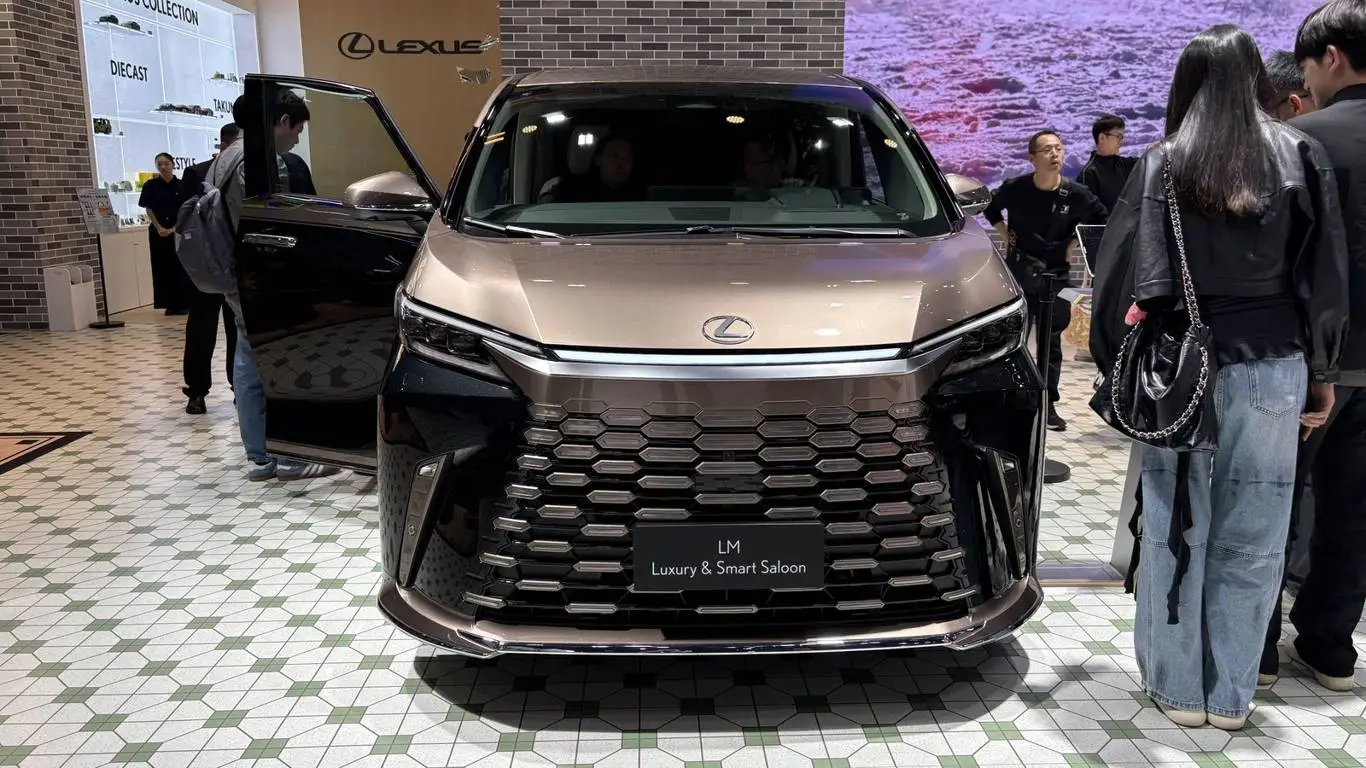


Lexus is bringing five installations to Milan Design Week 2026, and the centerpiece isn’t really the new LS Concept flagship — it’s what the brand wants you to feel about the space inside it.
The exhibition, titled SPACE, opens to media on April 20 and runs publicly from April 21 through 26 at Superstudio Più in Milan’s Tortona district. The LS Concept gets its world premiere there, but Lexus is framing the whole thing less as a car reveal and more as a philosophical meditation on what a luxury cabin should become when work, life, and travel blur into a single continuous experience.
This is a familiar gambit. Luxury automakers have been colonizing Milan Design Week for years, wrapping product launches in the language of art and architecture to signal that they’re not just building cars — they’re curating lifestyles. BMW does it. Mercedes does it. Lexus has done it consistently, showing installations themed around “Time” in 2024 and “A-Un” in 2025.
But this year’s effort is more ambitious in scope. Alongside the main SPACE installation, Lexus will debut four works from its Discover Together 2026 initiative, a co-creation project pairing the brand with emerging creators from Japan, Italy, and the Netherlands. The shared brief: interpret “Discover Your Space” using the LS Concept as a common motif.
The roster is deliberately eclectic. Japanese filmmaker Kyotaro Hayashi and art director Yumi Kurotani will present an immersive installation built around light, sound, and physical texture. Italy’s Guardini Ciuffreda Studio, led by fashion designer Tiziano Guardini and architect Luigi Ciuffreda, brings a sustainability-rooted practice that dissolves boundaries between fashion, architecture, and material.
Amsterdam-and-Paris-based Random Studio specializes in interactive spatial experiences. The fourth team pairs Lexus in-house designers with Japanese master artisans — kumiko woodworkers from Mie prefecture, century-old stone craftsmen from Inagaki Sekizai-ten, Tendo Mokko’s legendary bentwood specialists, and a WorldSkills champion wooden model craftsman from Toyota’s own shops.
That last collaboration is the most revealing. Lexus is explicitly yoking its industrial design DNA to centuries-old Japanese craft traditions, positioning the LS Concept not as an engineering achievement but as a vessel for artisanal heritage. It’s a calculated move to differentiate from the German luxury houses that dominate the European market with technology-forward messaging.
The tension underneath all of this is straightforward: Lexus still hasn’t told us much about the LS Concept as a car. No powertrain details. No platform confirmation. No production timeline. What we get instead is talk of mobility transforming “from simple transportation into a new experience that reimagines space itself.”
That language does real work for Lexus. It buys time. The LS nameplate has been the brand’s flagship sedan since 1989, but its relevance has eroded in a market gravitating toward SUVs and electric crossovers.
If the next LS is going to matter, Lexus needs to redefine what a flagship even means. Milan, with its design-literate audience, is a smarter stage for that argument than any auto show floor.
Whether the SPACE installation actually advances that conversation or simply dresses up a concept car in gallery lighting remains to be seen. Lexus has earned credibility in the design world through years of consistent investment in these exhibitions. The creators they’ve assembled have genuine pedigrees, not just influencer followings.
Still, at some point the LS Concept has to be a car, not just a motif. Milan will tell us how much longer Lexus intends to keep the conversation abstract before committing to something you can actually drive.
Share this Story