


Ferrari unveiled the Luce, its first electric vehicle, to a reception that can charitably be described as hostile. The internet recoiled. Industry veterans winced. Jaguar’s PR team presumably opened champagne.
And somewhere in a Honda boardroom, executives were busy killing the one car that actually nailed what Ferrari was attempting.
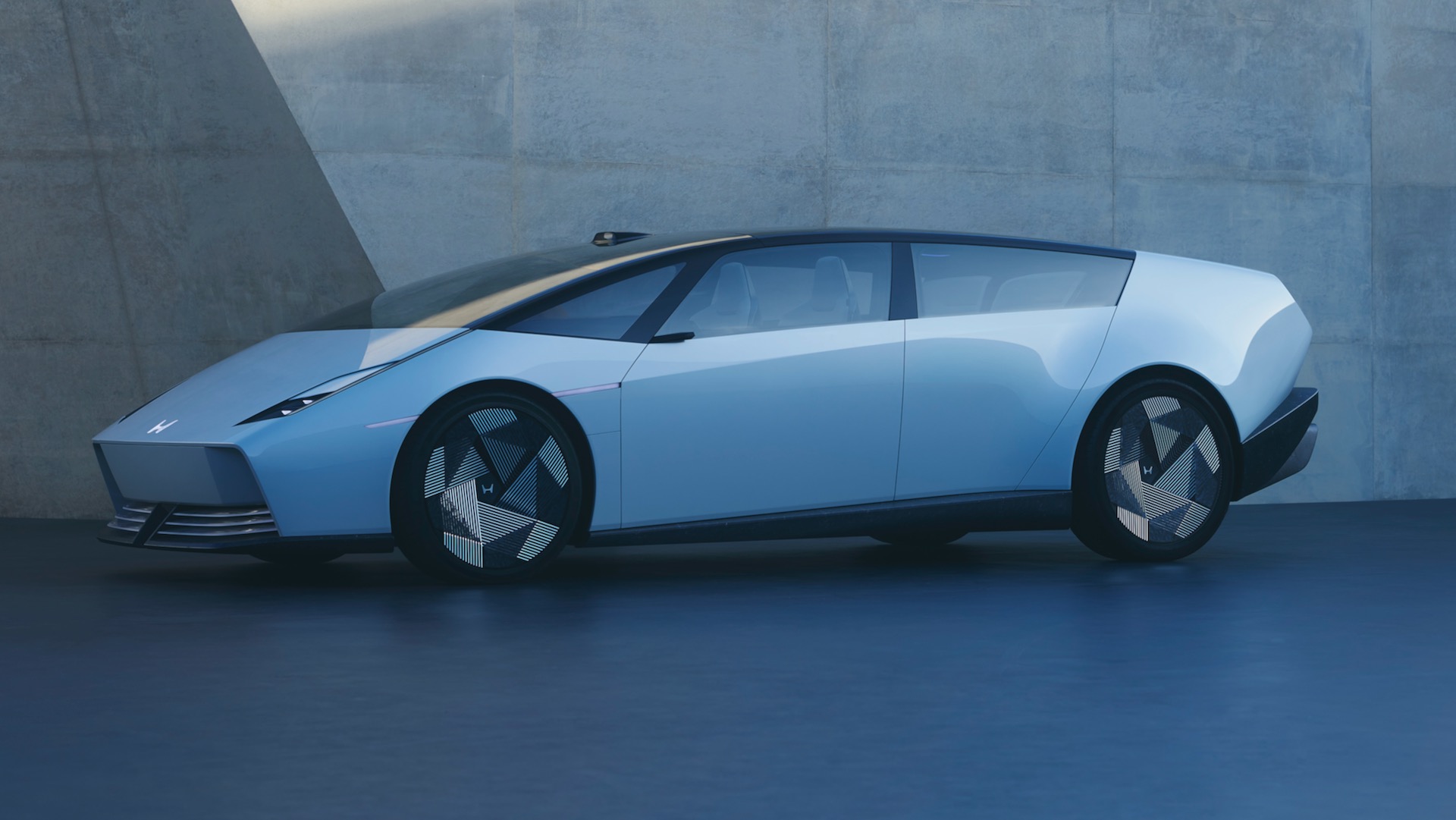
The Honda 0 Saloon is dead. Honda axed its EV flagship as part of a broader retreat from battery-electric vehicles in North America. That car, with its razor-sharp wedge profile echoing the F40 and Testarossa, generated genuine excitement when it debuted as a concept at CES 2024.
A refined prototype at CES 2025 looked production-ready. It wasn’t.
The Luce, meanwhile, will hit the market with a reported base price of $640,000. For that money, buyers get a shape that resembles a smoothed-over crossover — a silhouette already explored by the Mercedes EQ SUVs, the Lucid Gravity, the BMW iX, and even failed startups like Faraday Future and Byton. Ferrari hired Jony Ive, the Apple design legend, supposedly to make a clean break with tradition.
The result is a car that looks like everything else.
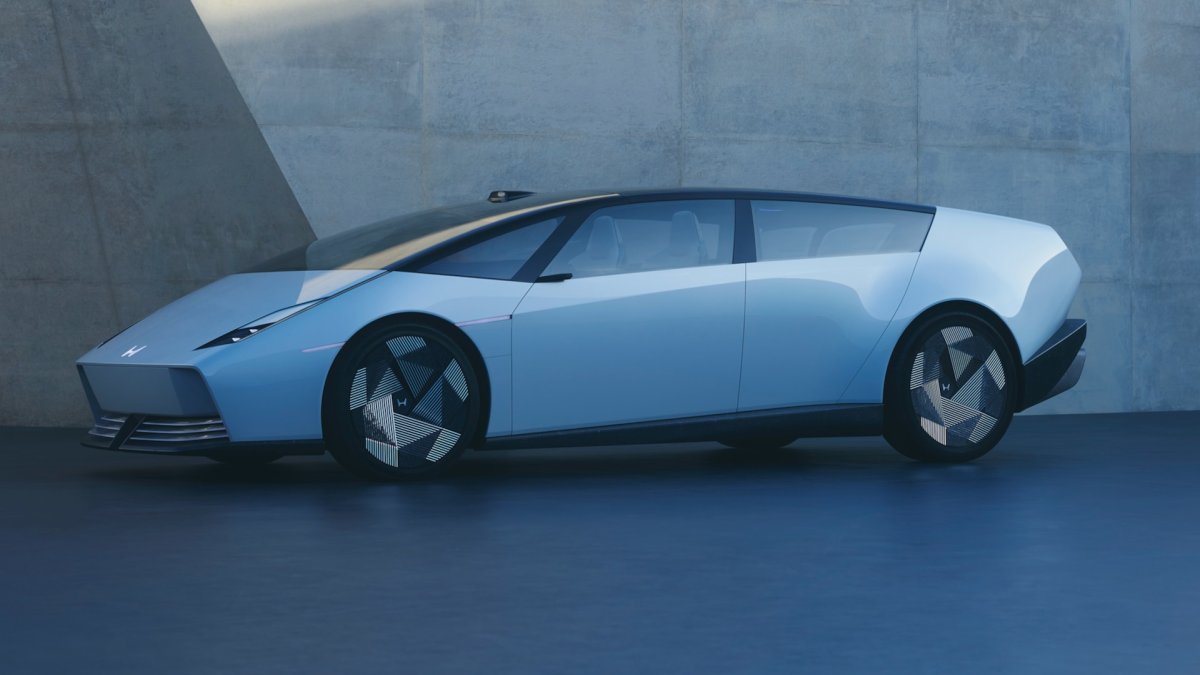
The 0 Saloon did something the Luce doesn’t: it made you feel something from across a parking lot. No explanation required. No need to zoom in on reinvented windshield wipers or study the surfacing philosophy.
The overall shape was the statement. It was a genuine three-box sedan with dramatic proportions, a form that read as both futuristic and unmistakably automotive. Honda’s designers didn’t get lost in the theology of electrification. They just drew a striking car.
Ferrari’s team went the other direction, becoming so preoccupied with expressing the car’s EV-ness that they forgot to make it look like a Ferrari. The Luce’s design innovations live in the details — details that require a walkaround presentation and a PowerPoint deck to appreciate. That’s a fatal flaw for a brand built on stopping traffic.
The Luce isn’t without merit. Its interior appears genuinely luxurious, and its specs are legitimately potent, though key performance figures land uncomfortably close to the Porsche Cayenne Turbo Electric at a fraction of the price. But exterior design is where Ferraris live or die in the public imagination, and on that front, the Luce is a crossover in couture clothing.
The irony cuts deep. Honda — a company that makes Civics and CR-Vs — produced an EV design with more visual daring than Ferrari, the most iconic sports car brand on earth. And then Honda killed it.
The 0 Saloon is being burned on a pyre of corporate retreat, sacrificed to the same EV hesitancy sweeping through boardrooms from Detroit to Tokyo.
So we’re left with a perverse outcome. The car that looked like it belonged in Maranello came from a company that sells minivans. The car that actually carries the prancing horse looks like it could’ve come from any of a dozen brands chasing aerodynamic efficiency above all else.
Ferrari had the budget, the brand equity, and the license to do something extraordinary. Honda had the design. Neither company will deliver what the other had.
The 0 Saloon would have been a $50,000 car that made people dream. The Luce is a $640,000 car that makes people argue. That gap tells you everything about where ambition lives in the auto industry right now — and where it doesn’t.
Share this Story